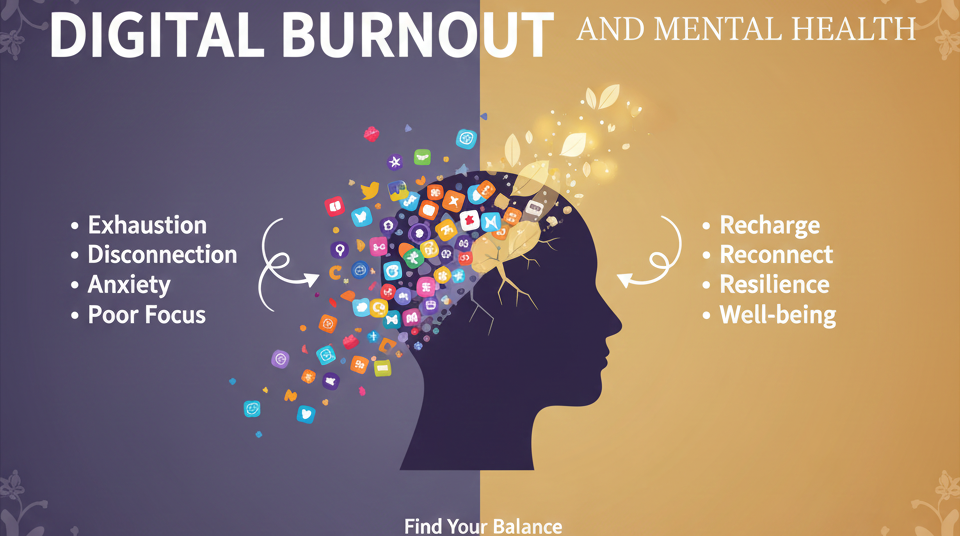
The impact of digital burnout on mental health is growing rapidly as people spend more hours online for work, entertainment, and communication. Digital burnout can lead to anxiety, exhaustion, sleep issues, emotional instability, and reduced cognitive function. This article explains what digital burnout is, why it happens, and the most effective ways to reduce its impact on your mental well-being.
10 Powerful Ways to Reduce the Impact of Digital Burnout on Mental Health
The modern world thrives on screens—phones, laptops, tablets, and TVs have become unavoidable parts of daily life. As a result, the impact of digital burnout on mental health has become a serious concern affecting professionals, students, parents, and even children. Digital burnout occurs when the mind becomes overwhelmed by prolonged screen exposure, constant notifications, and information overload. It feels like emotional exhaustion, mental fog, irritability, and lack of motivation. Understanding how digital burnout affects mental health is the first step toward healing and prevention.
Aarogya Sewa Samiti highlights that the impact of digital burnout on mental health is far more widespread than people assume. The organisation’s wellness experts note that excessive screen time disrupts sleep cycles, heightens anxiety, reduces emotional resilience, and weakens cognitive performance. Digital burnout also affects physical health, contributing to headaches, neck pain, eye strain, and fatigue. When left unchecked, these symptoms may escalate into depression, chronic stress, and long-term psychological imbalance. Fortunately, with the right strategies, it is possible to reduce the impact of digital burnout on mental health and rebuild emotional well-being.
Understanding the Impact of Digital Burnout on Mental Health
Before exploring solutions, it is essential to understand how deeply the impact of digital burnout on mental health shapes emotions, thoughts, and daily functioning. Digital burnout is not simply “being tired” of screens. It is a neurological response caused by overstimulation, multitasking, social comparison, and constant digital demands. The impact of digital burnout on mental health includes symptoms like irritability, anxiety, reduced patience, sleep disturbances, and difficulty concentrating.
Research shows that the human brain is not designed to process rapid digital information at the speed modern life demands. When online activities become excessive, the brain enters a state of overwhelm. This leads to emotional exhaustion and cognitive fatigue, proving just how significant the impact of digital burnout on mental health truly is.
1. Set Clear Screen-Time Boundaries
One of the most effective ways to reduce the impact of digital burnout on mental health is by establishing firm boundaries. Without limits, online activities can spill into every part of your day. Set time slots for social media, work emails, and online streaming. Avoid checking your phone first thing in the morning, as it immediately triggers mental stimulation. Consistent boundaries help restore balance and reduce the impact of digital burnout on mental health over time.
2. Take Scheduled Digital Detox Breaks
A planned digital detox—whether for one hour, half a day, or an entire weekend—helps the brain reset. Short, consistent breaks are powerful tools for reducing the impact of digital burnout on mental health. During detox periods, engage in offline activities like walking, reading, cooking, or talking to loved ones. These activities decrease overstimulation and support mental recovery.
3. Use the 20-20-20 Rule for Eye & Mental Relief
Every 20 minutes, take a 20-second break and look at something 20 feet away. This simple habit helps reduce eye strain and mental tension caused by screens. Regular practice significantly lowers the impact of digital burnout on mental health because it slows down cognitive overload and improves focus.
4. Reduce Notification Overload
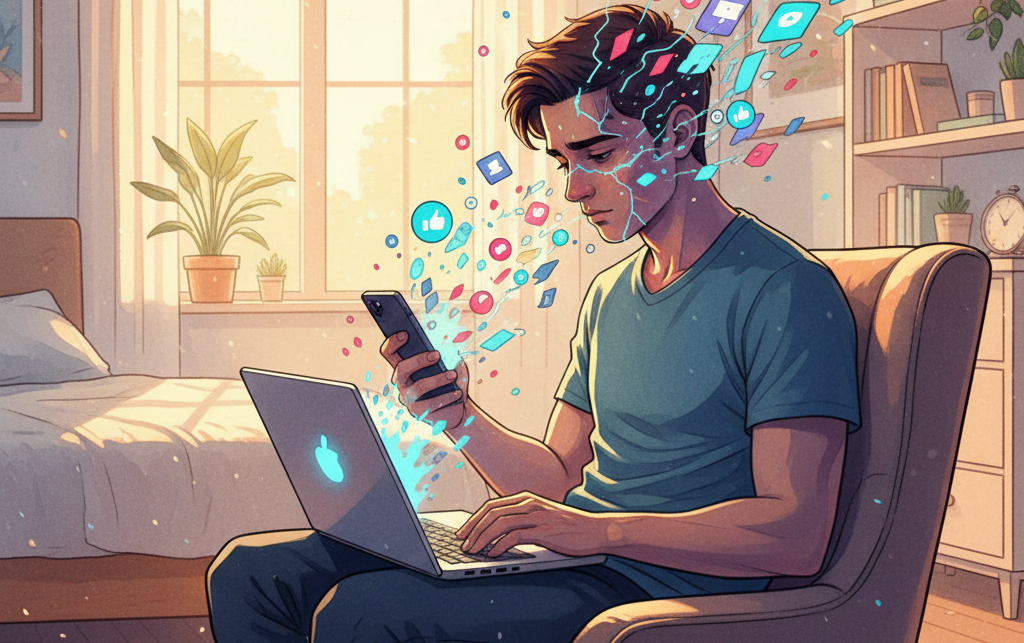
Constant alerts keep the brain in a state of hyper-vigilance. Turning off unnecessary notifications reduces stress hormones and prevents mental exhaustion. This simple step lowers the impact of digital burnout on mental health by allowing the mind to experience uninterrupted calm.
5. Prioritise Sleep Hygiene
Sleep is one of the strongest protectors against the impact of digital burnout on mental health. Avoid screens at least one hour before bedtime to prevent melatonin suppression. Use warm lighting, read a book, or practice mindfulness before sleep. Good sleep improves emotional strength, decision-making, and stress management.
6. Practice Mindfulness and Deep Breathing
Mindfulness reduces emotional reactivity and resets the overstimulated brain. Just 10 minutes of deep breathing or meditation can significantly decrease the impact of digital burnout on mental health. Mindfulness improves clarity, reduces stress, and helps the brain shift from digital chaos to inner calm.
7. Strengthen Real-Life Social Connections
Digital communication cannot replace the emotional fulfilment of in-person interactions. Spending time with friends or family reduces loneliness and helps heal the impact of digital burnout on mental health. In-person connections release oxytocin—the bonding hormone that reduces anxiety and improves mood.
8. Engage in Physical Activity Daily
Exercise increases dopamine and serotonin—natural mood stabilisers. Physical movement reverses the impact of digital burnout on mental health by stimulating blood flow, lowering cortisol, and increasing energy. Activities like yoga, running, dancing, or home workouts are powerful burnout relievers.
9. Create Tech-Free Zones in Your Home
Designate spaces like the dining room, bedroom, or balcony as phone-free areas. Tech-free zones reduce overstimulation and encourage moments of mental rest. This lifestyle habit reduces the impact of digital burnout on mental health while strengthening mindfulness and presence.
10. Seek Professional Guidance When Needed
If digital burnout has begun to affect sleep, work performance, emotional balance, or relationships, seeking professional help is essential. Counsellors and therapists help individuals understand the deeper impact of digital burnout on mental health and offer personalised tools for recovery. Early guidance prevents long-term psychological consequences and accelerates healing.

Conclusion
The impact of digital burnout on mental health is becoming one of the most significant emotional and psychological challenges of modern life. While screens are unavoidable, the way we use them determines whether they support or harm our well-being. By setting boundaries, practising mindfulness, strengthening real-life relationships, protecting sleep, and reducing notification overload, anyone can restore clarity and emotional balance. Adopting these habits prevents long-term burnout and promotes a healthier relationship with technology.
For individuals whose digital stress has contributed to deeper emotional struggles or addictive patterns, reaching out for support can make a transformative difference. Professional guidance provides structure, clarity, and specialised tools for emotional healing. Those seeking compassionate support can find life-changing help at the best de-addiction centre in Dehradun – Aarogya Sewa Samiti, where comprehensive wellness programs focus on rebuilding mental strength, resilience, and overall balance for long-term recovery.