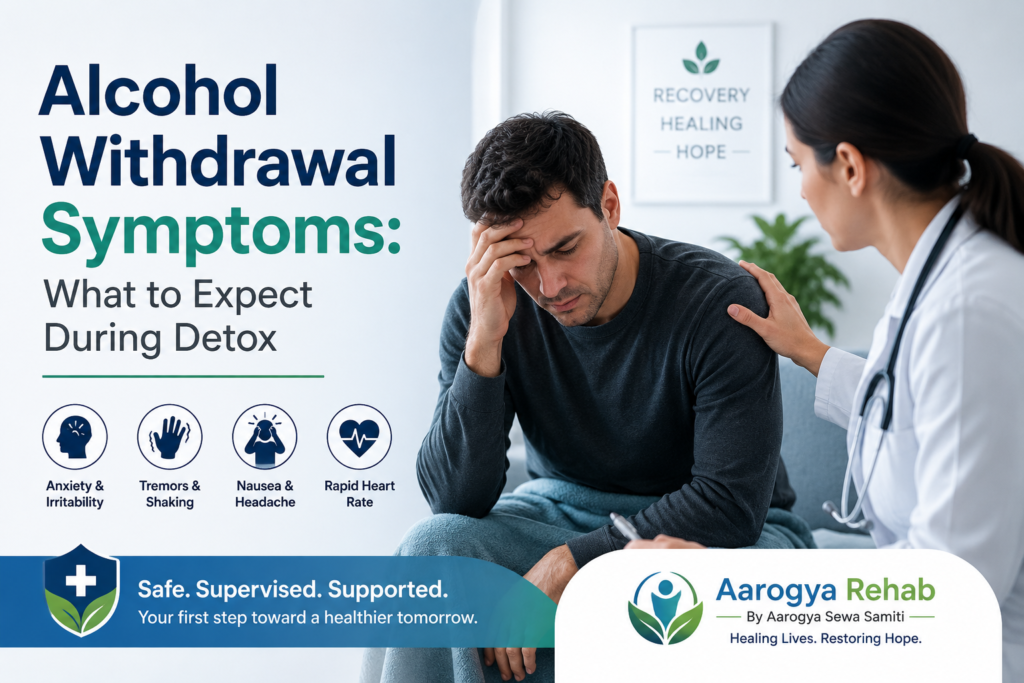
Alcohol addiction affects millions of people worldwide and can have serious effects on physical and mental health. When someone who has been drinking heavily for a long time suddenly stops consuming alcohol, the body reacts in several ways. These reactions are known as alcohol withdrawal symptoms. Understanding these symptoms and seeking professional help can make the detox process much safer and more comfortable.
At Aarogya Rehab, operated by Aarogya Sewa Samiti, individuals receive compassionate care and evidence-based treatment designed to support every stage of recovery. Professional detox and rehabilitation services help people overcome addiction safely while preparing them for a healthier future.
What Are Alcohol Withdrawal Symptoms?
Alcohol withdrawal symptoms are physical and psychological changes that occur when a person reduces or stops drinking after prolonged alcohol use.
Alcohol changes the way the brain functions. Over time, the body becomes dependent on alcohol to maintain normal brain activity. Once alcohol is removed, the brain becomes overactive, leading to withdrawal symptoms.
The severity of withdrawal depends on several factors, including:
- How long the person has been drinking
- The amount of alcohol consumed
- Overall physical health
- Mental health conditions
- Previous withdrawal experiences
Withdrawal symptoms can range from mild discomfort to life-threatening medical emergencies. This is why detox should always be supervised by trained healthcare professionals.
Why Does Alcohol Withdrawal Happen?
Alcohol acts as a depressant, slowing down brain activity and relaxing the nervous system.
When someone drinks regularly for months or years, the brain adapts to the constant presence of alcohol. Instead of functioning normally, it begins depending on alcohol to maintain balance.
Once alcohol intake suddenly stops, the nervous system becomes overactive because it no longer has alcohol to suppress its activity.
This overactivity causes alcohol withdrawal symptoms, which may begin within a few hours after the last drink.
When Do Withdrawal Symptoms Begin?
The timeline varies from person to person, but most individuals experience symptoms according to the following pattern.
6–12 Hours After the Last Drink
Early symptoms may include:
- Anxiety
- Restlessness
- Headache
- Sweating
- Nausea
- Difficulty sleeping
- Trembling hands
These symptoms are often mild but should not be ignored.
12–24 Hours After the Last Drink
Symptoms may become more noticeable.
A person may experience:
- Increased heart rate
- Elevated blood pressure
- Mood swings
- Irritability
- Loss of appetite
- Difficulty concentrating
Some individuals may also experience mild hallucinations.
24–72 Hours After the Last Drink
This is often considered the most critical stage of detox.
Symptoms may include:
- Severe shaking
- Fever
- Confusion
- Hallucinations
- Seizures
- Extreme anxiety
Some individuals may develop Delirium Tremens (DTs), a serious medical emergency requiring immediate treatment.
Professional detox greatly reduces the risks associated with severe withdrawal.

“Continuous monitoring helps prevent complications during alcohol withdrawal”
Common Alcohol Withdrawal Symptoms
Every individual experiences withdrawal differently.
Some common symptoms include:
Physical Symptoms
- Sweating
- Trembling
- Nausea and vomiting
- Rapid heartbeat
- High blood pressure
- Headache
- Fatigue
- Muscle pain
- Loss of appetite
- Difficulty sleeping
Emotional Symptoms
- Anxiety
- Depression
- Irritability
- Mood swings
- Panic attacks
- Restlessness
- Difficulty relaxing
Psychological Symptoms
- Confusion
- Poor concentration
- Memory problems
- Hallucinations
- Intense cravings for alcohol
Recognizing these symptoms early allows medical professionals to provide timely treatment and improve recovery outcomes.
Is Alcohol Withdrawal Dangerous?
Many people believe they can stop drinking without medical help.
While this may be possible for some individuals with mild dependence, heavy drinkers face significant health risks during withdrawal.
Potential complications include:
- Severe dehydration
- Heart rhythm problems
- Seizures
- Delirium Tremens
- Loss of consciousness
- Serious electrolyte imbalance
Because of these risks, professional detox is strongly recommended.
At Aarogya Rehab, experienced healthcare professionals monitor patients throughout detox to ensure their safety and comfort.
What Is Medical Detox?
Medical detox is the first stage of addiction treatment.
The goal is to safely remove alcohol from the body while managing withdrawal symptoms under medical supervision.
Medical detox usually includes:
- Comprehensive health assessment
- Regular monitoring of vital signs
- Medication to reduce withdrawal symptoms
- Proper hydration
- Nutritional support
- Emotional counselling
- Continuous medical observation
Medical detox does not cure alcohol addiction, but it creates a strong foundation for long-term recovery.

“Medical detox provides a safe environment for managing alcohol withdrawal symptoms”
Why Professional Detox Is Better Than Detoxing at Home
Many people attempt to quit alcohol without professional help.
Unfortunately, home detox can become dangerous if severe withdrawal symptoms develop unexpectedly.
Professional detox offers several advantages:
- Immediate medical assistance
- Safe symptom management
- Reduced risk of seizures
- Proper nutrition and hydration
- Emotional support
- Individual treatment planning
- Smooth transition into rehabilitation
Choosing professional care significantly improves both safety and recovery success.
How Aarogya Rehab Supports Alcohol Detox
Recovery involves much more than simply stopping alcohol consumption.
Aarogya Rehab, managed by Aarogya Sewa Samiti, provides a structured recovery environment where individuals receive personalized treatment based on their medical and emotional needs.
The rehabilitation approach focuses on:
- Safe medical detox
- Individual counselling
- Group therapy
- Family counselling
- Yoga and meditation
- Lifestyle improvement
- Relapse prevention education
This holistic approach helps individuals regain confidence while preparing for a healthier, alcohol-free future.
Therapies That Support Recovery After Detox
Completing detox is an important milestone, but recovery does not end there. Long-term success depends on addressing the emotional, psychological, and behavioral causes of alcohol addiction. A structured rehabilitation program helps individuals build healthy habits and develop coping strategies for a sober life.
At Aarogya Rehab, recovery programs are personalized to meet each individual’s needs. The goal is to help patients regain physical health, improve mental well-being, and restore relationships with family and society.
Treatment commonly includes:
- Individual counselling
- Group therapy
- Family counselling
- Cognitive Behavioral Therapy (CBT)
- Yoga and meditation
- Stress management sessions
- Relapse prevention planning
- Life skills development
These therapies work together to promote lasting recovery rather than temporary abstinence.
The Importance of Family Support During Recovery
Alcohol addiction affects not only the individual but also family members and close friends. Emotional stress, broken trust, and communication problems are common in families dealing with addiction.
Family involvement plays a significant role in successful recovery. Encouragement, understanding, and healthy communication can motivate an individual to continue treatment and remain committed to sobriety.
Family counselling sessions help:
- Improve communication
- Rebuild trust
- Resolve conflicts
- Educate family members about addiction
- Create a supportive home environment
A strong support system increases the chances of long-term recovery and reduces the risk of relapse.
Healthy Habits That Improve Recovery
Recovery becomes easier when healthy lifestyle changes are introduced alongside treatment. These habits strengthen both physical and emotional health while reducing cravings and stress.
Some beneficial habits include:
- Eating a balanced and nutritious diet
- Drinking enough water every day
- Following a regular sleep schedule
- Practicing yoga and meditation
- Exercising regularly
- Avoiding situations that encourage drinking
- Staying connected with supportive family and friends
- Participating in hobbies and productive activities
Small positive changes made consistently can have a significant impact on long-term recovery.

“Mental wellness is an essential part of recovery, helping individuals find balance, clarity, and inner strength”
Preventing Alcohol Relapse
Relapse does not mean failure, but preventing it should always be a priority. Recovery is an ongoing process that requires continued effort and support.
Common relapse triggers include:
- Stress
- Anxiety
- Depression
- Social pressure
- Loneliness
- Financial difficulties
- Relationship problems
- Easy access to alcohol
Learning to identify these triggers allows individuals to respond in healthier ways before cravings become overwhelming.
Effective relapse prevention strategies include:
- Attending regular counselling sessions
- Joining support groups
- Following a structured daily routine
- Practicing stress management techniques
- Staying physically active
- Maintaining regular follow-up appointments
At Aarogya Rehab, relapse prevention is an essential part of every recovery program, helping individuals maintain sobriety even after completing rehabilitation.
Why Choose Aarogya Rehab?
Finding the right rehabilitation centre can make a significant difference in recovery outcomes. Aarogya Rehab, operated by Aarogya Sewa Samiti, is committed to providing compassionate, evidence-based care in a safe and supportive environment.
Patients receive comprehensive services that focus on physical healing, emotional wellness, and long-term recovery. Every treatment plan is tailored to the individual’s unique needs, ensuring personalized care throughout the recovery journey.
The centre emphasizes dignity, respect, confidentiality, and holistic healing, helping individuals rebuild their lives with confidence and hope.

“A dedicated rehabilitation team provides continuous support throughout the recovery journey”
Conclusion
Experiencing alcohol withdrawal symptoms can be physically and emotionally challenging, but recovery is possible with the right care and support. Attempting to detox without professional supervision can lead to serious health complications, making medical guidance essential for individuals with alcohol dependence.
Professional detox, counselling, and rehabilitation provide the safest path toward recovery. They not only manage withdrawal symptoms but also address the underlying causes of addiction, helping individuals develop healthier lifestyles and prevent relapse.
If you or someone you care about is struggling with alcohol addiction, seeking timely help can make all the difference. Aarogya Rehab, managed by Aarogya Sewa Samiti, offers comprehensive treatment programs designed to support individuals through every stage of recovery. With expert medical care, counselling, wellness therapies, and continued aftercare, recovery becomes a realistic and achievable goal.
Remember, asking for help is not a sign of weakness—it is the first step toward a healthier, happier, and alcohol-free future.
Frequently Asked Questions (FAQs)
1. What are the first alcohol withdrawal symptoms?
The earliest symptoms often include anxiety, sweating, trembling, headache, nausea, and difficulty sleeping. These may begin within 6 to 12 hours after the last drink.
2. How long do alcohol withdrawal symptoms last?
Mild symptoms usually improve within a few days, while some individuals may experience lingering symptoms for several weeks. Recovery varies depending on the severity of alcohol dependence.
3. Is alcohol detox safe at home?
Home detox can be risky for people with moderate to severe alcohol dependence. Medical supervision is recommended to manage withdrawal safely and prevent serious complications.
4. Can alcohol withdrawal be life-threatening?
Yes. Severe withdrawal can lead to seizures, hallucinations, and Delirium Tremens (DTs), which require immediate medical attention.
5. How does Aarogya Rehab help people recover from alcohol addiction?
Aarogya Rehab, operated by Aarogya Sewa Samiti, provides medical detox, counselling, family therapy, yoga, wellness programs, relapse prevention, and personalized rehabilitation plans to support long-term recovery.