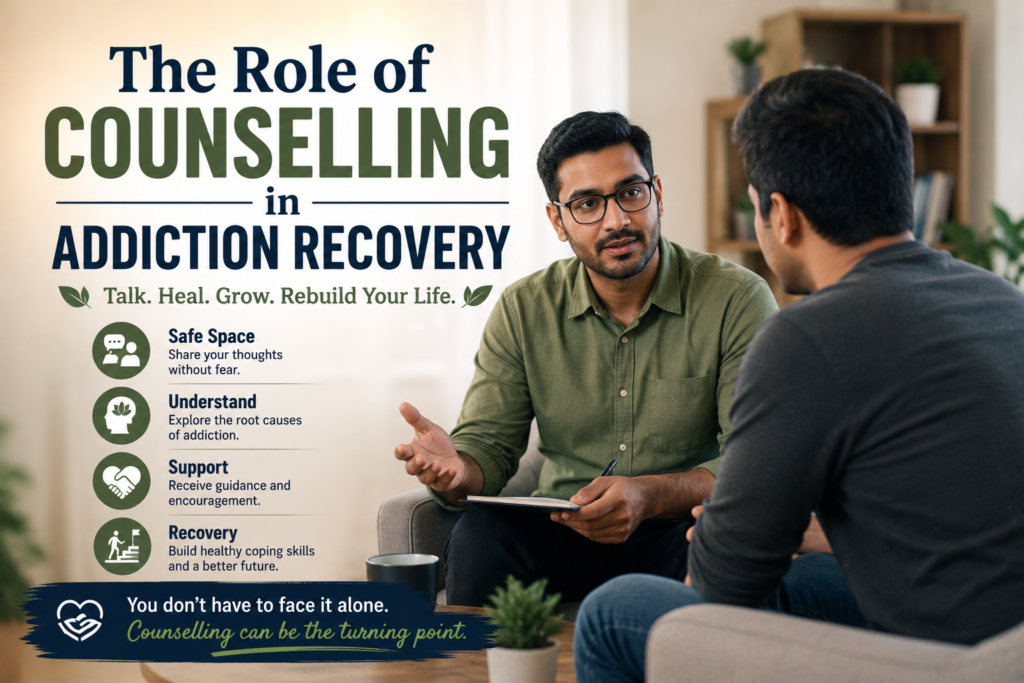
Addiction is a complex condition that can affect a person’s physical health, emotions, relationships, family life, and daily responsibilities. While medical treatment and detoxification can be important parts of recovery, emotional and psychological support also play a valuable role in helping individuals make lasting changes.
Counselling in addiction recovery provides a safe space where individuals can discuss their thoughts, feelings, fears, and personal challenges. With the guidance of a trained professional, a person can begin to understand the factors connected with addiction and develop healthier ways to manage difficult situations.
Recovery is not only about stopping addictive behaviour. It is also about learning how to live a healthier and more balanced life. Counselling can help individuals understand themselves better, improve coping skills, rebuild confidence, and prepare for challenges that may occur during and after treatment.
What Is Counselling in Addiction Recovery?
Addiction counselling is a professional support process that helps individuals explore the emotional, behavioural, and psychological factors connected with addiction. A counsellor provides a non-judgmental environment where a person can speak openly about personal experiences and concerns.
Every individual’s recovery journey is different. Some people may struggle with stress or anxiety, while others may experience relationship problems, low confidence, guilt, loneliness, or difficulty controlling cravings.
A counsellor can help a person identify these challenges and develop practical strategies for managing them. The aim is not to judge the individual or focus only on past mistakes, but to encourage healthier choices and positive changes.
At Aarogya Rehab, counselling and psychological support are described as important parts of the organisation’s approach to addiction recovery. Aarogya Sewa Samiti also describes a multidisciplinary care approach involving professionals who support individuals through different stages of recovery.
Why Is Counselling Important?
Addiction often involves more than physical dependence. It may also be connected with emotional pain, stress, trauma, unhealthy habits, social influences, or mental health concerns.
If these underlying issues are not addressed, an individual may find it difficult to maintain long-term recovery. Counselling can help people understand these factors and learn healthier ways to respond.
Some important benefits of counselling may include:
- Understanding personal triggers
- Developing healthier coping strategies
- Managing stress and difficult emotions
- Improving communication skills
- Building self-confidence
- Addressing unhealthy thought patterns
- Strengthening motivation for recovery
- Preparing for potential relapse triggers
Counselling is not a quick solution, and progress can take time. However, regular sessions can provide structure, guidance, and emotional support throughout the recovery journey.
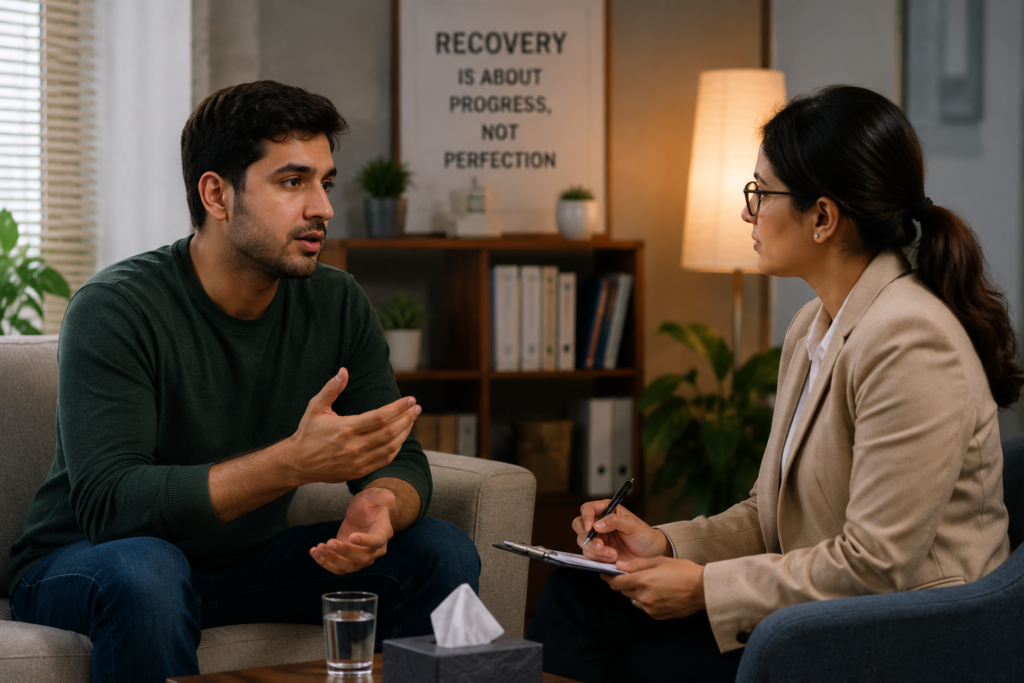
“A realistic image of an adult speaking with a professional counsellor about difficult thoughts and emotions during recovery”
Helping Individuals Understand Their Triggers
A trigger is something that may increase the desire to return to addictive behaviour. Triggers can be different for every person and may include certain people, places, emotions, memories, or situations.
For example, stress at work, family conflict, loneliness, or social pressure may create emotional discomfort. If an individual previously used addictive behaviour as a way to cope, these situations may become challenging during recovery.
Counselling can help individuals identify their personal triggers and understand how they affect thoughts, emotions, and behaviour.
Once triggers are recognised, a person can work with a professional to develop healthier responses. This may involve leaving a stressful situation, practising relaxation techniques, talking to someone supportive, or following a personal recovery plan.
Developing Healthy Coping Skills
One of the important roles of counselling in addiction recovery is helping individuals develop healthy coping skills. Life will continue to bring challenges, and recovery becomes stronger when people learn how to handle difficult situations without returning to unhealthy behaviours.
Counselling may help individuals explore different ways to manage stress and emotions, such as:
- Mindfulness and relaxation
- Physical activity
- Healthy hobbies
- Journaling
- Talking to trusted people
- Time management
- Problem-solving techniques
- Setting healthy boundaries
These skills can be practised gradually. Over time, individuals may become more confident in handling difficult emotions and everyday challenges.
The goal is to help a person build practical tools that can be used not only during treatment but also after returning to everyday life.
Counselling and Emotional Healing
Addiction can sometimes be connected with difficult emotions. Individuals may experience guilt, shame, anger, sadness, fear, or loneliness. These emotions can become particularly noticeable when addictive behaviour stops.
Counselling provides a safe environment where individuals can explore these feelings without unnecessary judgement. A professional can help them understand emotional patterns and learn healthier ways to respond.
Emotional healing does not mean forgetting the past. Instead, it involves understanding past experiences, accepting responsibility where appropriate, and learning from them.
With time and professional guidance, individuals may begin to develop greater self-awareness and emotional resilience.
Building Self-Confidence
Addiction can affect a person’s confidence and sense of self-worth. Repeated difficulties may lead individuals to believe that they cannot change or that recovery is impossible.
Counselling can help challenge these negative beliefs. Individuals can learn to recognise their strengths and focus on achievable goals.
Small steps can make a difference. Attending appointments, following a recovery routine, managing a difficult situation successfully, or maintaining healthy relationships can all contribute to growing confidence.
A counsellor can help individuals recognise progress that they may not notice themselves. This can encourage motivation and strengthen commitment to recovery.
Improving Family and Personal Relationships
Addiction can affect relationships with parents, partners, children, siblings, friends, and colleagues. Trust may be damaged, and communication may become difficult.
Counselling can help individuals understand how their behaviour has affected others and explore ways to improve communication. Learning to listen, accept responsibility, express feelings respectfully, and maintain healthy boundaries can support relationship rebuilding.
Family counselling may also be beneficial when appropriate. It can provide a structured environment where family members can discuss concerns and work toward healthier communication.
At Aarogya Sewa Samiti, family support and counselling are included in the broader recovery approach described by the organisation. Family involvement can provide encouragement while helping loved ones better understand the recovery process. (aarogyarehab.org)

“A realistic family counselling session showing an adult in recovery speaking with family members and a professional counsellor”
Counselling and Relapse Prevention
Relapse prevention is an important part of long-term recovery. Although every individual’s experience is different, recognising personal warning signs and preparing for difficult situations can be helpful.
Counselling can help individuals identify situations that may increase their risk of returning to addictive behaviour. These may include unmanaged stress, emotional distress, social pressure, isolation, or returning to unhealthy environments.
A personalised relapse-prevention plan may include:
- Identifying personal triggers
- Recognising early warning signs
- Creating a list of supportive contacts
- Maintaining healthy routines
- Continuing counselling when recommended
- Avoiding high-risk situations
- Seeking help when difficulties appear
At Aarogya Rehab, relapse prevention and aftercare are among the areas of support described on the organisation’s website. Continued support can help individuals remain connected with appropriate recovery resources after structured treatment.
Counselling for Co-Occurring Mental Health Concerns
Some individuals experiencing addiction may also face mental health concerns such as anxiety, depression, or other psychological difficulties. When these concerns occur together, they may require careful assessment and appropriate professional support.
Counselling can help individuals understand the relationship between their emotional well-being and addictive behaviour. It can also help identify situations where additional medical or psychological care may be appropriate.
At Aarogya Rehab and Aarogya Sewa Samiti, the organisation describes support involving psychiatrists, psychologists, counsellors, medical professionals, nurses, and other team members. A multidisciplinary approach can help address different aspects of an individual’s needs.
Professional assessment is important because every person’s situation is different. Treatment should be based on individual needs rather than a single approach.
The Importance of Consistency
Counselling is most useful when individuals remain engaged with the recovery process. Attending sessions regularly, being honest about challenges, and practising skills between sessions can help make counselling more meaningful.
Progress may not always be immediate. Some individuals may experience difficult days or feel discouraged. This does not necessarily mean that treatment is not working.
Recovery is a gradual process. The ability to recognise challenges, seek support, and continue working toward healthier choices is itself an important part of progress.
Counselling can provide ongoing guidance as individuals move through different stages of recovery.

“A realistic, hopeful image of an adult attending a counselling session and showing positive progress during recovery”
How Families Can Support Counselling
Family members can support the counselling process by encouraging treatment and respecting the individual’s privacy. They can also learn more about addiction and understand that recovery involves both challenges and progress.
Families may help by:
- Encouraging regular treatment
- Listening without unnecessary judgement
- Supporting healthy routines
- Avoiding constant criticism
- Respecting professional guidance
- Maintaining appropriate boundaries
- Participating in family counselling when recommended
At the same time, families should also care for their own emotional well-being. Supporting someone in recovery does not mean accepting harmful behaviour or ignoring personal boundaries.
Counselling After Rehabilitation
Recovery does not necessarily end when a person leaves a rehabilitation centre. Returning to everyday life can introduce new responsibilities, social situations, and emotional challenges.
Aftercare and continued counselling may help individuals maintain the progress they made during treatment. Ongoing support can provide an opportunity to discuss new challenges before they become overwhelming.
At Aarogya Sewa Samiti, aftercare and relapse prevention are described as components of the broader recovery process. Continued professional guidance can help individuals stay connected with healthy recovery goals.
The appropriate length and type of counselling will vary from person to person. Professional guidance can help determine what level of ongoing support is suitable.
Final Thoughts
The role of counselling in addiction recovery extends beyond simply discussing addiction. It can help individuals understand triggers, manage emotions, develop coping skills, rebuild confidence, improve relationships, and prepare for challenges that may arise in the future.
Counselling works alongside other aspects of recovery, which may include medical care, detoxification, psychological support, healthy lifestyle practices, family involvement, relapse prevention, and aftercare.
At Aarogya Rehab and Aarogya Sewa Samiti, counselling and psychological support form part of a broader approach designed to help individuals work toward recovery and improved well-being.
If you or someone you care about is struggling with addiction, seeking professional guidance can be an important first step. Recovery is a personal journey, and with appropriate support, patience, and commitment, individuals can learn healthier ways to manage challenges and build a more stable future.