Understanding how sleep affects your mental health is essential for improving emotional stability, cognitive functioning, and overall psychological well-being. Poor sleep disrupts mood, increases anxiety, weakens memory, and raises the risk of long-term mental health disorders. This guide explains the science behind sleep, common sleep-related mental challenges, and actionable steps to restore balance.
How Sleep Affects Your Mental Health
Sleep plays a vital role in maintaining emotional strength, cognitive clarity, and long-term psychological resilience. When people reduce or compromise their sleep quality, the brain struggles to regulate emotions, stress hormones increase, and daily functioning becomes harder. By understanding how sleep affects your mental health, individuals can make lifestyle changes that protect both their mind and body.
A large number of rehabilitation and wellness programs—including the compassionate initiatives run by Arogya Sewa Samiti—emphasise sleep hygiene as a foundational step in emotional healing. This connection between restful sleep and mental wellness is now strongly supported by neuroscience and clinical psychology.
Why Sleep Matters for Mental Health
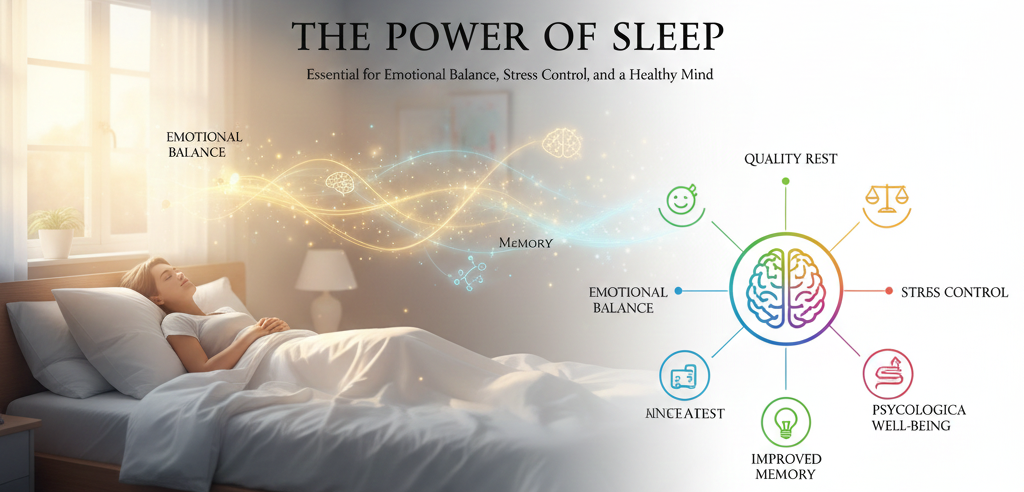
Sleep is not merely rest—it’s an active biological process where the brain repairs itself, restores emotional balance, and processes memories. When sleep is disrupted, mental health suffers in predictable and scientifically validated ways. To fully understand how sleep affects your mental health, it’s important to examine each component of sleep’s impact.
1. Sleep Regulates Mood
Sleep has a direct, measurable effect on emotional regulation, one of the strongest indicators of mental health.
What Happens During Good Sleep
-
The brain reduces the intensity of negative emotions.
-
The amygdala (fear & anxiety center) calms down.
-
Emotional stress from the day is processed safely.
-
You wake up feeling emotionally stable and more resilient.
What Happens During Poor Sleep
Without good sleep, people experience:
-
Irritability
-
Mood swings
-
Low frustration tolerance
-
Heightened emotional sensitivity
Research from the National Institute of Mental Health shows that even one night of poor rest can make the amygdala 60% more reactive.
This demonstrates clearly how sleep affects your mental health from day one.
2. Sleep Reduces Anxiety Levels
Anxiety and sleep are deeply interconnected. Poor sleep increases anxiety, and anxiety reduces sleep quality, creating a frustrating cycle.
Why This Happens:
-
The brain cannot complete emotional-processing cycles.
-
Stress hormones (especially cortisol) rise overnight.
-
Thought patterns become more rigid and repetitive.
This is why people with insomnia often report racing thoughts, panic attacks, or morning anxiety.
3. Sleep Improves Logical Thinking and Decision-Making
Good sleep ensures the prefrontal cortex—a region responsible for judgment and decision-making—functions smoothly.
Sleep Helps You:
-
Make rational choices
-
Solve problems
-
Think clearly
-
Control impulses
This is particularly important for people in recovery, where emotional control and clarity directly affect success.
4. Sleep Protects Memory and Learning Abilities
Memory consolidation happens during REM and deep sleep.
Lack of sleep leads to:
-
Forgetfulness
-
Poor concentration
-
Difficulty learning new information
-
Mental confusion
This is also why students or professionals with chronic sleep loss perform poorly despite working longer hours.
The Connection: How Sleep Affects Your Mental HealthHow sleep affects your mental health is deeply tied to cognitive function, particularly memory. Memory consolidation, the process of stabilizing a memory trace after its initial acquisition, happens primarily during REM and deep sleep cycles.
When there is a lack of sleep, the negative outcomes clearly illustrate how sleep affects your mental health:
-
Forgetfulness
-
Poor concentration
-
Difficulty learning new information
-
Mental confusion
This diminished cognitive performance is why students or professionals suffering from chronic sleep loss often perform poorly, despite the effort they put in; the brain simply cannot process and retain information effectively without sufficient restorative rest.
5. Sleep Balances Stress Hormones
Sleep resets the body’s stress response system.
During restful sleep:
-
Cortisol levels normalise
-
Heart rate stabilises
-
Muscles relax
-
The brain recalibrates
Poor sleep, on the other hand, keeps the body in a mild state of “fight or flight.”
This constant stress response is one of the main mechanisms explaining how sleep affects your mental health negatively.
6. Sleep Strengthens Emotional Resilience
People who sleep well recover faster from emotional setbacks.
They feel more hopeful, confident, and capable of handling challenges.
Without consistent sleep, small problems feel overwhelming, and emotional burnout sets in more quickly.
7. Sleep Prevents Depression
Chronic sleep loss is one of the strongest predictors of depression.
How Sleep Impacts Depression:
-
Disrupts neurotransmitters like serotonin
-
Reduces motivation
-
Increases feelings of worthlessness
-
Causes fatigue that mimics depressive symptoms
Improving sleep hygiene alone can reduce depressive symptoms by up to 40% according to recent clinical studies.
8. Sleep Boosts Social Behaviour and Relationships
Good sleep improves:
-
Empathy
-
Patience
-
Communication
-
Social awareness
Poor sleep causes people to misread facial expressions and interpret neutral comments as negative.
This creates misunderstandings, conflicts, and emotional distance.
9. Sleep Supports Recovery from Addiction and Trauma
People healing from addiction or trauma experience greater emotional instability, making sleep hygiene essential.
Why Sleep Is Crucial in Recovery:
-
The brain needs more time to heal from stress
-
Emotional triggers are stronger
-
Cognitive functioning is often impaired
-
Relapse risk increases with fatigue
This is why rehabilitation centers emphasize sleep improvement as a core therapeutic goal.
10. Sleep Enhances Overall Psychological Well-Being
Good sleep contributes to:
-
Higher self-esteem
-
Better motivation
-
Calm thinking
-
Improved physical health
-
Greater life satisfaction
Simply put, sleep builds the foundation for long-term mental health, and this is how sleep affects your mental health.

How to Improve Sleep for Better Mental Health
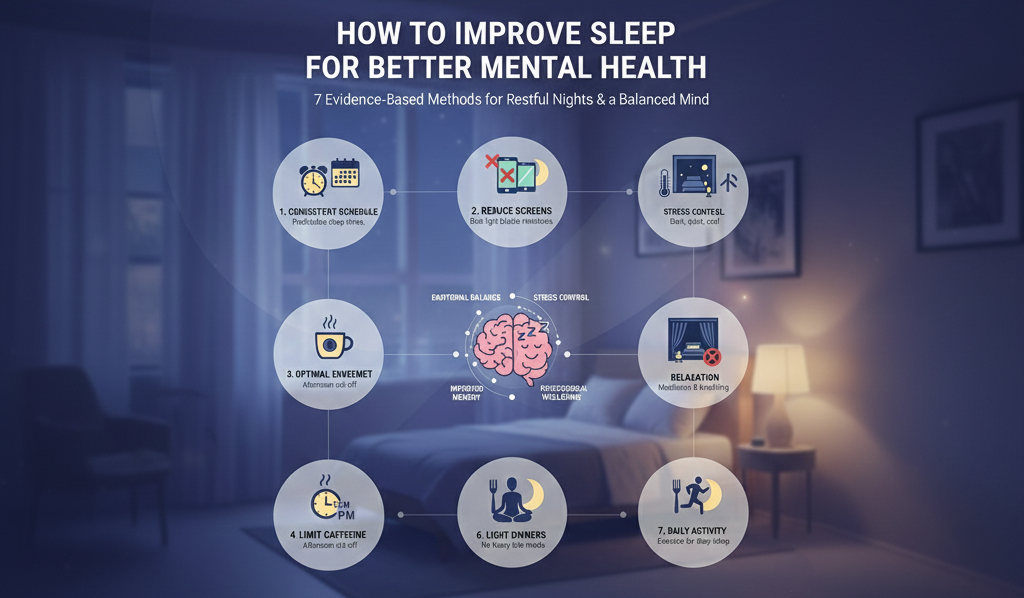
To protect your mental well-being, it is necessary to adopt habits that support healthy sleep cycles. Here are evidence-based methods to improve how sleep affects your mental health :
1. Maintain a consistent sleep schedule
Your brain functions better with predictable sleeping and waking times.
2. Reduce screen usage before bedtime
Blue light interferes with melatonin, the hormone that induces sleep.
3. Create a dark, quiet, cool sleep environment
The brain associates darkness with rest and recovery.
4. Limit caffeine after noon
Caffeine stays in the body for up to 8 hours.
5. Practice relaxation techniques
Meditation, deep breathing, and progressive relaxation ease mental tension.
6. Avoid heavy meals close to bedtime
A calm digestive system supports deeper sleep.
7. Engage in daily physical activity
Exercise reduces anxiety and promotes restful sleep.
Conclusion
Good sleep is one of the most powerful tools for improving emotional stability and long-term mental wellness. By understanding how sleep affects your mental health, individuals can identify harmful patterns, adjust daily habits, and create a supportive environment that nurtures healing. Whether you struggle with anxiety, depression, stress, or cognitive difficulties, prioritising sleep can significantly reduce symptoms and restore emotional balance.
Rehabilitation specialists also encourage sleep optimisation as part of the psychological recovery process. A well-rested mind makes therapy more effective, improves decision-making, and strengthens confidence. If sleep problems are connected to addiction or mental health struggles, seeking professional support from one of the best rehab centres in Dehradun – Aarogya Sewa Samiti, can help you regain control and rebuild a healthier future.