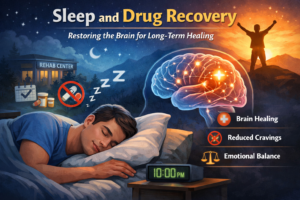
Sleep is often ignored, especially by school-going and college-going students who stay up late studying, scrolling, or socializing. But when substance use enters the picture, lack of sleep becomes more than just tiredness—it directly affects recovery. Sleep and Drug Recovery are deeply connected, and without proper rest, healing becomes slower and more difficult.
In Aarogya Sewa Samiti , sleep is not treated as a luxury but as a core part of recovery therapy. Quality sleep helps the brain repair itself, regulate emotions, and regain balance after substance abuse. This article explains why rest is essential for brain healing, how sleep supports addiction recovery, and what students can do to improve sleep during recovery.
Sleep and Drug Recovery – Why Rest Is Important for Brain Healing
Understanding the Connection Between Sleep and Drug Recovery
Addiction disrupts the brain’s natural rhythm, including sleep cycles. Drugs and alcohol interfere with REM sleep, deep sleep, and hormone balance. Even after quitting substances, sleep problems often continue.
Sleep and Drug Recovery are linked because:
• The brain heals mainly during deep sleep
• Sleep restores damaged neural pathways
• Proper rest reduces cravings and relapse risk
Without adequate sleep, recovery becomes emotionally and mentally exhausting.
Importance of Sleep in Addiction Recovery
The importance of sleep in addiction recovery cannot be overstated. Sleep is when the brain resets, repairs, and strengthens itself.
Key reasons sleep is essential during recovery:
• Reduces stress and anxiety
• Improves emotional control
• Strengthens decision-making skills
• Supports long-term sobriety
For students, good sleep also improves concentration, memory, and academic performance during recovery.

How Addiction Damages Sleep Patterns
Effects of Drugs and Alcohol on Sleep
• Alcohol may cause drowsiness but blocks deep sleep
• Stimulants and drugs cause insomnia
• Withdrawal symptoms disturb sleep cycles
• Irregular sleep increases mood swings
This creates a cycle where poor sleep increases cravings, and cravings disrupt sleep even more.
Role of Sleep in Brain Repair After Addiction
The role of sleep in brain repair is one of the most important yet overlooked aspects of recovery.
During sleep, the brain:
• Removes toxins accumulated from substance use
• Repairs damaged brain cells
• Rebuilds neural connections (neuroplasticity)
• Balances dopamine and serotonin levels
Deep sleep restores areas of the brain responsible for memory, self-control, and emotional regulation.
Sleep, Mental Health, and Emotional Stability
Recovery is not just physical—it is emotional and psychological. Lack of sleep increases anxiety, depression, irritability, and impulsive behavior.
Benefits of sleep for mental healing:
• Improves mood and motivation
• Enhances emotional resilience
• Reduces negative thinking
• Builds confidence and self-control
Sleep and Craving Control
Cravings are one of the biggest challenges in addiction recovery.
Research shows that:
• Sleep deprivation increases stress hormones
• Poor sleep weakens impulse control
• Well-rested brains resist cravings better
Sleep and Drug Recovery work together to reduce relapse risk.
Why Students in Recovery Need Extra Sleep Support
School-going and college-going students face academic pressure, peer influence, social stress, and digital addiction, all of which directly affect Sleep and Drug Recovery. Managing these challenges is essential because healthy sleep habits strengthen Sleep and Drug Recovery and support mental focus and emotional balance.
Healthy sleep helps students:
• Focus better in studies
• Manage peer pressure
• Reduce anxiety
• Stay committed to recovery
Sleep-Focused Practices in Nasha Mukti Kendras
Modern Nasha Mukti Kendras treat sleep as a therapeutic tool.
Common practices include:
• Fixed sleep and wake schedules
• Meditation and relaxation therapy
• Sound therapy and calming music
• Counseling for insomnia
• Reduced screen exposure at night
Simple Sleep Tips for Students in Drug Recovery
Practical sleep improvement tips:
• Sleep and wake up at the same time daily
• Avoid caffeine and screens before bedtime
• Practice deep breathing
• Keep the room dark and quiet
• Avoid long daytime naps
Long-Term Benefits of Proper Sleep in Recovery
Proper sleep leads to:
• Faster brain healing
• Better emotional balance
• Lower relapse risk
• Improved academic performance
• Stronger self-discipline

Summary: Sleep Is the Foundation of Brain Healing
Here’s your paragraph with Nasha Mukti Kendra added naturally and clearly:
Sleep is not optional in addiction recovery—it is essential. From repairing brain cells to controlling cravings, the importance of sleep in addiction recovery is undeniable. In a Nasha Mukti Kendra, proper rest supports healing, emotional stability, and personal growth, especially for students.
Call to Action
Here’s the revised sentence with Sleep and Drug Recovery added naturally and strongly (without sounding stuffed):
Seek support from a trusted Nasha Mukti Kendra that understands the deep connection between Sleep and Drug Recovery, focusing on holistic healing through Sleep and Drug Recovery programs that include sleep therapy, mental health care, and lifestyle rebuilding. True Sleep and Drug Recovery begins with proper rest.
Frequently Asked Questions
Why is sleep important during drug recovery?
Sleep repairs brain damage, reduces cravings, and improves emotional stability during recovery.
Can poor sleep cause relapse?
Yes. Lack of sleep increases stress and weakens decision-making, raising relapse risk.
How much sleep is needed during recovery?
Most people need 7–9 hours of quality sleep, especially during early recovery.
Do Nasha Mukti Kendras treat sleep problems?
Yes. Many centers include sleep therapy, counseling, and relaxation techniques.
Can better sleep help students academically?
Yes. Proper sleep improves focus, memory, and emotional control.