Recovery from addiction is a life-changing achievement, but maintaining sobriety requires continuous effort and commitment. Many individuals successfully complete treatment programs, yet the risk of relapse remains a challenge throughout recovery.
Relapse does not mean failure. Instead, it often indicates that recovery strategies need strengthening or additional support is needed. Understanding how to prevent relapse can help individuals protect their progress and continue building a healthier future.
At Aarogya Rehab, operated under Aarogya Sewa Samiti and supported by Aarogya Sewa Samiti Dehradun, relapse prevention is considered a vital part of long-term recovery. Through counseling, therapy, family support, and aftercare services, individuals learn practical ways to maintain sobriety and avoid returning to substance use.
What Is Relapse?
Relapse occurs when a person returns to alcohol or drug use after a period of sobriety.
Recovery is not always a straight path. Many individuals experience challenges, cravings, or emotional struggles during recovery. This is why having a relapse prevention plan is essential.
Professional rehabilitation programs teach individuals how to recognize risks and respond effectively before relapse occurs.
Why Relapse Prevention Matters
Without proper planning, everyday stress, emotional difficulties, or environmental triggers can increase the risk of returning to substance use.
Effective relapse prevention helps individuals:
• Maintain long-term sobriety
• Build self-confidence
• Improve emotional stability
• Strengthen coping skills
• Protect physical health
• Improve relationships
• Reduce stress and anxiety
By learning practical recovery skills, individuals can confidently manage life’s challenges without relying on alcohol or drugs.
1. Identify Personal Triggers
One of the most effective relapse prevention strategies is identifying personal triggers.
Triggers are situations, emotions, people, or environments that increase the desire to use substances.
Common triggers include:
- Stress
- Loneliness
- Anxiety
- Financial problems
- Social pressure
- Relationship conflicts
- Certain locations
Recognizing these triggers allows individuals to prepare healthy responses before problems arise.

“The first step to overcoming triggers is recognizing them”
2. Build a Strong Support Network
Recovery should never be faced alone.
Having supportive family members, friends, counselors, and recovery groups creates a safety net during difficult times.
A strong support network can provide:
• Emotional encouragement
• Accountability
• Practical guidance
• Motivation to stay sober
• Crisis support when needed
At Aarogya Rehab, patients are encouraged to build healthy support systems that continue long after treatment ends.
3. Attend Counseling Regularly
Professional counseling remains one of the most valuable tools in addiction recovery.
Counseling helps individuals:
- Understand emotional triggers
- Manage stress
- Address unresolved trauma
- Improve decision-making skills
- Strengthen coping mechanisms
Regular sessions allow individuals to discuss challenges before they become serious threats to recovery.
4. Follow a Structured Daily Routine
A predictable daily schedule can significantly reduce relapse risk.
When people have too much unstructured time, boredom and negative thinking often increase.
A healthy routine may include:
• Work or education
• Exercise
• Counseling sessions
• Recovery meetings
• Family time
• Healthy meals
• Relaxation activities
Structure creates stability and helps individuals remain focused on recovery goals.

“Every well-planned day is another step toward a stronger future”
5. Practice Effective Stress Management
Stress is one of the most common causes of relapse.
Many individuals previously used alcohol or drugs as a way to cope with stress. Learning healthier alternatives is essential for long-term sobriety.
Effective stress management techniques include:
- Meditation
- Deep breathing exercises
- Yoga
- Physical exercise
- Journaling
- Mindfulness practices
These techniques help individuals manage emotions without turning to substances.
6. Avoid High-Risk Situations
Avoiding temptation is an important part of relapse prevention.
Certain environments may be strongly associated with past substance use.
Examples include:
• Bars and clubs
• Parties involving alcohol
• Drug-using social circles
• Stressful gatherings
• Toxic relationships
Choosing healthier environments supports recovery and reduces unnecessary risk.
Understanding the Stages of Relapse
Many people assume relapse begins when substance use occurs. In reality, relapse often develops gradually.
The three common stages include:
Emotional Relapse
During emotional relapse, individuals may experience:
- Mood swings
- Anxiety
- Isolation
- Poor self-care
- Increased stress
Mental Relapse
Mental relapse often includes:
• Thinking about past substance use
• Romanticizing addiction
• Craving alcohol or drugs
• Planning opportunities to use
Physical Relapse
This occurs when actual substance use begins again.
Recognizing emotional and mental warning signs early can help prevent physical relapse.
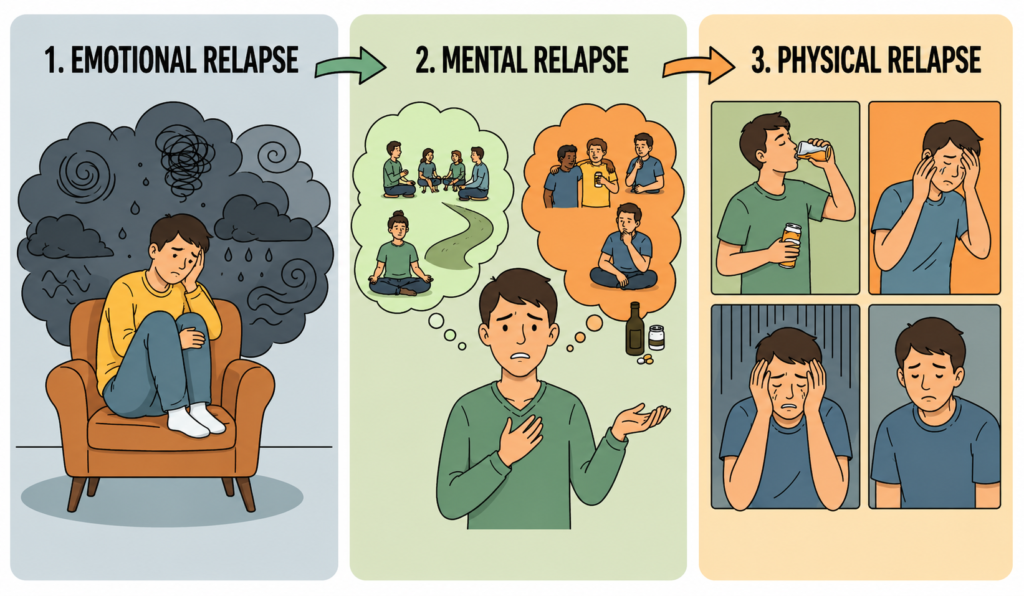
“Awareness of relapse stages is a key component of successful addiction recovery programs”
7. Focus on Physical Health
Physical wellness plays a major role in successful recovery.
Substance abuse often damages the body, weakens the immune system, and affects overall health. Rebuilding physical strength can improve both emotional and mental well-being.
Healthy habits that support recovery include:
- Regular exercise
- Balanced nutrition
- Proper hydration
- Quality sleep
- Routine health checkups
- Avoiding unhealthy habits
Physical health improvements often increase motivation and confidence during recovery.
8. Participate in Support Groups
Support groups provide a safe space where individuals can connect with others who understand the recovery journey.
Sharing experiences helps reduce feelings of isolation and builds confidence.
Benefits of support groups include:
• Emotional encouragement
• Accountability
• Shared coping strategies
• Recovery motivation
• Long-term social support
At Aarogya Rehab, individuals are encouraged to remain connected with recovery communities even after completing treatment.
9. Develop Healthy Hobbies and Interests
One of the most effective relapse prevention strategies is replacing harmful habits with meaningful activities.
Many people used substances to fill emotional voids, cope with boredom, or escape daily stress.
Healthy hobbies may include:
- Reading
- Gardening
- Sports
- Music
- Painting
- Volunteering
- Learning new skills
Positive activities provide purpose and help create a fulfilling lifestyle that supports sobriety.

“Healthy hobbies transform free time into opportunities for growth and healing”
10. Learn to Recognize Early Warning Signs
Relapse rarely happens without warning.
Most individuals experience emotional or behavioral changes before returning to substance use.
Common warning signs include:
• Increased stress
• Isolation from loved ones
• Skipping counseling sessions
• Loss of motivation
• Mood swings
• Poor sleep habits
• Negative thinking patterns
Recognizing these signs early allows individuals to seek help before problems become serious.
11. Create an Emergency Recovery Plan
Every person in recovery should have a plan for managing difficult situations.
An emergency recovery plan helps individuals respond quickly when cravings or emotional challenges arise.
A good plan may include:
- Contacting a counselor
- Calling a trusted family member
- Attending a support meeting
- Practicing relaxation techniques
- Leaving high-risk environments
- Reviewing recovery goals
Having a clear action plan can prevent impulsive decisions and strengthen recovery.
12. Stay Connected With Aftercare Services
Recovery does not end after leaving a rehabilitation center.
Ongoing support is often necessary to maintain long-term sobriety.
Aftercare services may include:
• Continued counseling
• Support group participation
• Recovery coaching
• Family therapy
• Follow-up assessments
• Relapse prevention workshops
At Aarogya Rehab, aftercare planning is considered an essential part of successful recovery because ongoing guidance reduces the likelihood of relapse.
The Importance of Family Support in Relapse Prevention
Addiction affects entire families, not just individuals.
Family members often experience emotional stress, trust issues, and communication challenges during addiction and recovery.
Family involvement can significantly improve recovery outcomes by providing:
- Encouragement
- Accountability
- Understanding
- Emotional support
- Healthy communication
- Professional family counseling programs help loved ones become active participants in the recovery process.
At Aarogya Sewa Samiti Dehradun, family support is recognized as an important component of long-term healing and recovery.
How Aarogya Rehab Helps Prevent Relapse
Successful recovery requires more than detoxification alone.
Aarogya Rehab, operating under Aarogya Sewa Samiti, provides comprehensive treatment programs that focus on sustainable recovery and relapse prevention.
Their services include:
- Medical detoxification
- Individual counseling
- Group therapy
- Family counseling
- Mental health support
- Yoga and meditation
- Lifestyle development programs
- Aftercare planning
By addressing both the physical and emotional aspects of addiction, individuals are better prepared to maintain sobriety after treatment.
The Role of Lifestyle Changes in Long-Term Recovery
Recovery becomes stronger when healthy habits become part of everyday life.
Lifestyle improvements help individuals develop resilience and reduce the likelihood of relapse.
Important recovery habits include:
• Maintaining healthy relationships
• Following a consistent schedule
• Prioritizing self-care
• Practicing mindfulness
• Managing stress effectively
• Seeking support when needed
• Setting personal goals
These positive choices strengthen confidence and create a healthier future.

“Inner peace is a powerful foundation for lasting change”
Final Thoughts
Preventing relapse is an ongoing process that requires awareness, preparation, and support. While challenges may arise during recovery, having the right strategies can make a significant difference.
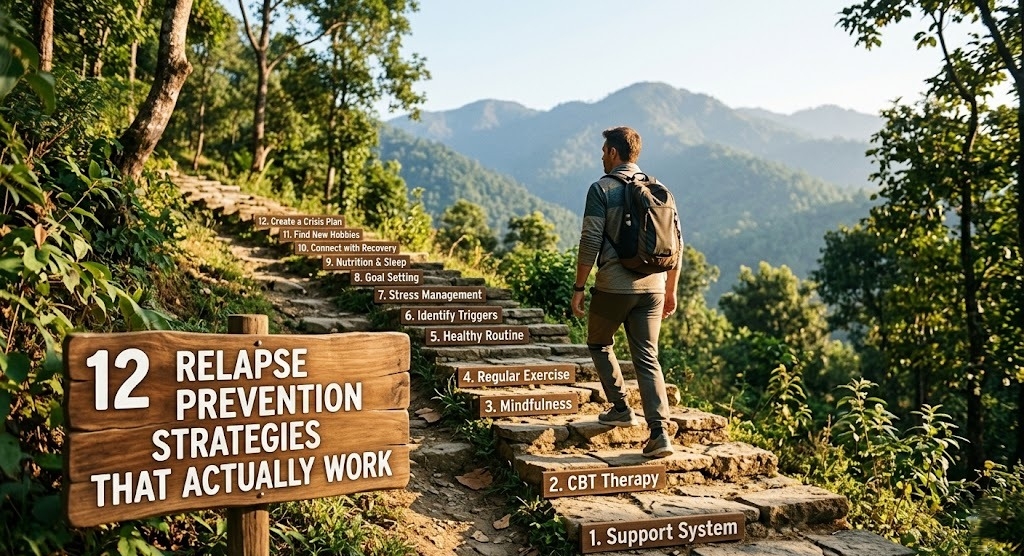
These 12 Relapse Prevention Strategies That Actually Work help individuals recognize risks, manage triggers, maintain healthy routines, and build strong support systems that protect long-term sobriety.
With professional guidance from Aarogya Rehab, support from Aarogya Sewa Samiti, and the dedicated recovery programs of Aarogya Sewa Samiti Dehradun, individuals can strengthen their recovery journey and continue building a healthier, substance-free life.
Recovery is not about perfection. It is about making positive choices every day and staying committed to a brighter future.