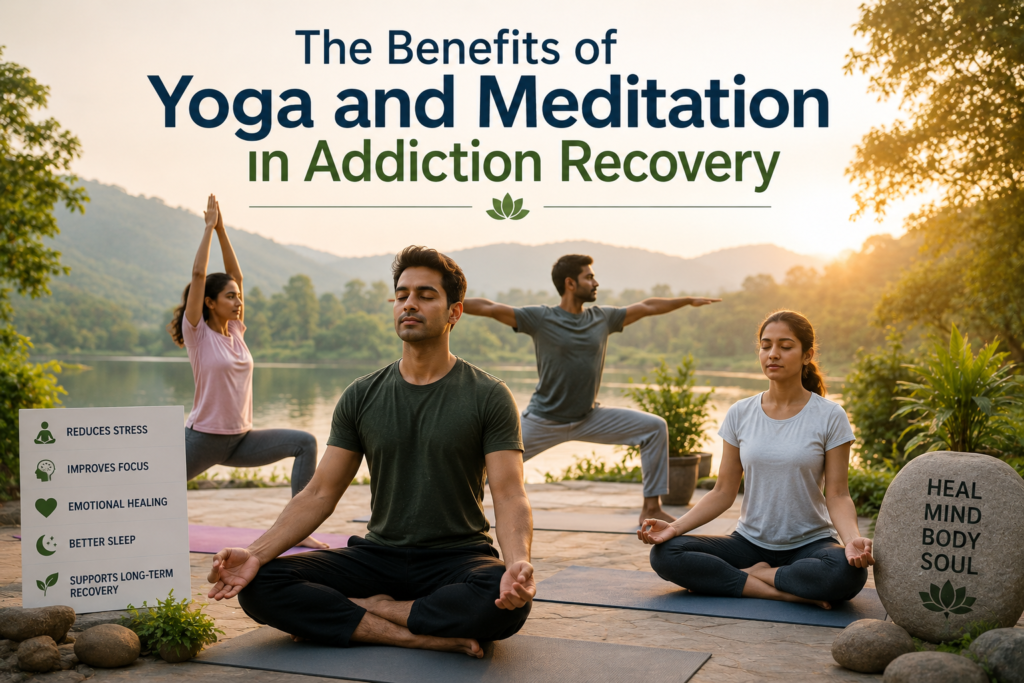
Addiction recovery is about much more than stopping the use of drugs or alcohol. It is a journey of healing the body, calming the mind, and rebuilding emotional strength. While medical detoxification and counseling remain the foundation of treatment, complementary therapies such as yoga and meditation are becoming increasingly important in modern rehabilitation programs.
Understanding The Benefits of Yoga and Meditation in Addiction Recovery can help individuals and families appreciate how these practices support long-term healing. Yoga and meditation improve physical health, reduce stress, strengthen emotional resilience, and encourage healthier lifestyle habits that make recovery more sustainable.
At Aarogya Rehab, operated by Aarogya Sewa Samiti, holistic wellness activities are integrated with evidence-based treatment to help individuals recover physically, mentally, and emotionally.
Why Holistic Healing Matters in Recovery
Addiction affects every part of a person’s life. It impacts physical health, emotional stability, relationships, and mental well-being.
Successful rehabilitation addresses more than physical dependence. Individuals also need healthy ways to manage stress, emotions, cravings, and daily challenges after treatment.
Yoga and meditation complement counseling and medical care by promoting overall wellness. These practices help individuals develop healthier coping skills that continue long after rehabilitation is complete.
Understanding Yoga in Addiction Recovery
Yoga is an ancient practice that combines physical postures, breathing techniques, and relaxation exercises. It encourages balance between the body and mind while improving overall health.
Unlike intense exercise programs, yoga is suitable for people of different ages and fitness levels. Many rehabilitation centres include gentle yoga sessions that focus on relaxation, flexibility, and emotional healing.
Regular practice helps individuals reconnect with their bodies after the physical and emotional effects of substance abuse.
What Is Meditation?
Meditation is the practice of calming the mind by focusing attention on breathing, thoughts, or the present moment.
People recovering from addiction often experience racing thoughts, anxiety, guilt, or emotional stress. Meditation teaches individuals to observe these feelings without reacting impulsively.
Over time, this practice improves emotional control and helps people respond more calmly to difficult situations.
Physical Benefits of Yoga During Recovery
Substance abuse can weaken the body, reduce energy levels, and affect overall health.
Yoga supports physical recovery by improving:
- Flexibility.
- Balance.
- Muscle strength.
- Blood circulation.
- Posture.
- Breathing capacity.
Gentle stretching also reduces physical tension that often accompanies stress and anxiety.
As physical health improves, individuals usually experience greater motivation to maintain healthy routines.

“Finding peace, balance, and healing on the path to sobriety”
Reducing Stress Naturally
Stress is one of the most common triggers for relapse.
Yoga combines movement with controlled breathing, helping activate the body’s natural relaxation response.
Meditation also reduces stress by encouraging mindfulness and emotional awareness.
Together, these practices help individuals:
- Feel calmer.
- Sleep better.
- Improve concentration.
- Respond positively to challenges.
Managing stress naturally reduces dependence on unhealthy coping methods.
Managing Anxiety and Depression
Many individuals entering rehabilitation struggle with anxiety or depression.
Although professional mental health treatment remains essential, yoga and meditation may complement therapy by improving emotional well-being.
Regular practice may help:
- Reduce anxious thoughts.
- Improve mood.
- Increase relaxation.
- Enhance emotional balance.
- Promote positive thinking.
These benefits make daily recovery feel more manageable.
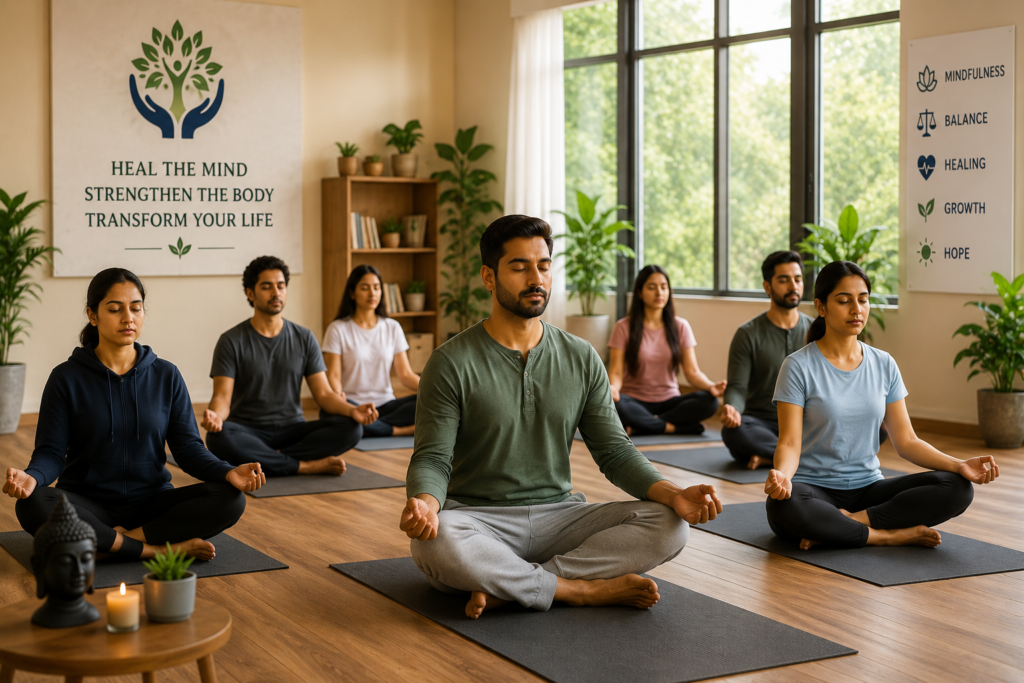
“Mental wellness is an essential part of recovery, helping individuals find balance, clarity, and inner strength”
Improving Sleep Quality
Sleep disturbances are common during addiction recovery.
Poor sleep affects mood, concentration, and emotional stability.
Yoga and meditation encourage relaxation before bedtime, making it easier to fall asleep naturally.
Better sleep contributes to:
- Improved energy.
- Better memory.
- Emotional resilience.
- Physical healing.
- Mental clarity.
Healthy sleep supports overall recovery and reduces daily stress.
Strengthening Self-Awareness
Addiction often causes individuals to lose touch with their emotions and physical well-being.
Yoga encourages people to pay attention to their breathing, posture, and physical sensations.
Meditation develops awareness of thoughts and emotions without judgment.
Greater self-awareness helps individuals:
- Recognize emotional triggers.
- Make healthier decisions.
- Build confidence.
- Practice self-control.
These skills become valuable tools for long-term recovery.
Developing Healthy Daily Habits
Recovery becomes stronger when healthy routines replace harmful behaviors.
Yoga and meditation encourage consistency, discipline, and self-care.
Many individuals begin incorporating these activities into their daily schedules alongside:
- Healthy eating.
- Exercise.
- Counseling.
- Journaling.
- Adequate sleep.
Positive routines reduce boredom and help create a balanced lifestyle after rehabilitation.
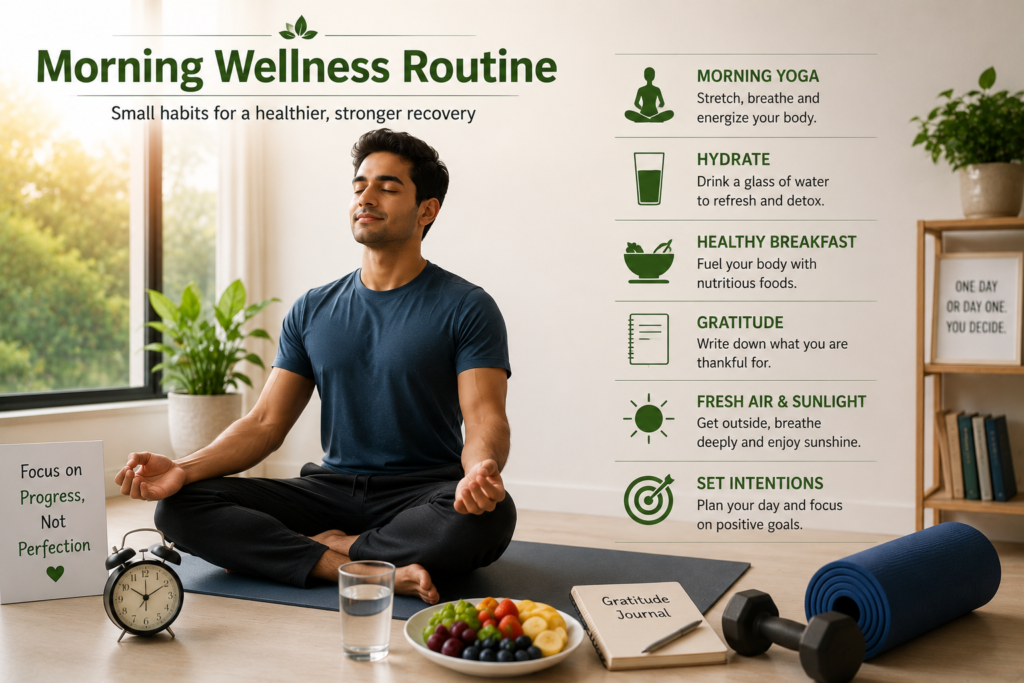
“A consistent morning wellness routine that includes yoga, mindfulness, hydration, and healthy nutrition lays a strong foundation for lasting addiction recovery”
Supporting Professional Treatment
Yoga and meditation should not replace medical detoxification, counseling, or prescribed treatment.
Instead, they work alongside professional rehabilitation services to improve overall outcomes.
At Aarogya Rehab, holistic wellness practices are carefully integrated with counseling, behavioral therapy, and individualized treatment plans provided through Aarogya Sewa Samiti.
This comprehensive approach addresses both addiction and overall well-being, increasing the likelihood of lasting recovery.
Building Emotional Resilience
Recovery involves learning how to handle difficult emotions without turning to drugs or alcohol. Yoga and meditation help individuals become more emotionally resilient by teaching patience, self-control, and acceptance.
Instead of reacting impulsively to stress or frustration, individuals learn to pause, breathe, and make healthier choices. These emotional skills become valuable tools for overcoming everyday challenges.
With regular practice, many people feel more confident in managing life’s ups and downs while staying committed to recovery.
How Mindfulness Helps Prevent Relapse
Mindfulness is an important part of meditation that encourages awareness of the present moment. Instead of dwelling on past mistakes or worrying about the future, individuals learn to focus on what is happening now.
Mindfulness can help people recognize cravings before they become overwhelming. This awareness allows them to use healthy coping techniques instead of returning to substance use.
Some practical mindfulness activities include:
- Deep breathing exercises.
- Guided meditation.
- Body scan relaxation.
- Mindful walking.
- Quiet reflection.
These practices strengthen emotional control and support long-term recovery.
Improving Relationships Through Inner Balance
Addiction often damages relationships with family members, friends, and colleagues. Emotional healing is an important step toward rebuilding trust.
Yoga and meditation encourage patience, empathy, and better communication. As individuals become calmer and more emotionally balanced, they often find it easier to express themselves and resolve conflicts peacefully.
Improved relationships provide encouragement and create a stronger support system during recovery.
Combining Yoga, Meditation, and Counseling
The most successful rehabilitation programs combine multiple treatment approaches.
Medical care addresses physical dependence, counseling explores emotional and behavioral patterns, while yoga and meditation promote overall wellness.
This integrated approach offers several advantages:
- Better stress management.
- Improved concentration.
- Stronger emotional stability.
- Increased motivation.
- Healthier lifestyle habits.
- Reduced relapse risk.
Working together, these therapies provide comprehensive support throughout the recovery journey.
Tips for Starting Yoga and Meditation
Beginning these practices does not require advanced experience or expensive equipment.
Simple steps include:
- Start with 10–15 minutes each day.
- Practice gentle stretches.
- Focus on slow, deep breathing.
- Choose a quiet environment.
- Follow qualified instructors.
- Be patient and consistent.
Progress develops gradually, and regular practice is more important than perfection.
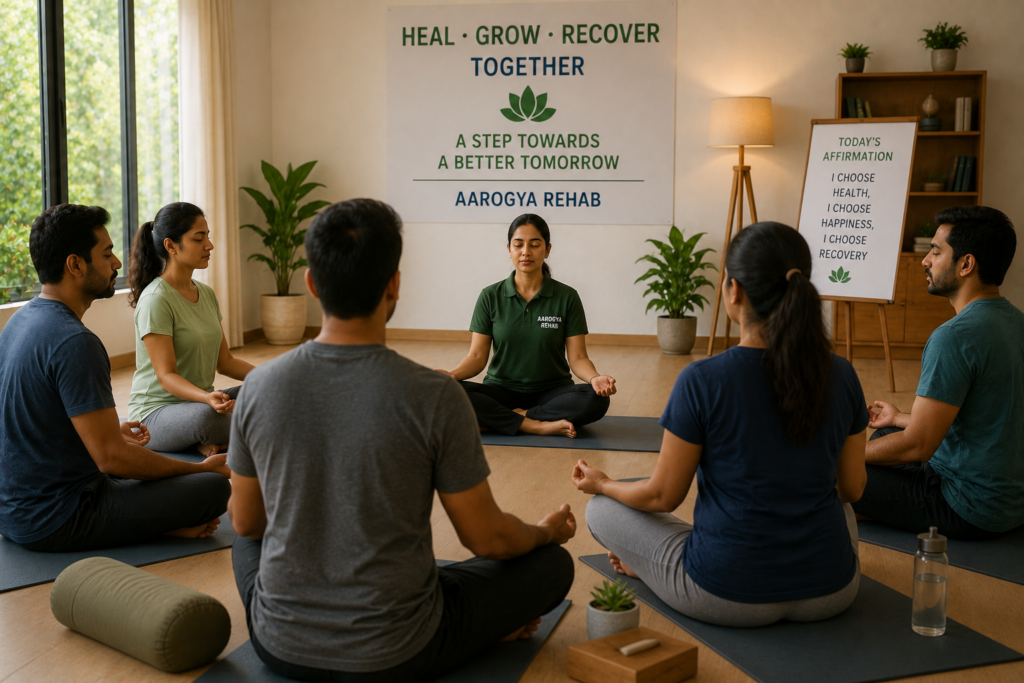
“Meditating together creates a supportive environment that promotes healing, mindfulness, and lasting recovery”
How Aarogya Rehab Supports Holistic Recovery
Aarogya Rehab, under Aarogya Sewa Samiti, believes that lasting recovery requires caring for both the body and mind.
Along with evidence-based medical treatment, counseling, and behavioral therapy, rehabilitation programs encourage healthy lifestyle practices that promote overall well-being.
By integrating yoga, meditation, physical wellness activities, emotional support, and professional guidance, the organization helps individuals build healthier habits that continue long after formal treatment ends.
This comprehensive approach empowers patients to regain confidence, improve emotional balance, and create a strong foundation for lifelong recovery.
Long-Term Benefits of Yoga and Meditation
Practicing yoga and meditation regularly can provide lasting improvements that extend well beyond rehabilitation.
Physical Benefits
- Increased flexibility.
- Better posture.
- Improved energy.
- Healthier sleep.
- Enhanced physical fitness.
Mental and Emotional Benefits
- Reduced stress.
- Better emotional balance.
- Improved focus.
- Greater self-awareness.
- Increased confidence.
Recovery Benefits
- Healthier coping strategies.
- Reduced relapse triggers.
- Greater commitment to recovery.
- Improved quality of life.
- Stronger emotional resilience.
These long-term improvements make yoga and meditation valuable components of comprehensive addiction treatment.
Frequently Asked Questions
Can yoga cure addiction?
No. Yoga is not a cure for addiction. It supports professional treatment by improving physical health, reducing stress, and strengthening emotional well-being.
Is meditation safe during recovery?
Yes. Meditation is generally considered safe for most individuals when practiced under appropriate guidance. It complements counseling and medical treatment rather than replacing them.
How often should someone practice yoga during recovery?
Many rehabilitation programs recommend practicing several times each week. Even 15 to 30 minutes of regular practice can provide meaningful physical and emotional benefits.
Can beginners practice yoga and meditation?
Absolutely. Gentle yoga and basic meditation techniques are suitable for beginners and can be adapted to different fitness levels and health conditions.
Why does Aarogya Rehab include holistic therapies?
Aarogya Rehab, through Aarogya Sewa Samiti, recognizes that successful recovery involves healing the whole person. Holistic practices complement medical care by promoting healthier habits, emotional balance, and long-term wellness.
Conclusion
Understanding The Benefits of Yoga and Meditation in Addiction Recovery helps individuals appreciate the value of combining holistic wellness practices with professional rehabilitation. While medical detoxification and counseling remain essential, yoga and meditation provide additional support by improving physical health, reducing stress, strengthening emotional resilience, and encouraging healthier daily routines.
These practices help individuals manage cravings, improve sleep, increase self-awareness, and develop positive coping strategies that support long-term recovery. When practiced consistently, yoga and meditation become powerful tools for maintaining balance and preventing relapse.
Through compassionate care, evidence-based treatment, and holistic wellness programs, Aarogya Rehab and Aarogya Sewa Samiti help individuals rebuild their lives with confidence, hope, and renewed purpose. By embracing a comprehensive approach to healing, people in recovery can create healthier lifestyles and move toward a brighter, substance-free future.