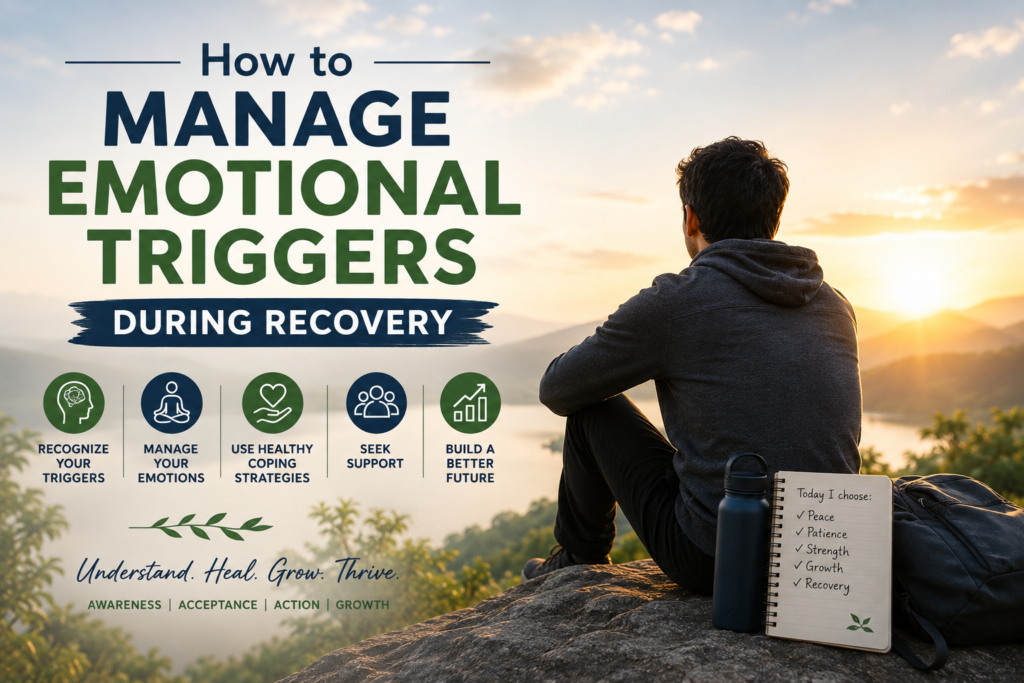
Recovery from addiction is a journey that involves healing both the body and the mind. While stopping substance use is an important step, many individuals continue to face emotional challenges during recovery. Feelings such as stress, sadness, anger, loneliness, or anxiety can become emotional triggers that make recovery more difficult if they are not managed in healthy ways.
Learning how to manage emotional triggers during recovery is an important part of maintaining long-term progress. Emotional triggers are normal, and everyone experiences them differently. The goal is not to avoid emotions completely but to understand them and respond in healthier ways.
With the right support, healthy coping strategies, and professional guidance, individuals can reduce the impact of emotional triggers and continue moving toward a healthier future.
What Are Emotional Triggers?
Emotional triggers are feelings or situations that create strong emotional reactions. During addiction recovery, these emotions may increase cravings or make it more difficult to stay focused on recovery goals.
Triggers can be connected to past experiences, relationships, stressful situations, or unexpected life events. They are different for every person, which is why understanding personal triggers is an important part of recovery.
Some individuals may feel triggered by loneliness, while others may struggle more with anger, disappointment, or social pressure. Recognising these emotional patterns allows individuals to prepare healthier responses before emotions become overwhelming.
Common Emotional Triggers During Recovery
Many people experience similar emotional challenges during recovery. Understanding these common triggers can help individuals recognise them early.
Common emotional triggers include:
- Stress related to work or finances
- Anxiety about the future
- Loneliness or isolation
- Anger after conflict
- Guilt about past behaviour
- Shame or embarrassment
- Relationship problems
- Grief and loss
- Boredom
- Fear of failure
These emotions do not mean that recovery is failing. They simply indicate that emotional support and healthy coping strategies may be needed.
Why Emotional Awareness Is Important
Many people spent years trying to avoid difficult emotions through substance use. During recovery, those emotions may return with greater intensity.
Learning to recognise emotions without immediately reacting to them is an important recovery skill.
Ask yourself:
- What am I feeling right now?
- What happened before this emotion appeared?
- Is there a specific situation causing this feeling?
- What healthy action can I take?
Simply identifying emotions can reduce their intensity. Naming emotions often helps individuals think more clearly before making decisions.
Keep a Recovery Journal
Writing down emotions can help individuals better understand their personal triggers. A journal creates an opportunity to recognise patterns that may not be obvious during stressful situations.
You might record:
- How you feel each day
- Situations that caused stress
- Physical symptoms
- Healthy coping strategies used
- Positive achievements
- Questions for your counsellor
Over time, these notes can help identify recurring emotional triggers and show how personal coping skills are improving.
Journaling also encourages self-reflection and helps individuals recognise progress that might otherwise be overlooked.
Develop Healthy Coping Strategies
Recovery becomes stronger when individuals replace unhealthy coping habits with healthier alternatives. Every person will find different techniques that work best for them.
Healthy coping strategies may include:
- Deep breathing exercises
- Mindfulness or meditation
- Physical exercise
- Reading
- Listening to calming music
- Creative hobbies
- Spending time outdoors
- Talking with supportive people
- Attending counselling sessions
Instead of trying to remove emotions completely, these activities help individuals respond to emotions in healthier ways.

“An adult practising mindfulness or meditation in a calm natural setting”
The Role of Counselling
Professional counselling can help individuals understand why emotional triggers occur and how to respond more effectively.
A counsellor provides a safe and confidential environment where individuals can discuss difficult emotions without fear of judgement.
Counselling may help people:
- Understand emotional patterns
- Learn healthier coping skills
- Improve communication
- Build confidence
- Manage anxiety and stress
- Prepare for challenging situations
- Develop relapse-prevention strategies
At Aarogya Rehab, counselling and psychological support are part of a comprehensive addiction recovery programme. Aarogya Sewa Samiti also recognises the importance of emotional healing alongside physical recovery.
Professional guidance can help individuals understand that emotional triggers are manageable and do not have to control their recovery journey.

“A realistic counselling session between a trained addiction therapist and an adult discussing emotional challenges in recovery”
Practise Stress Management
Stress is one of the most common emotional triggers during addiction recovery. Everyday responsibilities, financial concerns, family relationships, and workplace pressures can all contribute to emotional strain.
Managing stress does not require eliminating every challenge. Instead, it involves learning healthier ways to respond.
Helpful stress-management techniques include:
- Maintaining a daily routine
- Exercising regularly
- Taking short breaks
- Spending time in nature
- Getting enough sleep
- Practising relaxation exercises
- Avoiding unnecessary conflicts
Small lifestyle changes can gradually improve emotional resilience and make stressful situations easier to manage.
Build a Strong Support System
Recovery is easier when individuals know they do not have to face emotional challenges alone.
A healthy support system may include:
- Family members
- Trusted friends
- Counsellors
- Recovery support groups
- Healthcare professionals
- Mentors
Talking openly with supportive people can reduce emotional pressure and provide encouragement during difficult moments.
Supportive relationships also remind individuals that asking for help is a sign of strength rather than weakness.
Learn to Pause Before Reacting
Strong emotions can create an immediate urge to react. During recovery, learning to pause before making decisions can reduce impulsive behaviour.
A simple technique is to stop, take several slow breaths, and ask yourself:
- What am I feeling?
- What triggered this emotion?
- What are my options?
- Who can I contact if I need support?
Even a short pause can help individuals make healthier decisions instead of reacting automatically.
Developing this habit takes practice, but it becomes easier over time.
Recognise Physical Warning Signs
Emotional triggers are often accompanied by physical changes. Becoming aware of these signs allows individuals to respond before emotions become overwhelming.
Common physical warning signs include:
- Muscle tension
- Rapid heartbeat
- Headaches
- Restlessness
- Difficulty concentrating
- Trouble sleeping
- Fatigue
Recognising these signals early creates an opportunity to use healthy coping strategies before emotions become more difficult to manage.

Self-Care Strategies for Better Mental Health
Managing Guilt and Shame
Many people in recovery experience guilt or shame because of past decisions. While these emotions are understandable, holding onto them for a long time can affect emotional well-being and recovery progress.
Guilt can sometimes encourage positive change, but constant self-blame may reduce confidence and motivation.
Instead of focusing only on past mistakes, try to recognise the positive steps you are taking today. Recovery is about learning, accepting responsibility, and creating a healthier future.
Professional counselling can help individuals work through difficult emotions in a safe and supportive environment.
Handling Anger in Healthy Ways
Anger is another common emotional trigger. It may arise from frustration, disappointment, misunderstandings, or unresolved conflicts.
Healthy ways to manage anger include:
- Taking a short walk
- Practising deep breathing
- Counting slowly before responding
- Writing down your thoughts
- Speaking calmly about your feelings
- Taking time away from an argument if needed
The goal is not to ignore anger but to express it in ways that do not harm yourself or others.
Coping With Loneliness
Some individuals feel lonely after leaving old social circles connected with substance use. Although this change can be difficult, it also creates an opportunity to build healthier relationships.
Ways to reduce loneliness include:
- Joining a recovery support group
- Spending time with supportive family members
- Participating in community activities
- Learning a new hobby
- Volunteering
- Staying connected with trusted friends
Healthy relationships can provide encouragement and reduce feelings of isolation during recovery.
Managing Anxiety
Anxiety about the future is common during recovery. Individuals may worry about employment, relationships, health, or maintaining long-term sobriety.
Rather than trying to solve every problem at once, focus on today’s responsibilities.
Helpful strategies include:
- Following a structured routine
- Practising mindfulness
- Exercising regularly
- Limiting unnecessary stress
- Talking with a counsellor
- Using relaxation techniques
Small daily actions can gradually reduce anxiety and increase confidence.

“Integrating Yoga and Wellness Training into Rehabilitation Programs”
Create a Healthy Daily Routine
A consistent routine can reduce emotional stress by providing structure and stability.
Your daily routine may include:
- Waking up at the same time
- Eating nutritious meals
- Exercising regularly
- Attending counselling sessions
- Spending time with supportive people
- Relaxation exercises
- Reading or journaling
- Sleeping at a regular time
Healthy routines reduce uncertainty and help individuals stay focused on recovery goals.
At Aarogya Rehab, wellness activities such as yoga are included as part of a broader recovery approach alongside counselling and rehabilitation.
Prepare for Difficult Situations
Recovery becomes easier when individuals prepare for emotionally challenging situations before they happen.
Ask yourself:
- What situations usually trigger strong emotions?
- Who can I contact if I need support?
- Which coping skills work best for me?
- What can I do instead of reacting impulsively?
Creating a personal action plan helps individuals respond calmly when difficult situations arise.
Preparation increases confidence and reduces the likelihood of making unhealthy decisions during stressful moments.
The Importance of Family Support
Family members can play a valuable role in helping individuals manage emotional triggers.
Supportive families can:
- Listen without judgement
- Encourage healthy routines
- Respect recovery boundaries
- Celebrate progress
- Encourage professional treatment
- Provide emotional reassurance
At the same time, healthy boundaries remain important. Family members should support recovery without enabling harmful behaviours.
At Aarogya Sewa Samiti, family involvement and professional guidance are recognised as valuable parts of long-term recovery.
Celebrate Small Successes
Recovery is built through many small achievements rather than one single event.
Celebrate progress such as:
- Completing counselling sessions
- Managing a difficult trigger successfully
- Following your daily routine
- Asking for support
- Rebuilding relationships
- Learning new coping skills
Recognising progress strengthens confidence and reminds individuals that recovery is moving forward.
Even small victories deserve appreciation because they represent meaningful growth.
Continue Professional Support
Recovery continues even after formal treatment ends. Ongoing professional support helps individuals maintain healthy coping strategies and prepare for future challenges.
Continuing care may include:
- Counselling
- Aftercare programmes
- Support groups
- Psychological support
- Wellness activities
- Relapse-prevention planning
At Aarogya Rehab, aftercare and relapse-prevention planning are described as important parts of maintaining long-term recovery.
Regular follow-up support allows individuals to address emotional challenges before they become overwhelming.

“An adult attending a follow-up counselling session with confidence and hope”
Emotional Triggers and Relapse Prevention
Managing emotional triggers is closely connected with relapse prevention. Difficult emotions do not automatically lead to relapse, but recognising them early creates an opportunity to respond differently.
Healthy coping skills, supportive relationships, counselling, and self-awareness all work together to reduce risk.
Individuals should remember that experiencing emotional triggers is a normal part of recovery. The important difference is learning healthier ways to respond.
With practice, many people find that emotional triggers become easier to recognise and manage over time.
Final Thoughts
Managing emotional triggers during recovery is an ongoing process that requires patience, self-awareness, and consistent effort. Stress, anxiety, loneliness, guilt, anger, and other emotions are natural experiences, but they do not have to control your recovery journey.
Healthy routines, counselling, mindfulness, supportive relationships, and positive coping strategies can help individuals respond to emotional challenges with greater confidence.
At Aarogya Rehab and Aarogya Sewa Samiti, recovery involves more than overcoming addiction. It includes emotional healing, psychological support, counselling, relapse prevention, wellness practices, and aftercare designed to support long-term well-being.
If you or someone you know is experiencing emotional challenges during recovery, seeking guidance from qualified addiction professionals can provide valuable support. Every healthy choice, no matter how small, contributes to lasting recovery and a healthier future.