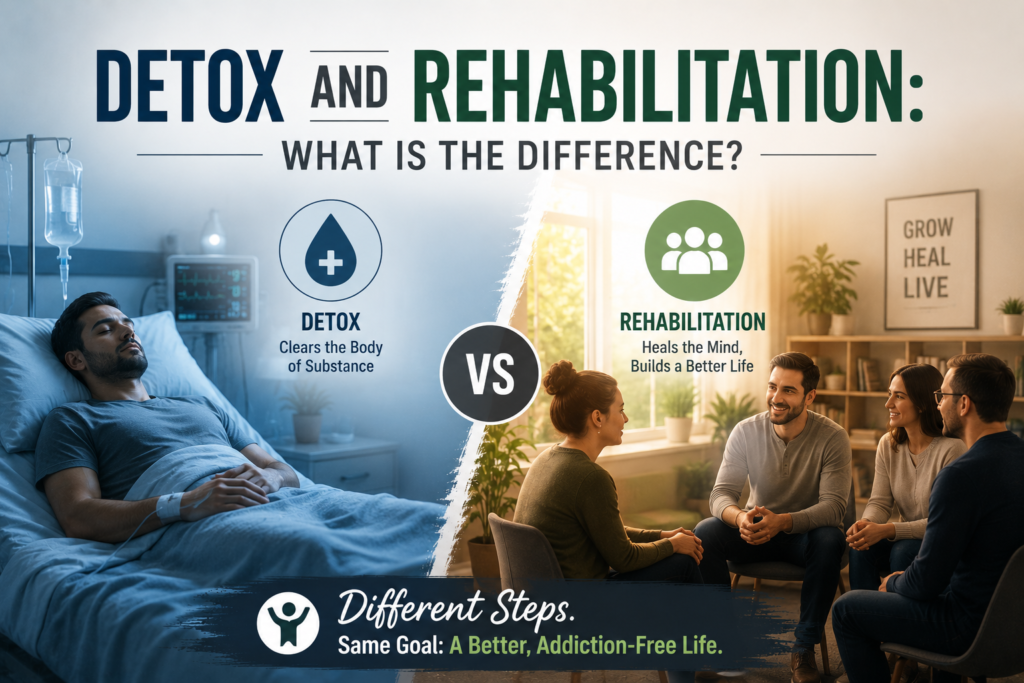
When a person decides to seek help for addiction, they may hear terms such as detoxification and rehabilitation. Although these two stages are connected, they are not the same. Understanding the difference can help individuals and families make better decisions about addiction treatment.
Detox and rehabilitation are often parts of a larger recovery journey. Detoxification generally focuses on helping the body adjust after stopping substance use, while rehabilitation focuses on addressing the emotional, psychological, behavioural, and social aspects of addiction.
Both stages can play important roles in recovery, but they have different purposes. Depending on a person’s needs, treatment may involve medical care, counselling, psychological support, residential rehabilitation, relapse prevention, and aftercare.
What Is Detoxification?
Detoxification, often called detox, is the process through which the body adjusts after a person stops using a substance. When someone has developed physical dependence, suddenly stopping may lead to withdrawal symptoms.
Withdrawal symptoms can vary depending on several factors, including the substance involved, how long it has been used, the amount used, and the person’s overall health.
Some withdrawal symptoms may be mild, while others can become serious. This is why detoxification should be approached carefully and, when necessary, carried out with appropriate medical supervision.
The primary focus of detox is usually the person’s immediate physical safety and comfort. It is an important first step for some people, but detox alone does not address every aspect of addiction.
What Happens During Detox?
During detoxification, healthcare professionals may monitor a person’s physical and emotional condition. The exact process depends on individual circumstances and the substance involved.
Medical professionals may assess:
- Physical health
- Mental health
- Substance use history
- Withdrawal risks
- Existing medical conditions
- Previous treatment experiences
Depending on the situation, medical support may be provided to manage withdrawal symptoms safely.
The length and intensity of detox can vary significantly. There is no single detox process that is suitable for everyone, so professional assessment is important.

“A realistic image of qualified healthcare professionals monitoring and supporting an adult during a supervised detoxification programme”
What Is Rehabilitation?
Rehabilitation, commonly called rehab, is a broader treatment process designed to help individuals address the underlying factors connected with addiction.
While detox focuses mainly on the physical effects of stopping substance use, rehabilitation focuses on helping individuals develop the skills needed for long-term recovery.
Rehabilitation may include:
- Individual counselling
- Group counselling
- Psychological support
- Behavioural therapy
- Family counselling
- Healthy lifestyle activities
- Relapse-prevention planning
- Aftercare support
The goal is to help individuals understand their addiction, recognise triggers, develop healthier coping strategies, and build a more stable lifestyle.
At Aarogya Rehab, the organisation describes a comprehensive recovery approach that includes medical care, detoxification, counselling, psychological support, residential treatment, yoga, relapse prevention, and aftercare. Aarogya Sewa Samiti focuses on providing structured support to individuals working toward addiction recovery.
Detox vs. Rehabilitation: The Main Difference
The easiest way to understand detox and rehabilitation is to think of them as different stages with different goals.
Detoxification primarily addresses the body’s adjustment after substance use stops. Rehabilitation addresses the broader physical, emotional, psychological, and behavioural aspects of addiction.
In simple terms:
Detox: Helps the body safely adjust to stopping substance use.
Rehabilitation: Helps the individual understand addiction and develop skills for long-term recovery.
Detox may take place before rehabilitation, but not everyone follows exactly the same treatment pathway. A healthcare professional can recommend the appropriate approach based on individual needs.
Why Is Detoxification Important?
For some individuals, detoxification is an important first step because physical dependence can make stopping substance use difficult or potentially unsafe.
Professional medical supervision may help healthcare providers identify and respond to withdrawal complications.
Detox can also create a transition point between active substance use and further addiction treatment.
However, completing detox does not automatically mean that addiction has been treated. A person may feel physically better after detox but still experience cravings, emotional difficulties, or behavioural patterns connected with addiction.
This is why continued treatment and professional support may be recommended after detoxification.
Why Is Rehabilitation Important?
Addiction can affect many areas of a person’s life. It may influence relationships, work, education, emotional health, decision-making, and daily routines.
Rehabilitation provides an opportunity to address these wider challenges.
Through counselling and professional support, individuals may learn how to:
- Identify personal triggers
- Manage stress
- Handle difficult emotions
- Improve communication
- Build healthier relationships
- Develop positive routines
- Recognise relapse warning signs
- Create long-term recovery goals
The aim is to help individuals develop practical skills that can be used after formal treatment ends.

“A realistic image of an adult participating in a one-to-one counselling session with a trained addiction recovery professional”
Can Detox Be Done Without Rehabilitation?
In some cases, a person may complete detoxification without entering a residential rehabilitation programme. However, detox alone may not address the underlying causes and patterns associated with addiction.
After detox, individuals may still experience cravings, stress, emotional challenges, or exposure to familiar triggers.
Without appropriate ongoing support, maintaining recovery can become difficult for some people.
The need for rehabilitation depends on individual circumstances. A qualified healthcare professional can assess the person’s condition and recommend whether additional treatment is appropriate.
The important point is that detox and rehabilitation serve different purposes and should not be considered interchangeable.
The Role of Counselling After Detox
Counselling can be an important part of rehabilitation after detoxification. It provides an opportunity for individuals to explore the emotional and behavioural factors connected with addiction.
Counselling may help individuals understand:
- Why they started using substances
- What situations trigger cravings
- How emotions influence behaviour
- How to manage stress differently
- How to improve relationships
- How to prepare for future challenges
At Aarogya Sewa Samiti, counselling and psychological support are described as important elements of the broader addiction recovery approach.
Professional counselling can also help individuals develop a personalised recovery plan based on their specific needs and circumstances.
The Role of Family Support
Addiction affects more than the individual. Family members may also experience stress, worry, confusion, and emotional challenges.
Family support can become an important part of the recovery process. Families can encourage treatment, provide emotional support, and help create a healthier environment.
Family counselling may help relatives:
- Understand addiction better
- Improve communication
- Rebuild trust gradually
- Establish healthy boundaries
- Support recovery without enabling harmful behaviour
At Aarogya Rehab and Aarogya Sewa Samiti, family involvement and counselling are included in the wider recovery approach described by the organisation.
Rehabilitation and Relapse Prevention
One of the important goals of rehabilitation is helping individuals prepare for challenges that may occur after treatment.
Relapse prevention involves identifying personal triggers and developing strategies to manage them.
Common triggers may include:
- Stress
- Emotional difficulties
- Social pressure
- Certain people or places
- Relationship conflicts
- Isolation
- Returning to old routines
A rehabilitation programme can help individuals recognise these risks and create a plan for responding to them in healthier ways.
At Aarogya Rehab, relapse prevention and aftercare are described as components of the broader recovery process.

“A realistic image of an adult and counsellor creating a personalised relapse-prevention plan together”
What Happens After Rehabilitation?
Recovery does not necessarily end when a person completes rehabilitation. Returning to everyday life can introduce new responsibilities and challenges.
Aftercare can help individuals maintain the progress they have made during treatment.
Aftercare may include:
- Follow-up counselling
- Regular professional check-ins
- Family support
- Healthy lifestyle practices
- Relapse-prevention planning
- Recovery support networks
At Aarogya Sewa Samiti, aftercare is described as part of the continuing recovery process. Ongoing support can help individuals remain connected with their recovery goals.
The type and length of aftercare should be based on individual needs and professional recommendations.
Is Detox the Same as Rehab?
No. Detox is not the same as rehabilitation.
Detox primarily focuses on helping the body adjust after stopping substance use. Rehabilitation is a broader process that addresses the psychological, emotional, behavioural, and social aspects of addiction.
A simple comparison is:
| Detoxification | Rehabilitation |
|---|---|
| Focuses on physical adjustment | Focuses on long-term recovery |
| May involve medical supervision | May involve counselling and therapy |
| Addresses withdrawal concerns | Addresses triggers and behaviours |
| Often occurs early in treatment | May continue for a longer period |
| Does not treat every aspect of addiction | Helps develop recovery and coping skills |
Both may be valuable, but they serve different purposes.
Choosing the Right Treatment Approach
Every person’s addiction and recovery needs are different. Some individuals may need medically supervised detoxification before continuing with rehabilitation.
Others may require residential treatment because they need a structured environment and greater professional support. Some may continue treatment through outpatient care and aftercare.
Factors that may influence treatment decisions include:
- Type of substance used
- Severity of dependence
- Physical health
- Mental health
- Previous treatment history
- Home environment
- Family support
- Risk of relapse
Professional assessment is essential when deciding on an appropriate treatment plan.
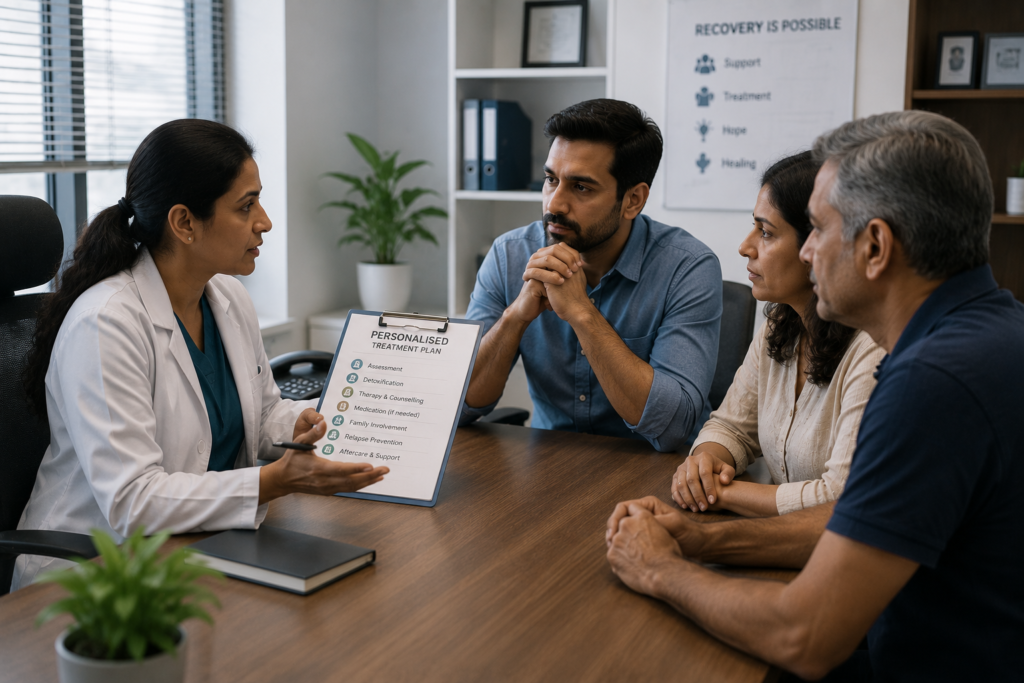
“A realistic image of a healthcare professional discussing a personalised addiction treatment plan with an adult and family members”
How Aarogya Rehab Supports Recovery
At Aarogya Rehab, detoxification is presented as one part of a broader approach to addiction treatment. The organisation describes services that include medical care, counselling, psychological support, residential treatment, yoga, relapse prevention, and aftercare.
Aarogya Sewa Samiti recognises that successful recovery often requires attention to multiple areas of a person’s life. Addressing physical health, emotional well-being, behaviour, relationships, and lifestyle can support a more complete recovery journey.
The appropriate treatment plan should always be based on individual needs and professional guidance.
Final Thoughts
Understanding the difference between detox and rehabilitation is important for anyone considering addiction treatment. Detoxification focuses mainly on the body’s adjustment after substance use stops, while rehabilitation addresses the broader factors that can contribute to addiction.
Detox may be an important first step for some individuals, but it does not necessarily address the emotional, psychological, and behavioural aspects of addiction.
Rehabilitation, counselling, relapse prevention, family support, and aftercare can help individuals continue working toward long-term recovery.
At Aarogya Rehab and Aarogya Sewa Samiti, a comprehensive approach combines different forms of support to help individuals move through various stages of recovery.
If you or someone you care about is struggling with addiction, seeking advice from a qualified healthcare or addiction professional can be an important first step. With appropriate care, continued support, and a personalised treatment plan, individuals can work toward a healthier and more stable future.