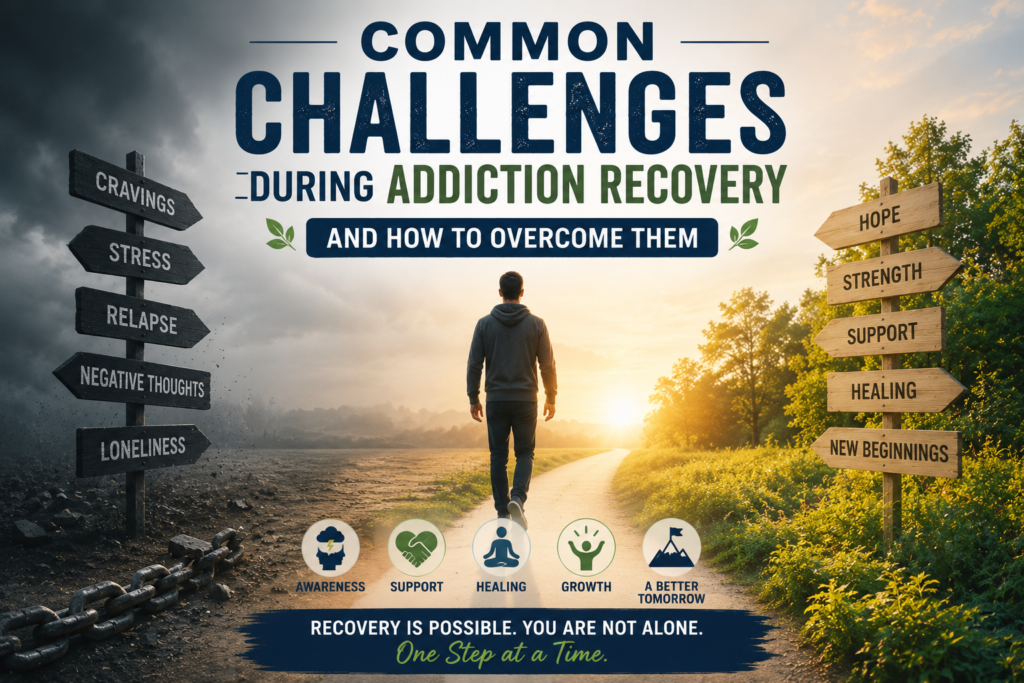
Addiction recovery is a journey that requires patience, commitment, and support. Choosing to stop addictive behaviour is an important step, but recovery does not end when treatment begins. Individuals may face emotional, physical, social, and psychological challenges at different stages of their recovery journey.
Some people may experience cravings, stress, loneliness, changes in relationships, or fear about the future. These challenges can sometimes make recovery feel difficult. However, facing difficulties does not mean that recovery is failing. With the right support and healthy coping strategies, individuals can learn to manage these challenges.
Understanding the common challenges during addiction recovery can help individuals and their families prepare for difficult situations. Professional treatment, counselling, family support, healthy routines, and aftercare can all play an important role in maintaining long-term recovery.
Understanding the Recovery Journey
Recovery looks different for every individual. Some people may experience progress quickly, while others may need more time and continued support. The recovery process may include medical care, counselling, lifestyle changes, and learning new ways to manage emotions.
It is important to remember that recovery is not simply about stopping addictive behaviour. It also involves understanding the reasons behind addiction and developing healthier ways to deal with stress, emotions, relationships, and daily responsibilities.
At Aarogya Rehab, the recovery approach described by the organisation includes medical care, counselling, psychological support, yoga, detoxification, residential treatment, relapse prevention, and aftercare. Aarogya Sewa Samiti also highlights the importance of providing supportive and structured care for individuals working toward recovery. (aarogyarehab.org)
Challenge 1: Dealing With Cravings
Cravings can be one of the most difficult parts of addiction recovery. A craving is a strong desire or urge that may appear unexpectedly. Certain places, people, emotions, memories, or stressful situations may act as triggers.
Cravings can feel powerful, but they do not last forever. Learning to recognise triggers and developing a plan for difficult moments can help individuals respond more safely.
Some useful strategies include:
- Identifying personal triggers
- Avoiding high-risk situations when possible
- Practising relaxation or breathing exercises
- Talking to a counsellor or trusted person
- Keeping busy with healthy activities
- Following a structured daily routine
The goal is not to fight every feeling but to learn how to respond to difficult emotions without returning to unhealthy patterns.
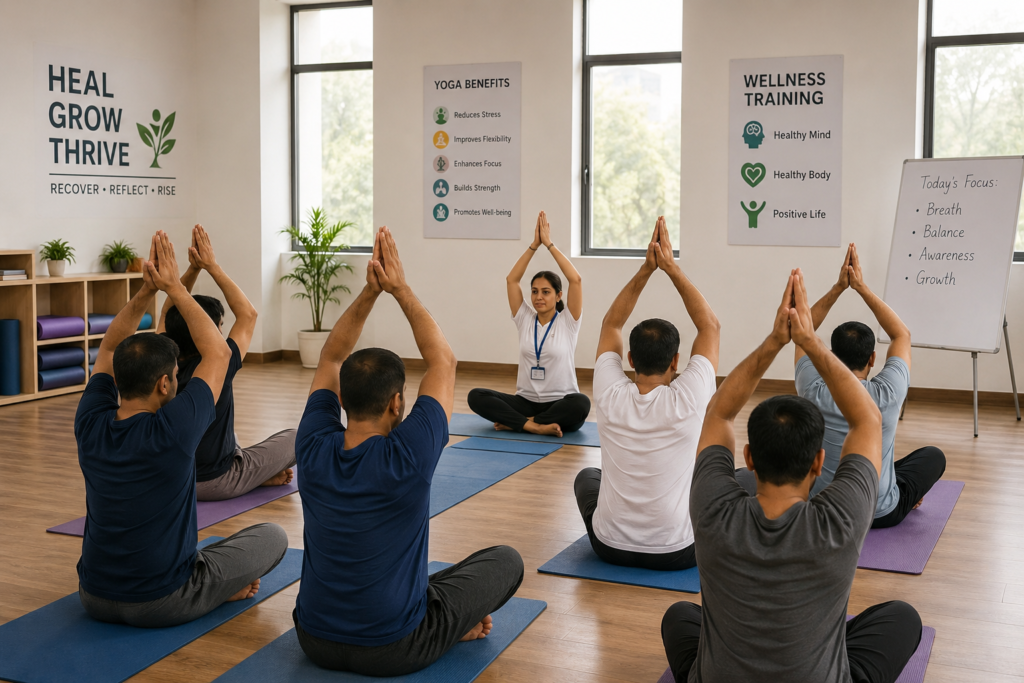
“Integrating Yoga and Wellness Training into Rehabilitation Programs”
Challenge 2: Managing Stress and Anxiety
Stress and anxiety can become significant challenges during recovery. Everyday responsibilities, family concerns, financial difficulties, or uncertainty about the future may create emotional pressure.
For some individuals, stress may have contributed to their addiction in the first place. During recovery, learning healthier ways to manage stress becomes an important part of building a stable lifestyle.
Healthy stress-management methods may include:
- Regular physical activity
- Meditation and mindfulness
- Yoga and relaxation exercises
- Maintaining a regular sleep schedule
- Talking openly with a professional
- Spending time with supportive people
- Taking short breaks during stressful situations
At Aarogya Sewa Samiti, yoga and wellness practices are included as part of the broader approach to recovery described on the organisation’s website. Such activities may help individuals develop healthier routines alongside professional treatment.
Challenge 3: Dealing With Emotional Changes
Addiction can sometimes become a way of avoiding difficult emotions. When addictive behaviour stops, individuals may suddenly become more aware of feelings such as sadness, anger, guilt, fear, or loneliness.
These emotions can be uncomfortable, especially when a person has not previously developed healthy ways to manage them. Emotional changes may also occur during different stages of recovery.
Counselling can help individuals understand their emotions and identify healthier responses. Instead of ignoring difficult feelings, people can learn to recognise them, discuss them, and work through them with appropriate support.
Recovery is not about feeling positive all the time. It is about developing the ability to experience difficult emotions without allowing them to control important decisions.
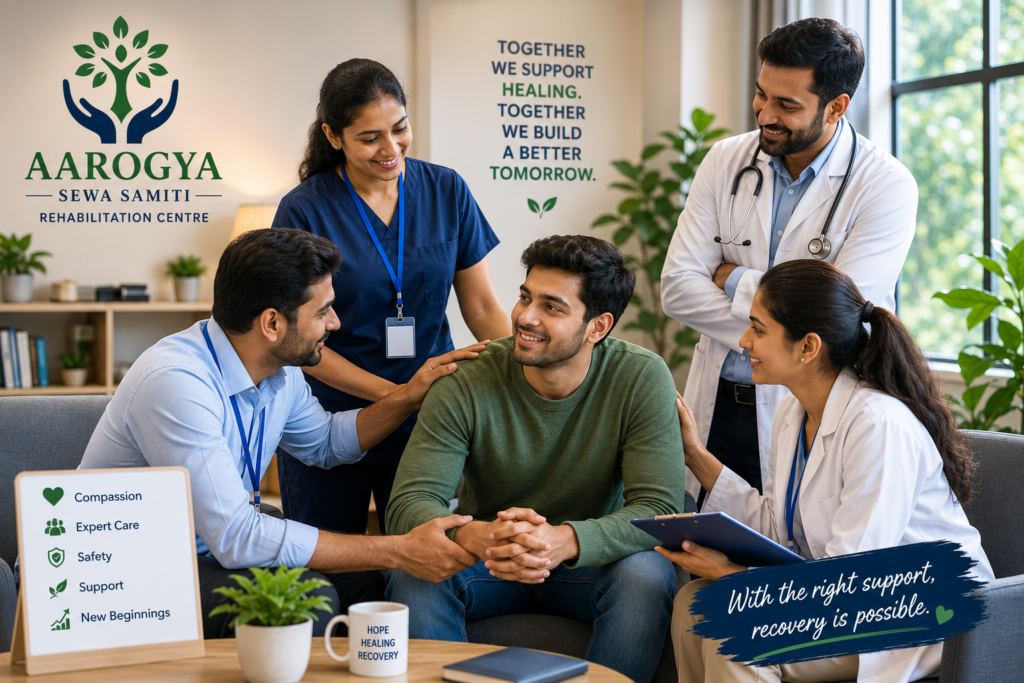
“Every successful recovery journey is built on trust, support, and professional care”
Challenge 4: Rebuilding Relationships
Addiction can affect relationships with family members, friends, and colleagues. Broken promises, misunderstandings, and changes in behaviour may cause trust to disappear.
Rebuilding relationships takes time. Loved ones may need to see consistent changes before they feel comfortable trusting again.
Individuals in recovery can work toward rebuilding relationships by:
- Being honest and respectful
- Keeping realistic promises
- Listening to family members
- Accepting responsibility for past actions
- Giving others time to heal
- Communicating without unnecessary blame
Trust cannot be demanded. It develops gradually through consistent actions. Family counselling may also help individuals and their loved ones communicate more effectively and understand each other’s experiences.
Challenge 5: Dealing With Loneliness
Some people experience loneliness during recovery, especially when they distance themselves from environments or social groups connected with addictive behaviour.
Although avoiding unhealthy influences can be important, suddenly losing familiar social connections may also feel difficult. This is why developing a healthy support network can be valuable.
Individuals can consider:
- Staying connected with supportive family members
- Joining healthy community activities
- Attending counselling sessions
- Participating in recovery-focused support groups
- Developing hobbies and interests
- Spending time with positive influences
Building new connections can take time, but meaningful relationships can provide encouragement and reduce feelings of isolation.
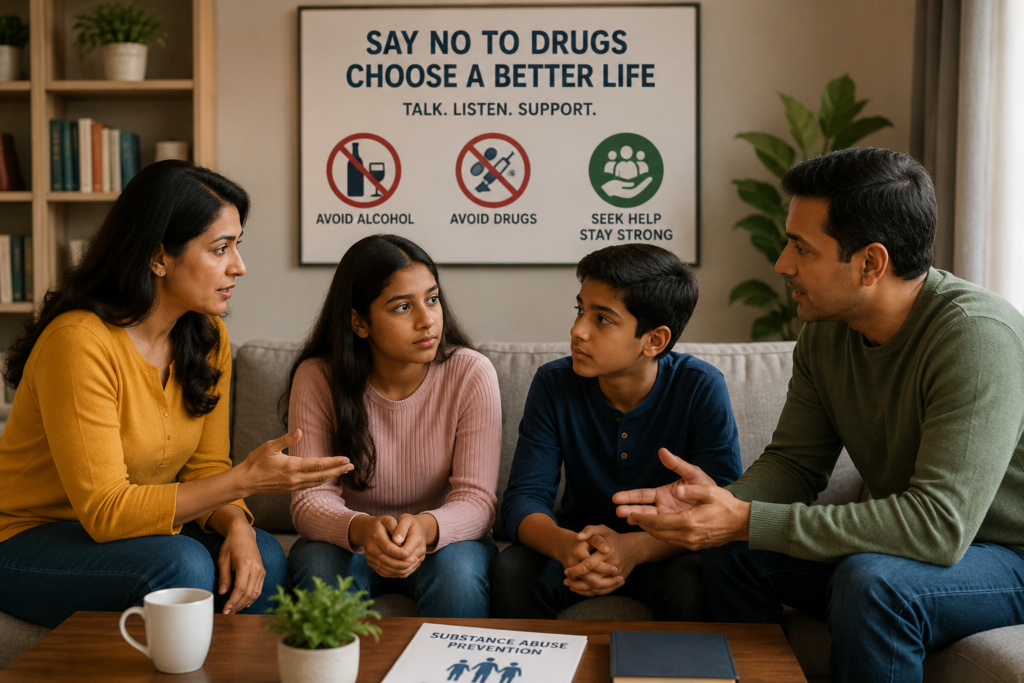
“Open communication and family support play a vital role in preventing substance abuse and helping young people make healthier life choices”
Challenge 6: Returning to Everyday Life
After completing a structured treatment programme, returning to everyday life can bring new challenges. Work, education, family responsibilities, and social situations may create pressure.
A person may need to adjust to responsibilities while continuing to protect their recovery. Creating a realistic routine can make this transition easier.
A daily plan might include:
- Waking and sleeping at consistent times
- Eating regular and nutritious meals
- Attending scheduled counselling
- Making time for physical activity
- Staying connected with supportive people
- Planning healthy recreational activities
- Following an aftercare programme
The transition from treatment to everyday life should be approached carefully. Continued support can help individuals maintain the progress made during treatment.
Challenge 7: Fear of Relapse
Many people in recovery worry about relapse. This fear can sometimes create anxiety about the future. Understanding that recovery requires ongoing attention can help individuals prepare for difficult situations.
Relapse prevention involves identifying personal triggers and creating strategies to respond to them. It may also involve recognising early warning signs and seeking help before a situation becomes more difficult.
Warning signs may include:
- Increasing isolation
- Returning to unhealthy social environments
- Ignoring counselling or support
- Experiencing unmanaged stress
- Losing interest in healthy routines
- Romanticising past addictive behaviour
If warning signs appear, reaching out for professional support can be an important step. Asking for help early is a sign of awareness and responsibility.
At Aarogya Rehab, relapse prevention and aftercare are included among the areas of support described by the organisation. Continuing care can help individuals remain connected to recovery resources after completing structured treatment.
Challenge 8: Managing Guilt and Shame
Guilt and shame can be difficult emotions during recovery. Individuals may regret how their addiction affected their health, relationships, education, career, or family life.
Taking responsibility is important, but constantly punishing oneself emotionally can make recovery harder. A healthier approach is to acknowledge past mistakes while focusing on positive changes in the present.
Individuals can work toward:
- Accepting that the past cannot be changed
- Taking responsibility for harmful actions
- Making sincere efforts to repair relationships
- Learning from previous experiences
- Practising self-compassion
- Focusing on achievable goals
Recovery provides an opportunity to create new patterns. A person’s past does not have to determine every part of their future.
Challenge 9: Finding a New Sense of Purpose
Addiction may consume a significant part of a person’s time and attention. After treatment, some individuals may wonder what comes next.
Finding meaningful goals can help create a stronger sense of direction. These goals do not have to be complicated. Learning a skill, returning to education, developing a career, helping others, or exploring a healthy hobby can provide motivation.
Purpose can also come from simple daily activities. Building a routine, maintaining relationships, caring for family, and contributing to the community can all create a sense of meaning.
The focus should be on realistic progress rather than trying to change everything at once.
How Professional Support Can Help
Addiction recovery can be challenging to manage alone. Professional support can provide guidance, structure, and accountability throughout the recovery process.
Depending on individual needs, treatment may involve:
- Medical assessment and care
- Detoxification under professional supervision
- Individual counselling
- Psychological support
- Family counselling
- Yoga and wellness activities
- Residential treatment
- Relapse-prevention planning
- Aftercare support
At Aarogya Sewa Samiti, the organisation’s website describes a multidisciplinary approach involving medical and mental health professionals, counsellors, nursing staff, and other support professionals. This type of coordinated care can help address different aspects of an individual’s recovery journey.
The Importance of Family Support
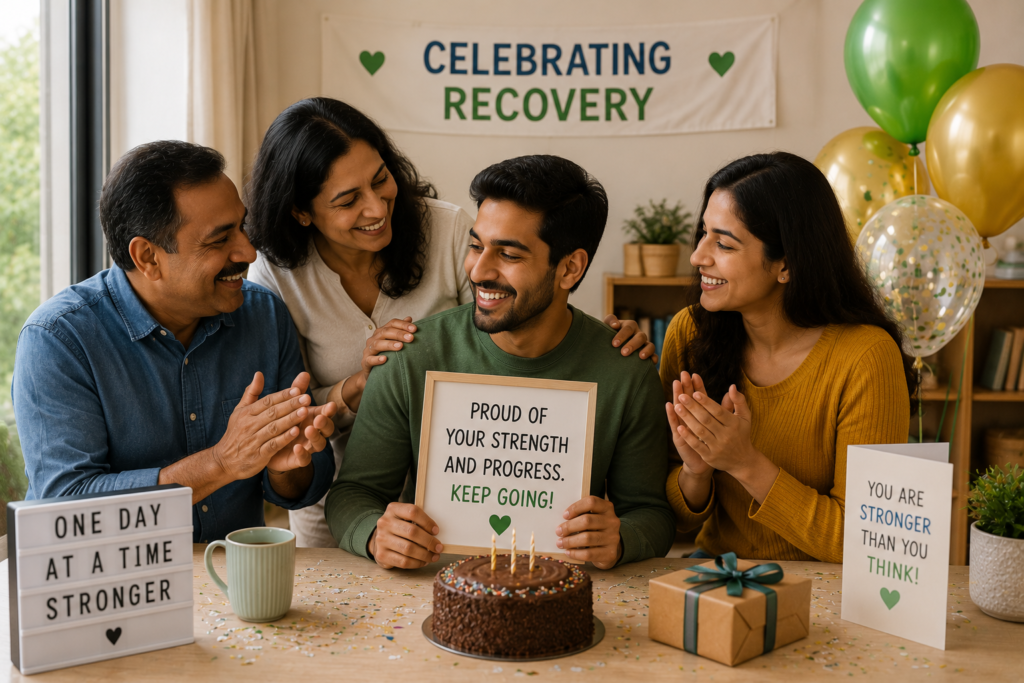
Family members can play an important role during recovery. Encouragement, understanding, and healthy communication can help individuals feel supported.
However, families also need to protect their own emotional well-being. Supporting someone does not mean ignoring personal boundaries or accepting harmful behaviour.
Families can help by:
- Encouraging professional treatment
- Learning about addiction
- Supporting healthy routines
- Communicating calmly
- Attending family counselling when appropriate
- Recognising progress
- Maintaining healthy boundaries
Recovery becomes stronger when individuals and families work toward healthier communication and realistic expectations.
Final Thoughts
The common challenges during addiction recovery can include cravings, stress, emotional changes, loneliness, damaged relationships, fear of relapse, guilt, and difficulty adjusting to everyday life. Each challenge may require a different approach.
The important thing to remember is that facing challenges does not mean that recovery is impossible. Difficult moments can become opportunities to learn new coping skills and strengthen the recovery plan.
With professional treatment, counselling, family support, healthy routines, and continued aftercare, individuals can learn to manage challenges and move toward a healthier future.
At Aarogya Rehab and Aarogya Sewa Samiti, recovery is approached as a journey that involves more than overcoming addiction. It can also involve rebuilding confidence, improving emotional well-being, developing healthy habits, and preparing for life beyond treatment.
If you or someone you care about is struggling with addiction, seeking appropriate professional guidance can be an important first step. Recovery takes time, but with patience, commitment, and the right support, individuals can continue moving forward one step at a time.