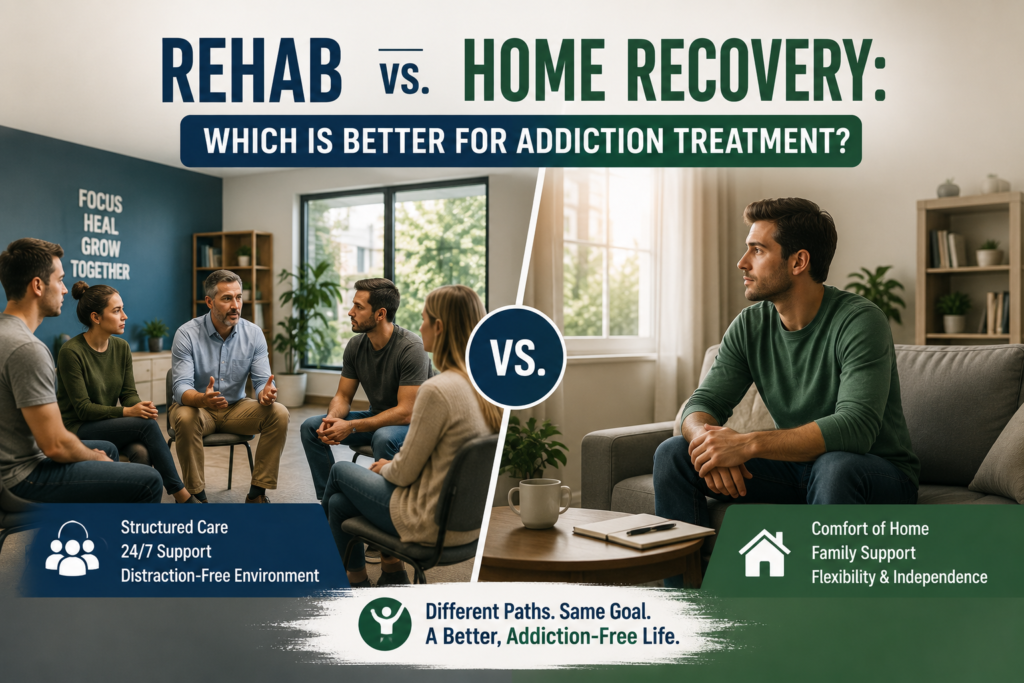
Choosing the right approach to addiction treatment is an important decision for individuals and families. When someone is struggling with addiction, families may wonder whether professional rehabilitation is necessary or whether recovery can happen at home with family support.
The answer is not the same for everyone. Rehab vs. home recovery involves two different approaches, and the right choice depends on the person’s health, addiction severity, support system, home environment, and professional assessment.
Some people may benefit from the structure and professional care available at a rehabilitation centre. Others may be able to participate in outpatient treatment or continue recovery at home with appropriate professional guidance. Understanding the differences can help families make informed decisions.
What Is Rehabilitation for Addiction?
Rehabilitation, commonly called rehab, is a structured treatment programme designed to help individuals overcome addiction and develop healthier ways of living. Depending on the programme, individuals may receive residential care or attend treatment sessions while living at home.
A rehabilitation centre may provide a combination of medical care, counselling, psychological support, healthy lifestyle activities, relapse-prevention planning, and aftercare.
The goal of rehabilitation is not only to stop addictive behaviour. It is also to help individuals understand the factors connected with addiction and develop coping skills for life after treatment.
At Aarogya Rehab, the organisation describes services and support that include medical care, detoxification, counselling, psychological support, residential treatment, yoga, relapse prevention, and aftercare. Aarogya Sewa Samiti follows a broader recovery approach designed to support individuals through different stages of addiction treatment.
What Is Home Recovery?
Home recovery means continuing addiction recovery while living in one’s usual home environment. This may involve outpatient counselling, medical follow-ups, family support, recovery groups, and healthy lifestyle changes.
Home recovery does not necessarily mean managing addiction completely without professional help. In many cases, individuals may still require regular counselling, medical care, or other forms of professional support.
A stable home environment can be helpful when family members are supportive and the individual can safely follow their recovery plan.
However, home recovery may become challenging when there are strong triggers, unhealthy relationships, substance availability, or limited family support.

“A realistic image of an adult in recovery participating in a supportive counselling session while continuing to live at home”
Rehab vs. Home Recovery: The Main Difference
The main difference between rehab vs. home recovery is the level of structure and supervision available.
In a rehabilitation centre, individuals may have access to a structured daily routine and professional support within a dedicated treatment environment. This can allow them to focus more fully on recovery.
With home recovery, individuals remain in their usual surroundings and manage recovery alongside daily responsibilities. This can provide flexibility but may also expose them to familiar triggers and stressful situations.
The right choice should be based on individual needs rather than convenience alone.
Benefits of Choosing Rehabilitation
A major advantage of professional rehabilitation is the structured environment. Individuals can follow a planned routine while receiving support from trained professionals.
Rehabilitation may offer:
- A dedicated environment focused on recovery
- Regular counselling and psychological support
- Medical supervision when required
- Detoxification support when appropriate
- Structured daily routines
- Relapse-prevention planning
- Family counselling
- Aftercare planning
- Opportunities to develop healthy habits
For individuals who have struggled repeatedly with addiction, a structured environment may provide the additional support needed to make meaningful progress.
However, rehabilitation is not a single solution for everyone. The type and intensity of treatment should be decided after considering the individual’s specific circumstances.
Benefits of Home Recovery
For some individuals, continuing recovery at home can offer important advantages. It allows them to remain connected with family and continue certain responsibilities while receiving professional treatment.
Potential benefits include:
- Remaining close to supportive family members
- Continuing work or education when appropriate
- Maintaining familiar daily routines
- Practising recovery skills in real-life situations
- Receiving outpatient counselling
- Staying connected with the local community
- Having greater flexibility in daily schedules
Home recovery may be suitable when the individual has a stable environment and can safely manage recovery without residential supervision.
However, professional guidance remains important. Family members should not be expected to manage serious addiction or medical concerns on their own.
When Rehab May Be More Suitable
Some individuals may benefit from residential rehabilitation because they need a higher level of structure and support.
Rehab may be considered when a person:
- Has a severe or long-standing addiction
- Has repeatedly returned to addictive behaviour
- Lives in an environment with significant triggers
- Has limited family support
- Needs a structured daily routine
- Requires professional monitoring
- Finds it difficult to maintain recovery at home
The decision should always involve qualified healthcare and addiction professionals who can assess the individual’s physical and psychological needs.

“A realistic image of a healthcare professional assessing an adult’s addiction treatment needs with supportive family members present”
When Home Recovery May Be Suitable
Home recovery may be appropriate for some individuals who have a supportive and stable environment.
It may be considered when a person:
- Has a safe and supportive home
- Is motivated to participate in treatment
- Can attend regular counselling sessions
- Has reliable family or social support
- Can manage daily responsibilities safely
- Does not require residential supervision
- Has access to appropriate professional care
However, home recovery should not be chosen simply because it appears easier or more convenient. Addiction can be complex, and professional assessment is important.
The Importance of Detoxification
Detoxification can be an important stage of addiction treatment for some individuals. It involves allowing the body to adjust after stopping substance use.
Withdrawal experiences vary depending on the substance, duration of use, amount used, and individual health. Some withdrawal symptoms can be serious and may require medical supervision.
For this reason, people should not assume that detoxification is always safe to manage independently at home.
At Aarogya Rehab, detoxification and medical care are described as part of the organisation’s broader addiction treatment approach. Professional assessment can help determine the safest and most appropriate level of care for each individual.
The Role of Counselling
Whether recovery takes place in a rehabilitation centre or at home, counselling can be an important part of treatment.
Counselling may help individuals:
- Understand addiction triggers
- Manage stress and difficult emotions
- Develop healthier coping strategies
- Improve communication
- Address negative thought patterns
- Rebuild confidence
- Strengthen motivation
- Prepare for relapse prevention
At Aarogya Sewa Samiti, counselling and psychological support are described as important parts of the recovery approach. The organisation also highlights the involvement of professionals from different fields in supporting individuals through treatment.
Professional counselling can also help families understand addiction and learn healthier ways to provide support.
The Role of Family Support
Family support can be valuable in both rehabilitation and home recovery. However, the type of involvement may be different.
In a rehabilitation setting, family members may participate through counselling, visits, communication, and treatment planning where appropriate. In home recovery, family members may have more direct involvement in everyday life.
Families can support recovery by:
- Encouraging professional treatment
- Listening without unnecessary judgement
- Supporting healthy routines
- Maintaining clear boundaries
- Avoiding enabling harmful behaviour
- Encouraging counselling and follow-up care
- Recognising positive progress
Family members should also remember that they cannot replace professional addiction treatment.

“A realistic image of a supportive family spending time with an adult in recovery at home, showing encouragement and healthy communication”
What About Relapse Risk?
Relapse can be a concern during any stage of addiction recovery. The risk may be influenced by stress, emotional difficulties, social pressure, personal triggers, and environmental factors.
A rehabilitation centre may temporarily remove an individual from some high-risk situations and provide a structured environment for developing coping skills.
Home recovery allows individuals to practise these skills in their real-life surroundings. However, they may need strong support and a clear relapse-prevention plan.
At Aarogya Rehab, relapse prevention and aftercare are described as part of the broader recovery process. Continued professional support can help individuals recognise challenges and seek help when needed.
Can Someone Move From Rehab to Home Recovery?
Yes. Recovery is often a gradual process, and treatment plans can change as an individual’s needs change.
A person may begin with residential rehabilitation and later transition to outpatient counselling and home-based recovery. This transition can help individuals gradually return to everyday responsibilities while maintaining access to professional support.
Aftercare may include:
- Follow-up counselling
- Relapse-prevention planning
- Family support
- Healthy lifestyle practices
- Regular professional check-ins
- Recovery support networks
This step-down approach may help individuals build independence without suddenly losing all professional support.
Rehab vs. Home Recovery: Which Is Better?
There is no universal answer to the question, “Is rehab better than home recovery?” The most suitable option depends on the individual’s needs.
Rehabilitation may be more appropriate when a person needs structured care, professional supervision, or separation from an unhealthy environment.
Home recovery may be suitable when an individual has a stable home, strong family support, and the ability to participate safely in outpatient treatment.
The decision should be based on professional assessment rather than assumptions or pressure from others.
How Aarogya Rehab Can Support Recovery
At Aarogya Rehab, the organisation describes a comprehensive approach to addiction recovery that may include medical care, detoxification, counselling, psychological support, residential treatment, yoga, relapse prevention, family counselling, and aftercare.
Aarogya Sewa Samiti recognises that recovery is an ongoing journey. Different individuals may need different types and levels of support at different stages.
Professional guidance can help individuals and families understand available treatment options and identify an approach that matches their circumstances.
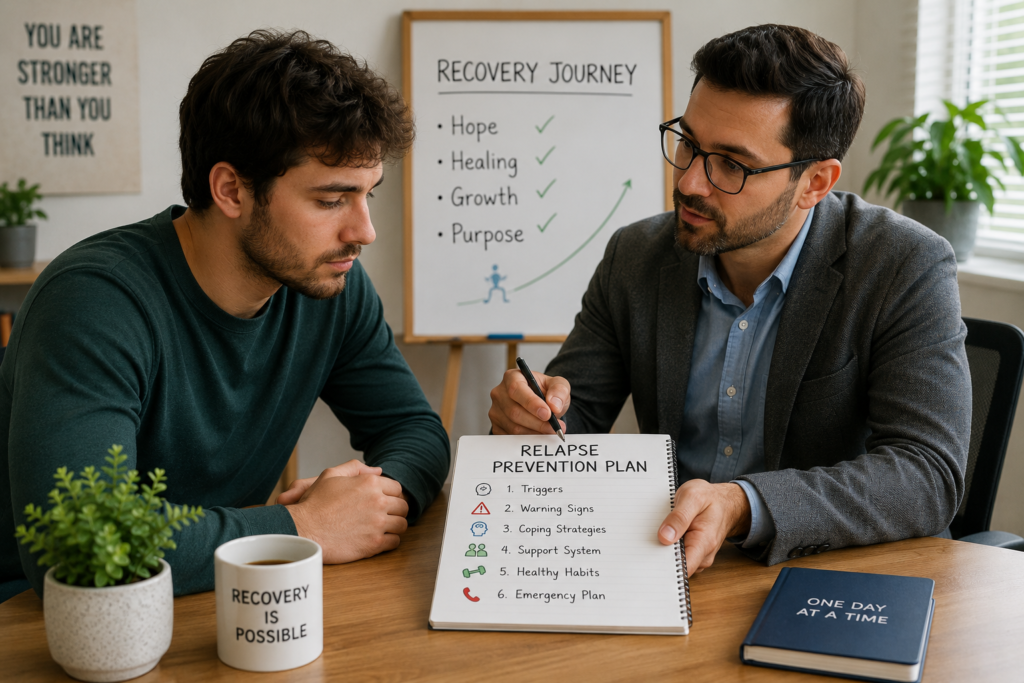
“A realistic, positive image of a counsellor speaking with an adult and family about a personalised long-term recovery plan”
Final Thoughts
The question of rehab vs. home recovery is an important one for families facing addiction. Both approaches can have a role in recovery, but neither is automatically suitable for everyone.
Rehabilitation provides a structured environment with professional support, while home recovery allows individuals to continue treatment within their everyday surroundings.
The right choice depends on addiction severity, physical and mental health, home environment, family support, and professional recommendations.
At Aarogya Rehab and Aarogya Sewa Samiti, the recovery approach includes different forms of support designed to address the needs of individuals at various stages of treatment.
If you or someone you care about is struggling with addiction, seeking professional advice can be an important first step. With appropriate treatment, continued support, and a commitment to healthy change, individuals can work toward a more stable and meaningful future.