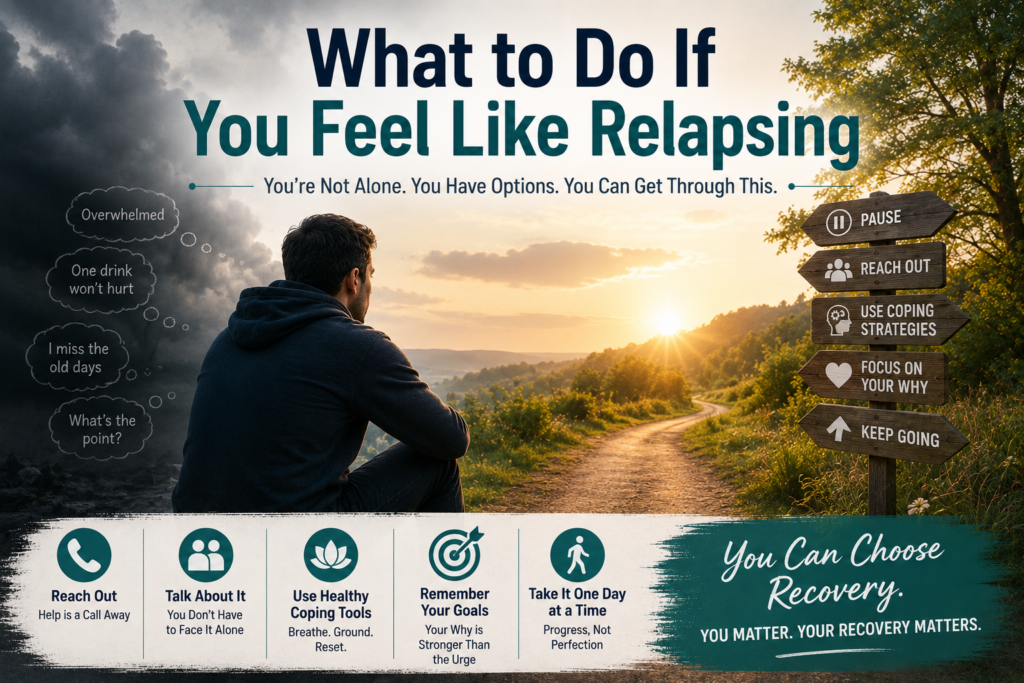
Recovery from addiction is a journey that requires patience, awareness, and continued support. Even after completing treatment, individuals may experience moments when they feel tempted to return to addictive behaviour. These moments can be difficult, but experiencing a strong urge does not mean that recovery has failed.
Knowing what to do if you feel like relapsing can help you respond to difficult moments more safely and effectively. The most important step is to recognise the feeling early and take action before it becomes overwhelming.
A craving or urge can sometimes appear suddenly, especially during stressful situations. It may also be connected with certain people, places, memories, emotions, or routines. Learning to recognise personal triggers and having a plan ready can make it easier to manage these challenging moments.
What Is a Relapse?
Relapse generally refers to returning to addictive substance use or behaviour after a period of recovery. It can happen for different reasons and does not mean that a person is incapable of recovering.
Recovery is often a gradual process. Individuals may face difficult emotions, stressful situations, relationship problems, or unexpected triggers. These challenges can sometimes increase the risk of returning to old patterns.
It is important to remember that a craving is not the same as a relapse. Feeling an urge does not mean that you have to act on it.
The earlier you recognise the warning signs, the more opportunities you have to use healthy coping strategies and seek support.
Recognise Your Warning Signs
The first step in relapse prevention is learning to recognise your personal warning signs. These signs can be emotional, mental, physical, or behavioural.
Some common warning signs may include:
- Feeling unusually stressed or overwhelmed
- Becoming isolated from supportive people
- Losing interest in healthy routines
- Romanticising past addictive experiences
- Thinking that one time will not matter
- Experiencing strong cravings
- Ignoring counselling or recovery appointments
- Returning to places or people connected with past addictive behaviour
These signs do not guarantee that relapse will happen. However, they can indicate that additional support may be needed.

“Every coping skill learned in therapy is another step toward a healthier, addiction-free future”
Pause Before You Act
When a strong urge appears, try to create a pause between the feeling and your response. Cravings can feel powerful, but they often change over time.
Instead of immediately reacting, take a moment to breathe and remind yourself why you chose recovery.
You can ask yourself:
- What am I feeling right now?
- What triggered this urge?
- What could happen if I act on it?
- Who can I contact for support?
- What healthy action can I take instead?
The goal is to give yourself time to make a safer decision rather than acting impulsively.
Reach Out to Someone You Trust
One of the most important things to do when experiencing a strong urge is to avoid facing it alone. Contacting someone supportive can help you feel less isolated.
You might reach out to:
- A counsellor
- A doctor or healthcare professional
- A trusted family member
- A supportive friend
- A recovery group
- Another person who understands your recovery journey
You do not need to wait until the situation becomes overwhelming. Asking for help early can be an important part of maintaining recovery.
At Aarogya Rehab, counselling and psychological support are described as components of the organisation’s broader addiction recovery approach. Aarogya Sewa Samiti also highlights ongoing support and aftercare as important parts of the recovery journey.
Leave a High-Risk Situation
Sometimes the best response to a craving is to change your environment. If you are in a place where addictive behaviour is available or encouraged, consider leaving the situation if it is safe to do so.
You might:
- Go for a walk in a safe public place
- Visit a supportive family member
- Attend a counselling session
- Spend time in a healthy environment
- Move away from people encouraging unhealthy behaviour
Changing your surroundings can create distance from the immediate trigger and give you time to regain control.
If you are concerned about your immediate safety, seek help from a trusted person or appropriate emergency service.
Use Healthy Coping Strategies
Recovery involves developing healthier ways to handle difficult emotions and stress. When a craving appears, use coping strategies that have worked for you in the past.
Possible strategies include:
- Deep breathing
- Meditation
- Yoga
- Physical activity
- Journaling
- Listening to calming music
- Taking a shower
- Spending time outdoors
- Calling a supportive person
- Practising mindfulness
Not every strategy works for everyone. The important thing is to identify activities that help you manage difficult moments without returning to addictive behaviour.
At Aarogya Rehab, yoga and wellness practices are described as part of the organisation’s wider recovery approach. These activities may complement professional treatment and support healthier routines.

Remember Your Reasons for Recovery
During a difficult moment, it can be easy to focus only on the immediate urge. Reminding yourself why you started recovery can help you reconnect with your long-term goals.
Your reasons may include:
- Improving your physical health
- Protecting important relationships
- Rebuilding trust
- Returning to work or education
- Developing a healthier lifestyle
- Achieving personal goals
- Creating a more stable future
Consider writing these reasons down when you are feeling calm. Keep the list somewhere accessible so you can read it during difficult moments.
Remember that your recovery goals belong to you. They can provide motivation when the present moment feels challenging.
Avoid “Just Once” Thinking
A common thought during cravings may be that returning to addictive behaviour “just once” will not cause a problem. For someone in recovery, this type of thinking can increase risk.
Try to recognise this thought as a warning sign rather than a decision you must follow.
You can remind yourself that recovery is about protecting the progress you have already made. Instead of focusing on whether you can control one moment, focus on the next healthy choice you can make.
If you notice these thoughts frequently, discuss them honestly with your counsellor or healthcare professional.
Contact Your Recovery Team
If cravings are becoming stronger or more frequent, contact your recovery team. A counsellor, doctor, psychologist, or other qualified professional can help you understand what may be contributing to the increased urges.
Your treatment plan may need to be reviewed or adjusted. This is not a failure. Recovery needs can change over time, and seeking additional support is a responsible step.
At Aarogya Sewa Samiti, the organisation describes counselling, psychological support, relapse prevention, and aftercare as parts of its broader recovery approach. Continued professional guidance can help individuals address challenges before they become more difficult to manage.
Strengthen Your Support Network
A strong support network can make recovery easier to maintain. Think about the people you can contact when you are struggling.
Your support network may include:
- Family members
- Trusted friends
- Counsellors
- Doctors
- Mental health professionals
- Recovery support groups
Keep important contact details easily available. If one person is unavailable, having additional support options can be helpful.
At the same time, healthy boundaries are important. Supportive relationships should encourage recovery rather than create additional pressure or exposure to triggers.
Follow Your Recovery Routine
When life becomes stressful, people sometimes stop following the routines that support their recovery. Missing counselling sessions, neglecting sleep, avoiding exercise, or becoming isolated can make difficult emotions harder to manage.
Try to return to the basics of your recovery plan:
- Attend scheduled appointments
- Maintain regular sleep
- Eat balanced meals
- Stay physically active
- Spend time with supportive people
- Practise healthy relaxation techniques
- Avoid known triggers where possible
Small daily actions can help maintain stability and reduce the impact of stress.

“Integrating Yoga and Wellness Training into Rehabilitation Programs”
If You Experience a Setback
If a setback occurs, it is important to seek professional help as soon as possible. Avoiding support because of shame or guilt can make the situation more difficult.
A setback does not erase all the progress made before it. It can be an opportunity to understand what happened and identify additional support that may be needed.
Contact your counsellor, doctor, or treatment provider and discuss the situation honestly. They can help you determine appropriate next steps.
If substance use has occurred, medical advice may be particularly important depending on the substance involved and the person’s health.
Create a Personal Relapse-Prevention Plan
Preparing a plan before a difficult moment occurs can make it easier to respond when cravings appear.
Your plan might include:
- My common triggers: Write down situations that increase cravings.
- My warning signs: Identify emotional or behavioural changes.
- People I can call: List trusted contacts and professionals.
- Healthy alternatives: Choose activities that help you cope.
- Safe places: Identify environments where you feel supported.
- Professional support: Keep your treatment team’s contact information available.
Review your plan regularly and update it as your recovery develops.
The Importance of Aftercare
Recovery does not end when residential treatment or rehabilitation is completed. Aftercare can provide continued guidance as individuals return to everyday life.
At Aarogya Rehab, aftercare and relapse prevention are described as part of the broader recovery process. Aarogya Sewa Samiti recognises that ongoing support can help individuals manage new challenges and maintain healthy recovery goals.
Aftercare may include counselling, follow-up appointments, family support, lifestyle guidance, and other services based on individual needs.
Final Thoughts
Knowing what to do if you feel like relapsing can help you respond to cravings with greater awareness and preparation. The most important step is to recognise the warning signs early and avoid facing difficult moments alone.
Pause, reach out for support, change your environment when necessary, and use healthy coping strategies. Remember why your recovery matters and continue following your treatment and aftercare plan.
If a setback occurs, seek professional support rather than giving up. Recovery is a process, and asking for help is a sign of strength.
At Aarogya Rehab and Aarogya Sewa Samiti, professional counselling, psychological support, relapse prevention, and aftercare form part of the wider recovery approach described by the organisation.
If you or someone you care about is struggling with addiction or experiencing strong urges to return to addictive behaviour, consider speaking with a qualified healthcare or addiction professional. With appropriate support and a personalised recovery plan, individuals can continue working toward healthier choices and long-term recovery.