
Completing a rehabilitation program is a major achievement, but recovery does not end when a person leaves a rehabilitation centre. The transition from a structured treatment environment back to everyday life can be challenging. During this stage, the support of family members and a positive home environment play a vital role in preventing relapse and encouraging long-term recovery.
Understanding Creating a Supportive Home Environment After Rehabilitation helps families provide the care, encouragement, and stability that recovering individuals need. A healthy home can improve emotional well-being, rebuild confidence, and make it easier to maintain a substance-free lifestyle.
Organizations such as Aarogya Rehab, operating under Aarogya Sewa Samiti, recognize that family involvement and a supportive environment are essential parts of successful addiction recovery.
Why the Home Environment Matters
Rehabilitation provides medical care, counseling, and life skills that help individuals begin their recovery journey. However, once treatment is complete, daily life presents new challenges.
Returning to an unhealthy or stressful environment can increase the risk of relapse. On the other hand, a peaceful and encouraging home helps reinforce the healthy habits learned during rehabilitation.
A supportive home gives recovering individuals a sense of belonging, security, and motivation. It reminds them that they are not facing recovery alone.
Understanding the Challenges After Rehabilitation
Recovery is a lifelong process. Even after completing treatment, individuals may experience emotional ups and downs while adjusting to their new lifestyle.
Common challenges include:
- Cravings and triggers.
- Stress and anxiety.
- Low self-confidence.
- Fear of failure.
- Relationship difficulties.
- Social pressure.
Family members who understand these challenges can respond with patience rather than criticism.
Encourage Open and Honest Communication
Healthy communication builds trust and strengthens relationships.
Family members should encourage open conversations where everyone feels comfortable expressing their thoughts and emotions without fear of judgment.
Simple questions such as:
- “How are you feeling today?”
- “Is there anything we can do to help?”
- “Would you like to talk?”
can make a recovering person feel supported and understood.
Listening carefully is often more helpful than offering immediate advice.
Create a Safe and Substance-Free Home
One of the most effective ways to support recovery is by reducing exposure to triggers.
Families should make every effort to remove substances that may tempt the recovering individual.
Helpful steps include:
- Removing alcohol from the home.
- Properly disposing of unused medications.
- Avoiding recreational drugs.
- Discouraging substance use during family gatherings.
A substance-free environment helps individuals focus on recovery without unnecessary temptation.
Build Healthy Daily Routines
Structure provides stability during recovery.
A consistent daily routine helps individuals stay focused while reducing boredom and stress.
Healthy routines may include:
- Waking up at the same time.
- Eating balanced meals.
- Exercising regularly.
- Attending counseling sessions.
- Practicing relaxation techniques.
- Getting enough sleep.
Predictable routines encourage discipline and support emotional well-being.

“A healthy morning routine with proper sleep, nutritious meals, hydration, and regular exercise builds a strong foundation for lasting recovery after rehabilitation”
Support Healthy Lifestyle Choices
Good physical health contributes to emotional recovery.
Families can encourage healthy habits by participating together in positive activities.
Examples include:
- Cooking nutritious meals.
- Going for walks.
- Practicing yoga.
- Exercising together.
- Spending time outdoors.
Shared activities strengthen relationships while promoting healthier lifestyles.
Be Patient During Recovery
Recovery does not happen overnight.
Some days will be easier than others, and emotional challenges are a normal part of healing.
Family members should avoid:
- Constant criticism.
- Blaming past mistakes.
- Unrealistic expectations.
- Comparing progress with others.
Instead, celebrate small achievements and encourage continued growth.
Patience creates a positive environment where recovery can continue successfully.
Help Identify Triggers
Triggers are situations, emotions, or environments that increase the urge to use drugs or alcohol.
Every individual has different triggers.
Common examples include:
- Stress.
- Loneliness.
- Financial problems.
- Certain social groups.
- Specific places.
- Emotional conflicts.
Families can help identify these triggers and develop healthy ways to manage them before they lead to relapse.
Encourage Continued Professional Support
Completing rehabilitation does not mean professional support should end.
Many individuals benefit from ongoing counseling, support groups, and regular follow-up appointments.
Continued professional care helps individuals:
- Manage stress.
- Prevent relapse.
- Build confidence.
- Develop coping strategies.
- Stay accountable.
Aarogya Rehab encourages long-term recovery through continuous guidance and personalized support provided by Aarogya Sewa Samiti.
Promote Independence and Responsibility
While support is important, recovering individuals also need opportunities to rebuild confidence through independence.
Families should encourage responsibility by allowing individuals to participate in daily activities such as:
- Household responsibilities.
- Financial planning.
- Meal preparation.
- Personal goal setting.
- Employment or education.
These responsibilities help rebuild self-esteem and encourage personal growth.
Strengthen Positive Relationships
Healthy relationships provide encouragement during recovery. Rebuilding trust may take time, but patience and understanding can help restore family bonds.
Spend quality time together by sharing meals, celebrating achievements, or enjoying hobbies as a family. Positive interactions reduce feelings of isolation and remind recovering individuals that they are valued.
Avoid bringing up past mistakes repeatedly. Instead, focus on progress and the future. A positive atmosphere encourages confidence and helps individuals remain committed to their recovery goals.
Manage Stress as a Family
Stress is one of the most common triggers for relapse. A calm home environment helps reduce emotional pressure and supports better mental health.
Families can manage stress together by:
- Practicing deep breathing exercises.
- Taking evening walks.
- Spending time in nature.
- Enjoying relaxing hobbies.
- Maintaining healthy sleep schedules.
- Encouraging open conversations.
When families learn healthy ways to manage stress together, everyone benefits.
Respect Personal Boundaries
Supporting someone in recovery does not mean controlling every aspect of their life.
Recovering individuals need privacy, independence, and opportunities to make responsible decisions.
Families should:
- Respect personal space.
- Avoid constant monitoring.
- Encourage honest communication.
- Offer help without forcing it.
- Trust the recovery process.
Healthy boundaries strengthen mutual respect and promote emotional well-being.
Celebrate Recovery Milestones
Recovery is made up of many small successes. Recognizing these achievements helps build motivation and confidence.
Families can celebrate milestones by:
- Preparing a favorite healthy meal.
- Planning a family outing.
- Writing encouraging notes.
- Expressing appreciation.
- Acknowledging personal growth.
Simple gestures remind recovering individuals that their efforts are valued and appreciated.
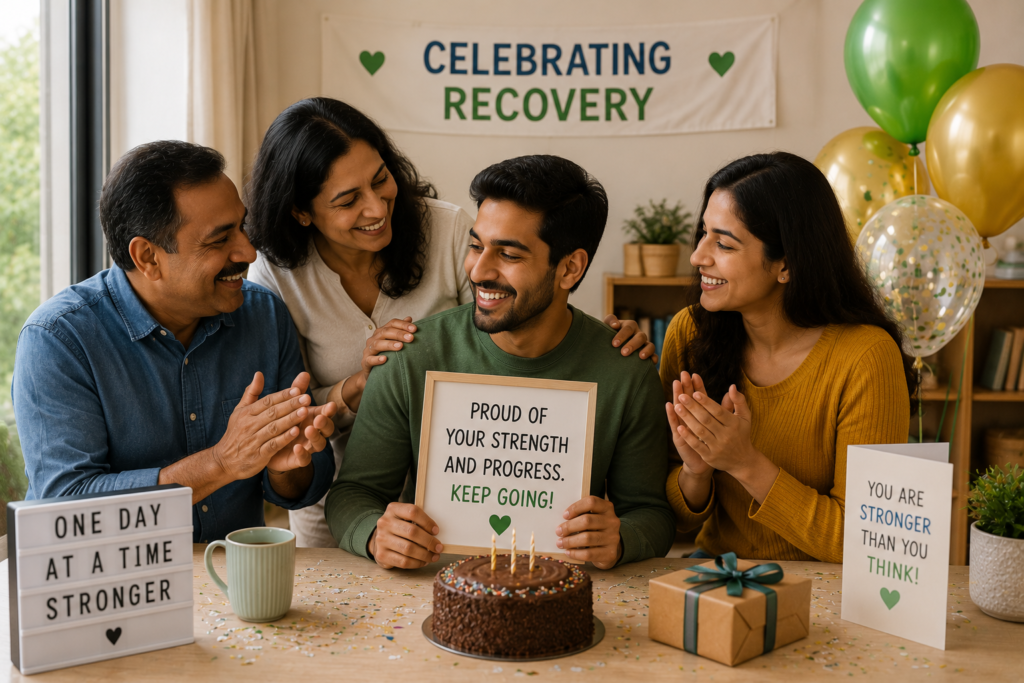
“Family support and encouragement make every milestone in recovery more meaningful and inspire continued progress”
Encourage Healthy Social Connections
The people someone spends time with can influence recovery.
Encourage relationships with individuals who support healthy choices and respect sobriety.
Positive social activities may include:
- Community volunteering.
- Sports or fitness groups.
- Yoga classes.
- Hobby clubs.
- Educational programs.
Healthy friendships reduce loneliness and provide encouragement during difficult times.
Watch for Early Warning Signs of Relapse
Relapse does not happen suddenly. It is often preceded by emotional and behavioral changes.
Some warning signs include:
- Withdrawal from family.
- Mood swings.
- Loss of motivation.
- Skipping counseling sessions.
- Returning to unhealthy friendships.
- Increased stress or anxiety.
Recognizing these signs early allows families to encourage professional support before problems become more serious.
Continue Learning About Addiction Recovery
Education helps families better understand the recovery journey.
Learning about addiction improves empathy and reduces misunderstandings.
Families can:
- Attend educational workshops.
- Read trusted recovery resources.
- Participate in counseling sessions.
- Ask healthcare professionals questions.
The more informed families become, the better they can provide meaningful support.
How Aarogya Rehab Supports Families
Recovery is strongest when families actively participate in the healing process.
Aarogya Rehab, under Aarogya Sewa Samiti, encourages family involvement throughout rehabilitation and after treatment is completed.
The organization provides guidance that helps families:
- Improve communication.
- Understand addiction.
- Support healthy routines.
- Recognize relapse warning signs.
- Build positive home environments.
This collaborative approach helps recovering individuals feel supported while developing confidence and independence.
Long-Term Benefits of a Supportive Home
A positive home environment contributes to lasting recovery in many ways.
Some long-term benefits include:
Emotional Benefits
- Greater self-confidence.
- Reduced stress.
- Better emotional stability.
- Increased motivation.
Family Benefits
- Stronger relationships.
- Better communication.
- Improved trust.
- Greater understanding.
Lifestyle Benefits
- Healthier daily routines.
- Better physical health.
- Improved productivity.
- Reduced relapse risk.
A supportive home provides the stability needed for long-term success after rehabilitation.
Frequently Asked Questions
Why is family support important after rehabilitation?
Family support provides emotional encouragement, accountability, and a safe environment that helps individuals maintain long-term recovery.
Should alcohol be kept at home after rehabilitation?
It is generally best to remove alcohol and other addictive substances from the home to reduce unnecessary triggers.
How can families help prevent relapse?
Families can encourage healthy routines, attend counseling, recognize warning signs, and maintain open communication.
Is professional support still necessary after rehabilitation?
Yes. Ongoing counseling, support groups, and follow-up care help individuals continue building healthy coping skills and reduce relapse risk.
How does Aarogya Rehab help families?
Aarogya Rehab, through Aarogya Sewa Samiti, provides counseling, education, and guidance that helps families create supportive home environments and strengthen long-term recovery.
Conclusion
Understanding Creating a Supportive Home Environment After Rehabilitation is essential for helping recovering individuals build a healthy, substance-free future. While rehabilitation provides the foundation for recovery, the home environment plays an equally important role in maintaining long-term progress.
Families who practice open communication, encourage healthy routines, respect personal boundaries, and provide emotional support create an atmosphere where healing can continue every day. Patience, understanding, and consistent encouragement help individuals rebuild confidence and strengthen their commitment to recovery.
Through compassionate rehabilitation services, ongoing counseling, and family-centered care, Aarogya Rehab and Aarogya Sewa Samiti continue supporting individuals and their loved ones as they work toward lasting recovery, healthier relationships, and a brighter future.