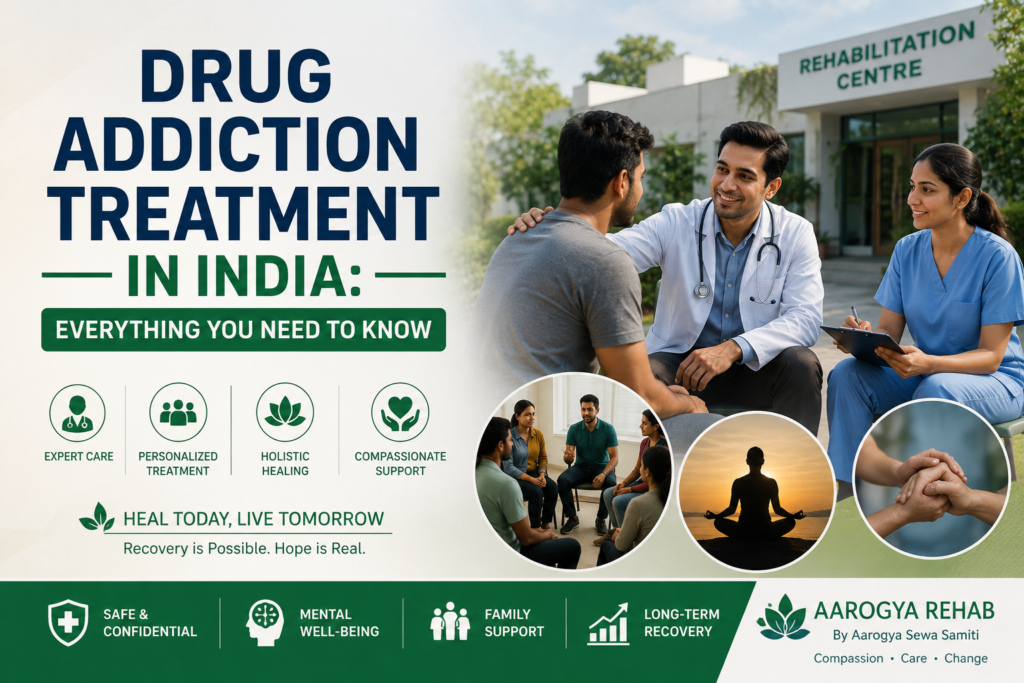
Drug addiction is a growing public health concern that affects individuals, families, and communities across India. It can impact physical health, mental well-being, relationships, education, careers, and financial stability. The good news is that addiction is treatable, and with the right support, individuals can regain control of their lives.
Understanding Drug Addiction Treatment in India: Everything You Need to Know helps people make informed decisions about seeking professional care. Modern rehabilitation combines medical treatment, counseling, behavioral therapy, and holistic wellness practices to support long-term recovery.
Aarogya Rehab, operated by Aarogya Sewa Samiti, is committed to providing compassionate, evidence-based rehabilitation services that focus on healing the whole person rather than only treating addiction symptoms.
What Is Drug Addiction?
Drug addiction is a chronic condition in which a person continues using harmful substances despite experiencing negative consequences. Over time, repeated substance use changes the brain, making it difficult to control cravings and behavior without professional support.
Addiction can affect people of any age, gender, or background. It is not simply a lack of willpower but a complex medical condition influenced by biological, psychological, environmental, and social factors.
Recognizing addiction early increases the chances of successful treatment and long-term recovery.
Common Signs of Drug Addiction
Early recognition allows individuals to receive timely treatment before addiction becomes more severe.
Some common warning signs include:
- Strong cravings for drugs.
- Sudden mood changes.
- Poor academic or work performance.
- Loss of interest in hobbies.
- Social withdrawal.
- Financial difficulties.
- Changes in sleep or appetite.
- Secretive behavior.
If several of these signs are present, professional evaluation is recommended.
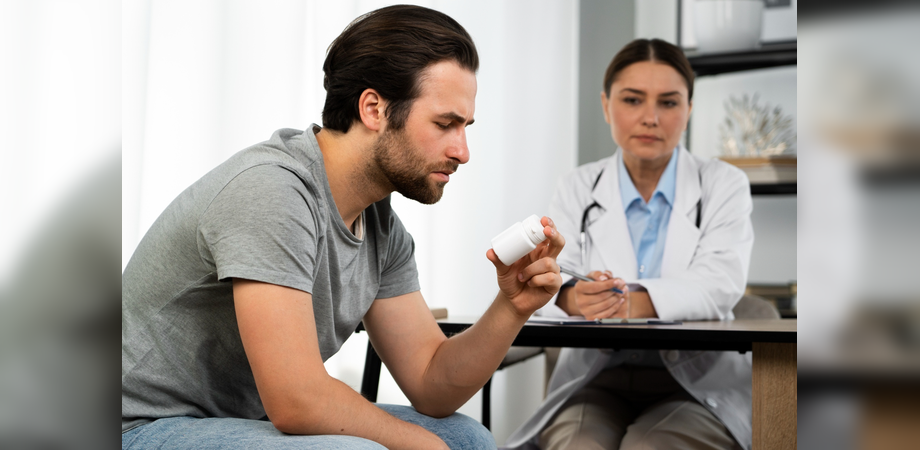
“The Future of Drug Rehabilitation”
Why Professional Treatment Is Important
Attempting to stop drug use without professional guidance can be difficult, especially when withdrawal symptoms occur.
Professional rehabilitation provides:
- Medical supervision.
- Safe detoxification.
- Psychological support.
- Relapse prevention strategies.
- Long-term recovery planning.
Comprehensive treatment addresses both physical dependence and the emotional factors contributing to addiction.
Understanding the Drug Rehabilitation Process
Every person’s recovery journey is different, but most rehabilitation programs follow several important stages.
These commonly include:
Initial Assessment
Healthcare professionals evaluate:
- Medical history.
- Substance use patterns.
- Mental health.
- Family background.
- Individual recovery goals.
This assessment helps create a personalized treatment plan.
Medical Detoxification
Detoxification is often the first stage of treatment.
During detox, harmful substances leave the body under medical supervision. Healthcare professionals monitor withdrawal symptoms and provide appropriate care to improve comfort and safety.
Detox alone is not sufficient for lasting recovery. It prepares individuals for the next stages of rehabilitation.
Individual Counseling
Counseling helps individuals understand why addiction developed and how to prevent relapse.
Therapists work with patients to identify emotional triggers, unhealthy thinking patterns, and harmful behaviors.
Counseling also helps develop healthier coping strategies that support long-term recovery.
Group Therapy
Group therapy allows individuals to connect with others facing similar challenges.
Participants share experiences, encourage one another, and learn practical recovery skills together.
Benefits include:
- Emotional support.
- Reduced isolation.
- Increased motivation.
- Shared learning.
- Greater accountability.
Group sessions remind individuals that they are not alone in their recovery journey.
Family Counseling
Addiction affects entire families.
Family counseling improves communication, rebuilds trust, and teaches loved ones how to provide healthy support during recovery.
Educating families also reduces misunderstandings and creates a more positive home environment after rehabilitation.
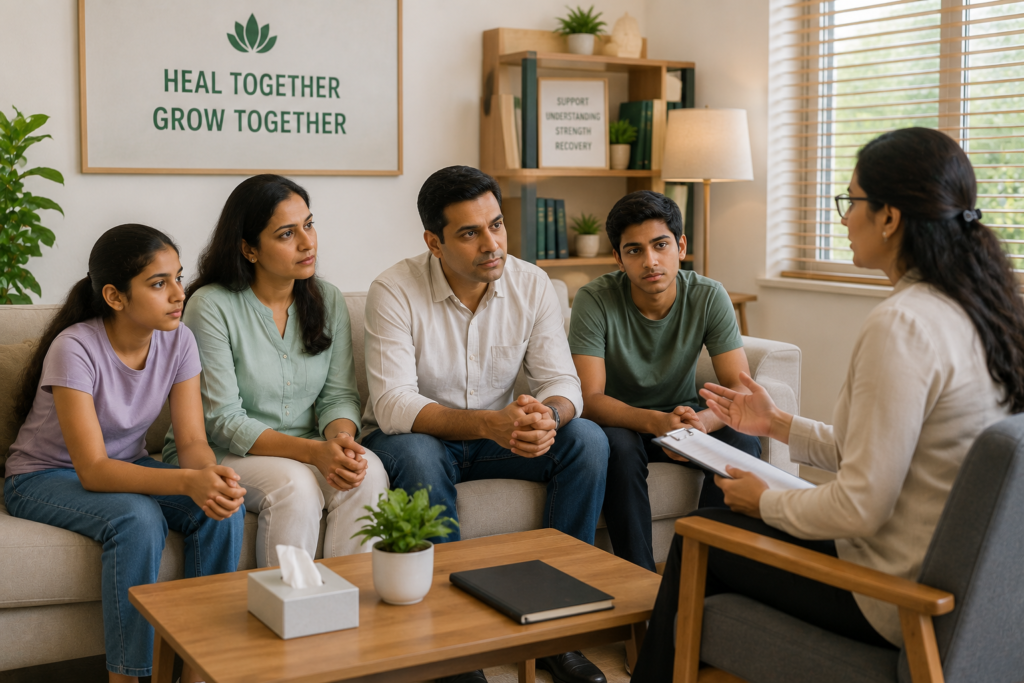
“Family counseling strengthens communication, rebuilds trust, and creates a supportive foundation for lasting recovery from addiction”
Holistic Therapies
Many rehabilitation centres now combine traditional treatment with holistic wellness practices.
These may include:
- Yoga.
- Meditation.
- Physical exercise.
- Nutrition counseling.
- Mindfulness training.
- Stress management activities.
Holistic therapies improve overall well-being while complementing medical treatment and counseling.
How Long Does Rehabilitation Take?
Treatment duration depends on several factors, including:
- Type of substance used.
- Length of addiction.
- Overall health.
- Mental health conditions.
- Individual recovery progress.
Some individuals require short-term programs, while others benefit from extended rehabilitation and ongoing aftercare.
Healthcare professionals determine the most appropriate treatment plan based on each person’s unique needs.
Choosing the Right Rehabilitation Centre
Selecting a qualified rehabilitation centre is one of the most important decisions during recovery.
Look for facilities that provide:
- Qualified medical professionals.
- Licensed counselors.
- Individualized treatment plans.
- Holistic therapies.
- Family involvement.
- Aftercare support.
A comprehensive approach improves the likelihood of long-term success.
Preventing Relapse After Treatment
Completing rehabilitation is a major achievement, but recovery continues after formal treatment ends. Maintaining sobriety requires commitment, healthy routines, and ongoing support.
Relapse prevention focuses on helping individuals recognize triggers and respond to them in positive ways. Building healthy habits after rehabilitation greatly improves long-term recovery outcomes.
Some effective relapse prevention strategies include:
- Attending follow-up counseling sessions.
- Participating in recovery support groups.
- Practicing yoga and meditation.
- Exercising regularly.
- Eating a balanced diet.
- Avoiding people or places linked to substance use.
- Maintaining a structured daily routine.
These habits strengthen emotional resilience and reduce the risk of returning to drug use.
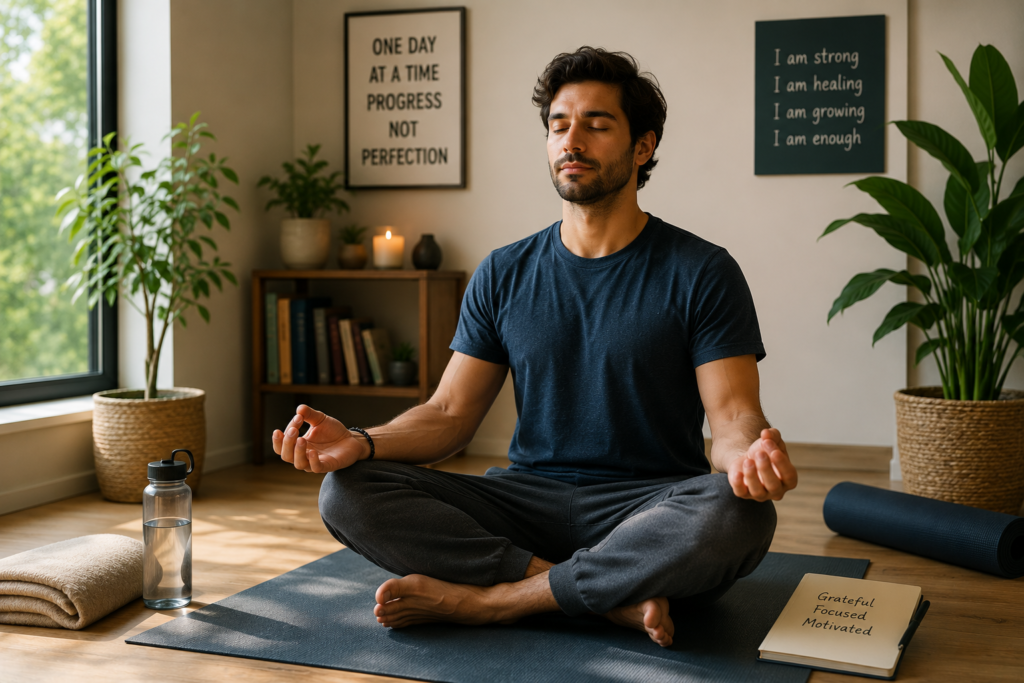
“Inner peace is a powerful foundation for lasting change”
The Importance of Family Support
Families play a significant role in successful recovery. A caring and understanding home environment encourages confidence and helps recovering individuals stay focused on their goals.
Family members can support recovery by:
- Encouraging open communication.
- Avoiding judgment or blame.
- Celebrating recovery milestones.
- Learning about addiction.
- Participating in family counseling.
- Promoting healthy daily routines.
Supportive families provide motivation during difficult moments and help individuals feel less isolated.
Mental Health and Addiction
Many individuals living with drug addiction also experience mental health challenges such as anxiety, depression, trauma, or chronic stress.
Treating both addiction and mental health together improves recovery outcomes. Ignoring emotional health may increase the risk of relapse.
Professional rehabilitation programs often include:
- Psychological assessment.
- Individual psychotherapy.
- Cognitive behavioral therapy.
- Stress management.
- Emotional wellness training.
Addressing mental health supports lasting recovery and improves overall quality of life.
Healthy Lifestyle Changes During Recovery
A healthier lifestyle supports physical healing and emotional stability after addiction treatment.
Important healthy habits include:
Physical Health
- Regular exercise.
- Balanced nutrition.
- Adequate sleep.
- Proper hydration.
Emotional Well-Being
- Meditation.
- Journaling.
- Relaxation exercises.
- Positive thinking practices.
Social Wellness
- Spending time with supportive family members.
- Building healthy friendships.
- Participating in community activities.
- Developing new hobbies.
These positive habits help replace unhealthy behaviors developed during addiction.
Aftercare: Continuing the Recovery Journey
Recovery does not end when rehabilitation is completed.
Aftercare programs help individuals maintain progress while adjusting to everyday life.
Aftercare may include:
- Regular counseling appointments.
- Peer support meetings.
- Family follow-up sessions.
- Lifestyle coaching.
- Relapse prevention planning.
Ongoing professional support helps individuals remain motivated and confident during long-term recovery.
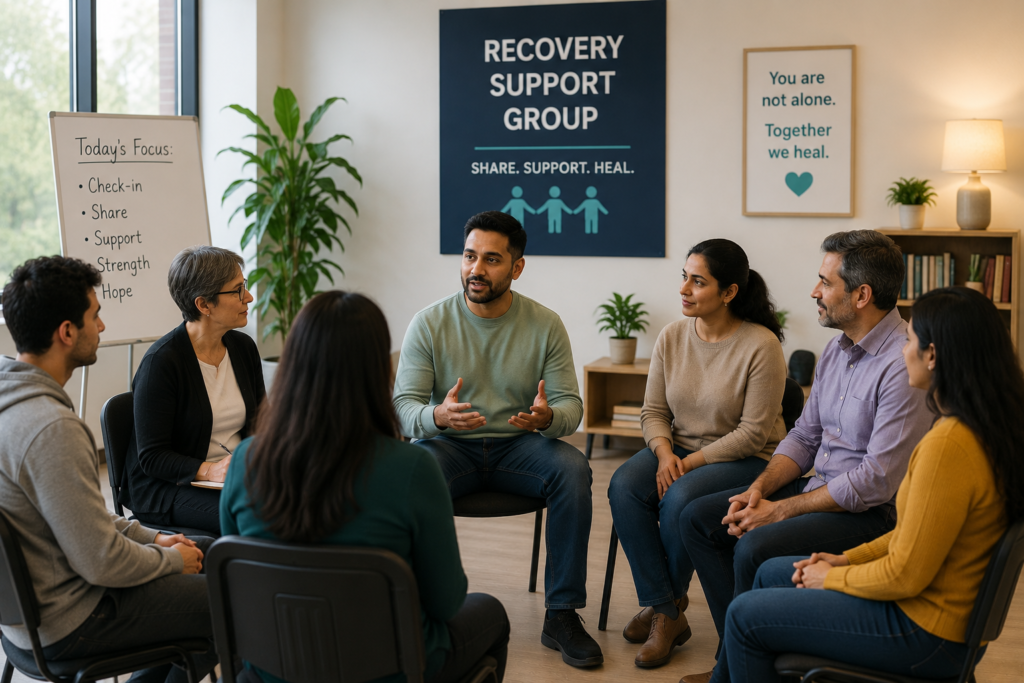
“Together on the Path to Recovery”
How Aarogya Rehab Supports Recovery
Aarogya Rehab, under the guidance of Aarogya Sewa Samiti, believes that successful rehabilitation requires personalized, compassionate, and evidence-based care.
Treatment programs are designed to address physical health, emotional well-being, behavioral change, and social reintegration. Professional medical supervision, counseling, family support, and holistic wellness activities work together to promote lasting recovery.
The organization’s goal is to help every individual regain confidence, rebuild healthy relationships, and successfully return to a productive, substance-free life.
Benefits of Professional Rehabilitation
Choosing professional treatment offers many advantages.
Physical Benefits
- Safe detoxification.
- Improved overall health.
- Better sleep.
- Increased energy.
Emotional Benefits
- Better stress management.
- Improved emotional stability.
- Greater self-confidence.
- Healthier coping strategies.
Social Benefits
- Stronger family relationships.
- Better communication.
- Improved work performance.
- Greater community participation.
These improvements contribute to long-term wellness and sustainable recovery.
Frequently Asked Questions
Is drug addiction treatable?
Yes. Drug addiction is a treatable medical condition. With professional rehabilitation, counseling, and continued support, many individuals achieve long-term recovery.
Why is medical detoxification important?
Medical detox helps individuals safely manage withdrawal symptoms while preparing them for ongoing rehabilitation and counseling.
How long does addiction treatment usually take?
Treatment duration varies depending on the individual, the substance involved, and overall recovery progress. Healthcare professionals recommend personalized treatment plans.
Can family members participate in rehabilitation?
Yes. Family counseling and education help loved ones provide healthy support while strengthening relationships during recovery.
Why choose Aarogya Rehab?
Aarogya Rehab, through Aarogya Sewa Samiti, provides comprehensive rehabilitation programs that combine medical care, counseling, holistic therapies, and long-term recovery support tailored to each individual’s needs.
Conclusion
Understanding Drug Addiction Treatment in India: Everything You Need to Know empowers individuals and families to seek timely, professional help for addiction. Recovery is not simply about stopping drug use—it involves healing the body, mind, and emotions while building healthier habits for the future.
Professional rehabilitation combines medical detoxification, counseling, behavioral therapy, family involvement, holistic wellness practices, and aftercare to support lasting recovery. Each stage of treatment plays an important role in helping individuals regain control of their lives and reduce the risk of relapse.
Through compassionate care, individualized treatment plans, and comprehensive recovery services, Aarogya Rehab and Aarogya Sewa Samiti continue helping individuals overcome addiction and build healthier, more fulfilling lives. With the right support, recovery is possible, and every step toward treatment is a step toward hope, healing, and a brighter future.