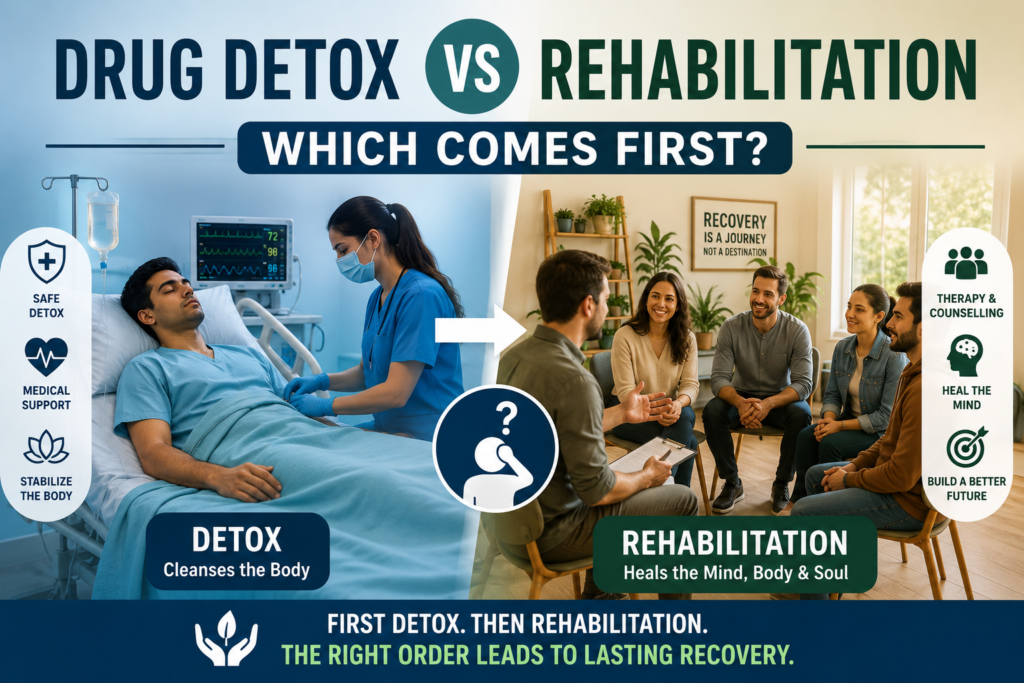
Drug addiction is a complex condition that affects the body, mind, and relationships. Many people who decide to seek help often ask an important question: Drug Detox vs Rehabilitation – which comes first? Understanding the difference between these two stages can make the recovery journey easier and help individuals choose the right treatment at the right time.
While detox and rehabilitation are closely connected, they serve different purposes. Detox focuses on safely removing harmful substances from the body, while rehabilitation helps individuals overcome the emotional, psychological, and behavioral causes of addiction. At Aarogya Rehab, operated by Aarogya Sewa Samiti, both stages are carefully planned to provide safe, compassionate, and effective care for long-term recovery.
What Is Drug Detox?
Drug detox is the first step in treating substance addiction. During this stage, the body clears harmful drugs while healthcare professionals manage withdrawal symptoms in a safe environment.
Many substances change how the brain and nervous system function. When drug use suddenly stops, the body needs time to adjust, which may cause uncomfortable or dangerous withdrawal symptoms.
Medical detox helps individuals complete this stage safely while reducing health risks.
The main goals of detox are:
- Remove drugs from the body safely.
- Manage withdrawal symptoms.
- Stabilize physical health.
- Prepare the individual for rehabilitation.
Detox alone does not treat addiction. It only prepares the body for the next stage of recovery.
Why Is Medical Detox Important?
Attempting to stop drug use without medical supervision can be dangerous.
Withdrawal symptoms vary depending on the substance used, the length of addiction, and the person’s overall health.
Common withdrawal symptoms include:
- Anxiety
- Sweating
- Shaking
- Nausea
- Vomiting
- Muscle pain
- Headaches
- Difficulty sleeping
- Strong cravings
- Mood swings
Some individuals may experience seizures or severe medical complications that require immediate treatment.
Medical professionals monitor patients throughout detox to ensure safety and comfort.

“Medical detox provides a safe environment for managing alcohol withdrawal symptoms”
What Is Rehabilitation?
Once detox is complete, the next step is rehabilitation.
Rehabilitation focuses on helping individuals understand why addiction developed and how they can maintain long-term recovery.
Unlike detox, rehabilitation addresses emotional and behavioral patterns that contribute to substance use.
Professional rehabilitation programs help individuals:
- Understand addiction.
- Identify triggers.
- Develop healthy coping skills.
- Improve mental health.
- Rebuild relationships.
- Prevent relapse.
Without rehabilitation, many individuals return to drug use because the emotional causes of addiction remain untreated.
Why Detox Alone Is Not Enough
Many people mistakenly believe that completing detox means they are fully recovered.
In reality, detox only removes harmful substances from the body.
The psychological aspects of addiction often remain, including:
- Cravings
- Stress
- Anxiety
- Depression
- Emotional trauma
- Poor coping skills
- Negative thinking patterns
Without therapy and continued support, relapse becomes much more likely.
This is why professional rehabilitation should always follow detox.

Continuous monitoring helps prevent complications during alcohol withdrawal.
Drug Detox vs Rehabilitation: Understanding the Difference
Although both are essential, detox and rehabilitation have different purposes.
Drug Detox
- Removes drugs from the body.
- Manages withdrawal symptoms.
- Focuses on physical stabilization.
- Usually lasts several days.
- Conducted under medical supervision.
Rehabilitation
- Treats emotional and psychological addiction.
- Develops healthy coping strategies.
- Includes counselling and therapy.
- Prevents relapse.
- Supports long-term recovery.
Together, these two stages provide a complete recovery program.
Which Comes First?
The answer is simple.
Drug detox always comes before rehabilitation.
The body must first become physically stable before the individual can fully participate in counselling, therapy, and recovery programs.
Someone experiencing severe withdrawal symptoms may struggle to concentrate during therapy sessions.
By completing detox first, individuals become physically stronger and mentally prepared to begin rehabilitation.
This step-by-step approach greatly improves the chances of long-term success.
What Happens During Medical Detox?
Every person’s treatment plan is different.
However, medical detox usually includes:
Medical Assessment
Doctors evaluate the patient’s physical health, addiction history, and withdrawal risks.
Continuous Monitoring
Healthcare professionals regularly check vital signs and monitor withdrawal symptoms.
Medication Support
Some patients receive medications that reduce discomfort and prevent serious complications.
Nutrition and Hydration
Healthy meals and proper hydration help the body recover more quickly.
Emotional Support
Counsellors provide reassurance and motivation during the detox process.
Medical detox creates a safe foundation before rehabilitation begins.
How Aarogya Rehab Supports Recovery
At Aarogya Rehab, managed by Aarogya Sewa Samiti, recovery begins with a carefully supervised detox program followed by personalized rehabilitation.
The treatment approach focuses on the whole person rather than only the addiction.
Patients receive compassionate care through:
- Safe medical detox
- Individual counselling
- Group therapy
- Family counselling
- Yoga and meditation
- Mental wellness programs
- Relapse prevention planning
- Aftercare support
This comprehensive approach helps individuals regain confidence while building the skills needed for lifelong recovery.
What Happens During Rehabilitation?
After completing detox, individuals begin rehabilitation, which focuses on healing the emotional and psychological effects of addiction. Rehabilitation helps people understand the reasons behind substance use and teaches practical skills for maintaining a drug-free lifestyle.
Every recovery journey is different, so treatment plans are personalized according to the individual’s needs. Professional rehabilitation encourages positive lifestyle changes while helping patients regain confidence and rebuild healthy relationships.
Common rehabilitation services include:
- Individual counselling
- Group therapy
- Family counselling
- Cognitive Behavioral Therapy (CBT)
- Yoga and meditation
- Stress management
- Wellness activities
- Relapse prevention education
These therapies work together to support long-term recovery and improve overall well-being.

Benefits of Completing Detox Before Rehabilitation
Beginning rehabilitation after detox offers several important advantages. Once withdrawal symptoms are under control, patients can focus completely on therapy and personal growth.
Some of the key benefits include:
- Improved physical health
- Better concentration during counselling
- Reduced withdrawal discomfort
- Greater emotional stability
- Increased motivation to recover
- Lower risk of early relapse
- Better participation in wellness programs
Following the correct treatment sequence improves both safety and recovery outcomes.
The Role of Family During Recovery
Addiction affects the entire family, not just the individual. Emotional stress, broken trust, and communication problems often develop over time.
Family support plays an important role throughout rehabilitation. Encouragement from loved ones helps patients remain motivated during difficult moments and strengthens their commitment to recovery.
Family counselling helps:
- Improve communication
- Rebuild trust
- Resolve conflicts
- Educate loved ones about addiction
- Create a supportive home environment
A strong support system significantly increases the likelihood of lasting recovery.
Preventing Relapse After Rehabilitation
Recovery does not end after leaving a rehabilitation centre. Maintaining sobriety requires ongoing effort, healthy routines, and continued support.
Common relapse triggers include:
- Stress
- Anxiety
- Depression
- Negative social influences
- Loneliness
- Financial difficulties
- Relationship conflicts
Professional rehabilitation teaches individuals how to identify these triggers before they become overwhelming.
Effective relapse prevention strategies include:
- Continuing counselling sessions
- Attending support groups
- Following a structured daily routine
- Exercising regularly
- Practicing yoga and meditation
- Staying connected with supportive family members
- Avoiding high-risk situations
Learning these strategies helps individuals remain focused on long-term recovery.
Why Choose Aarogya Rehab?
Selecting the right rehabilitation centre is one of the most important decisions during recovery. Aarogya Rehab, operated by Aarogya Sewa Samiti, provides compassionate, evidence-based addiction treatment in a safe and supportive environment.
The centre follows a holistic approach that addresses both physical dependence and emotional healing. Every patient receives personalized care designed to meet their specific recovery goals.
Services offered include:
- Medical detoxification
- Individual counselling
- Group therapy
- Family counselling
- Yoga and meditation
- Mental wellness programs
- Relapse prevention planning
- Aftercare support
The dedicated team works closely with each patient to build confidence, restore hope, and encourage lasting recovery.

“A dedicated rehabilitation team provides continuous support throughout the recovery journey”
Common Myths About Drug Detox and Rehabilitation
Many people delay treatment because of common misconceptions. Understanding the facts can help individuals make informed decisions.
Myth 1: Detox alone cures addiction.
Fact: Detox removes harmful substances from the body, but rehabilitation addresses the emotional and behavioral causes of addiction.
Myth 2: Rehabilitation is only for severe addiction.
Fact: Early treatment is often more effective and can prevent addiction from becoming more serious.
Myth 3: Relapse means treatment has failed.
Fact: Relapse can occur during recovery, but professional support helps individuals get back on track and continue progressing.
Conclusion
Understanding Drug Detox vs Rehabilitation is essential for anyone seeking addiction treatment. Although both are important, they serve different purposes. Detox safely removes harmful substances from the body and manages withdrawal symptoms, while rehabilitation focuses on emotional healing, behavioral change, and relapse prevention.
Following the correct sequence—detox first, rehabilitation second—provides the strongest foundation for long-term recovery. Individuals who complete both stages are better prepared to overcome addiction and build healthier, more fulfilling lives.
At Aarogya Rehab, managed by Aarogya Sewa Samiti, experienced professionals provide comprehensive care throughout every stage of recovery. From medically supervised detox to counselling, therapy, wellness activities, and aftercare, every program is designed to help individuals achieve lasting sobriety.
Recovery begins with a single step. Seeking professional help today can open the door to a healthier, happier, and addiction-free future.
Frequently Asked Questions (FAQs)
1. What is the difference between drug detox and rehabilitation?
Drug detox removes harmful substances from the body and manages withdrawal symptoms, while rehabilitation focuses on treating the emotional, psychological, and behavioral aspects of addiction.
2. Does everyone need detox before rehabilitation?
Individuals with physical dependence usually require medical detox before starting rehabilitation. A healthcare professional determines the appropriate treatment plan.
3. How long does drug detox take?
The detox process varies depending on the substance used, the severity of addiction, and the individual’s health. It commonly lasts several days under medical supervision.
4. Can rehabilitation prevent relapse?
Rehabilitation greatly reduces the risk of relapse by teaching coping strategies, stress management, trigger identification, and healthy lifestyle habits.
5. What services does Aarogya Rehab provide?
Aarogya Rehab, operated by Aarogya Sewa Samiti, provides medical detox, counselling, group therapy, family counselling, yoga, meditation, relapse prevention, wellness programs, and personalized rehabilitation plans.