For many years, people believed that addiction was simply a lack of willpower or a personal weakness. Individuals struggling with alcohol or drug dependence were often blamed for their condition. However, modern medical science presents a very different understanding of addiction.
Today, healthcare professionals around the world recognize that addiction is a disease that affects the brain, behavior, and overall health of a person. Understanding addiction from a medical perspective helps reduce stigma and encourages people to seek treatment without fear or shame.
In the Vikasnagar region and surrounding areas, awareness about addiction treatment is steadily growing. Organizations such as Aarogya Sewa Samiti are helping individuals and families understand that recovery is possible through proper care, counseling, and rehabilitation.
What Is Addiction?
Addiction is a chronic condition in which a person becomes unable to control the use of a substance despite experiencing harmful consequences. These substances may include alcohol, opioids, cannabis, prescription medications, tobacco, or other drugs.
Over time, the brain begins to rely on the substance to feel normal. The individual may continue using it even when it affects health, relationships, education, employment, and financial stability.
Medical experts classify addiction as a complex brain disorder because it changes the way the brain functions, particularly areas responsible for judgment, motivation, memory, and self-control.
Why Do Experts Say Addiction Is a Disease?
The idea that addiction is a disease is based on extensive medical research. Scientists have found that repeated substance use causes significant changes in the brain.
These changes can make it extremely difficult for a person to stop using drugs or alcohol without professional support. Just as diabetes affects blood sugar regulation, addiction affects brain function and behavior.
Several characteristics support the disease model of addiction:
- It changes normal brain functioning.
- It often worsens over time if untreated.
- It can lead to physical and psychological complications.
- It may relapse and require ongoing management.
- Professional treatment improves recovery outcomes.
Because of these factors, addiction is now widely recognized as a medical condition rather than a moral failure.
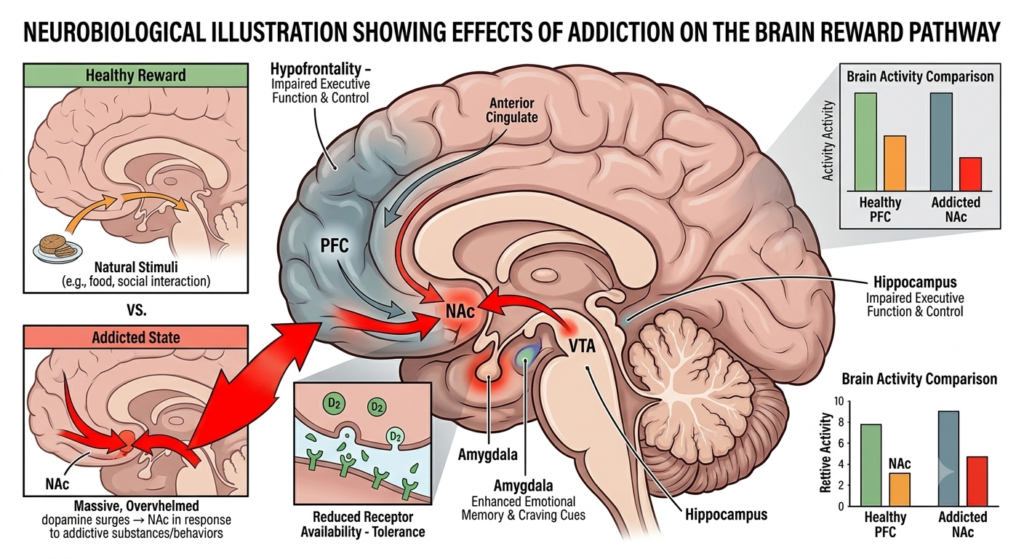
“Medical infographic showing a comparison of a healthy brain reward pathway versus an addicted state”
How Addiction Affects the Brain
The brain contains a reward system that releases chemicals such as dopamine when we experience pleasure or achieve goals.
Drugs and alcohol can overstimulate this reward system. As a result, the brain begins associating substance use with pleasure and relief.
Over time, natural activities such as spending time with family, exercising, studying, or working may no longer provide the same satisfaction.
Common brain-related effects of addiction include:
- Strong cravings
- Poor decision-making
- Reduced self-control
- Emotional instability
- Increased dependence on substances
These changes explain why many people continue using substances even when they genuinely want to stop.
Is Addiction Caused Only by Personal Choices?
The first use of a substance may involve personal choice. However, continued use can lead to brain changes that reduce a person’s ability to control their behavior.
This is why addiction cannot be viewed only as a matter of choice. Multiple factors contribute to the development of addiction, and many are beyond an individual’s control.
Risk factors may include:
- Family history of addiction
- Mental health disorders
- Stress and trauma
- Peer pressure
- Easy access to substances
- Social and environmental influences
Understanding these factors helps communities provide support rather than judgment.
Signs and Symptoms of Addiction
Recognizing addiction early can improve treatment outcomes. The symptoms may vary depending on the substance being used.
Some common warning signs include:
- Frequent cravings for drugs or alcohol
- Inability to stop using despite repeated attempts
- Neglecting responsibilities
- Changes in mood and behavior
- Isolation from family and friends
- Financial problems related to substance use
- Increased tolerance to the substance
- Withdrawal symptoms when not using
If these signs are present, professional help should be sought as soon as possible.
The Impact of Addiction on Families
Addiction does not affect only the individual. It often creates emotional, financial, and social challenges for the entire family.
Family members may experience anxiety, stress, frustration, and feelings of helplessness. Relationships can become strained due to broken trust and communication difficulties.
Children living in households affected by addiction may also face emotional and developmental challenges.
This is why family counseling is an important part of recovery programs offered by rehabilitation centers such as Aarogya Rehab under Aarogya Sewa Samiti.
Can Addiction Be Treated Successfully?
Yes. One of the most encouraging facts about addiction is that recovery is possible. Thousands of people successfully rebuild their lives every year through professional treatment and ongoing support.
Since addiction is a disease, treatment focuses on managing symptoms, restoring health, and helping individuals develop healthier habits.
Recovery often involves multiple approaches working together to support long-term success.
Treatment Approaches for Addiction
Modern rehabilitation programs typically include:
Medical Detoxification
Detox helps remove harmful substances from the body under medical supervision. This process can reduce withdrawal risks and improve safety.
Individual Counseling
Therapists help individuals understand the root causes of addiction and develop healthier coping strategies.
Group Therapy
Support groups allow people to share experiences, gain encouragement, and learn from others facing similar challenges.
Family Counseling
Family participation improves communication and strengthens the support system needed for recovery.
Holistic Therapies
Many rehabilitation programs include:
- Yoga
- Meditation
- Stress management techniques
- Physical fitness activities
- Mindfulness practices
These approaches support both mental and physical well-being.

“Mental wellness is an essential part of recovery, helping individuals find balance, clarity, and inner strength”
The Importance of Early Intervention
Seeking help early can significantly improve recovery outcomes. Delaying treatment often allows addiction to become more severe and difficult to manage.
Early intervention can help:
- Prevent health complications
- Protect relationships
- Improve mental well-being
- Reduce financial problems
- Increase treatment success rates
The sooner treatment begins, the better the chances of achieving long-term recovery.
How Aarogya Sewa Samiti Supports Recovery in Vikasnagar
For individuals and families in Vikasnagar and nearby areas, Aarogya Sewa Samiti provides compassionate support for those struggling with addiction.
Through professional rehabilitation services, counseling programs, recovery planning, and holistic healing approaches, Aarogya Rehab focuses on helping individuals regain control of their lives.
The organization works to create a safe and supportive environment where recovery can begin with dignity and hope.
Conclusion
Modern medical science clearly demonstrates that addiction is a disease, not a character flaw or a sign of weakness. It affects the brain, behavior, emotions, and overall health of an individual.
Recognizing addiction as a medical condition allows people to seek help without shame and encourages families to provide support instead of judgment.
With proper treatment, counseling, family involvement, and rehabilitation services from organizations such as Aarogya Sewa Samiti, recovery is possible. Every person deserves the opportunity to heal, rebuild, and move toward a healthier and more fulfilling future.