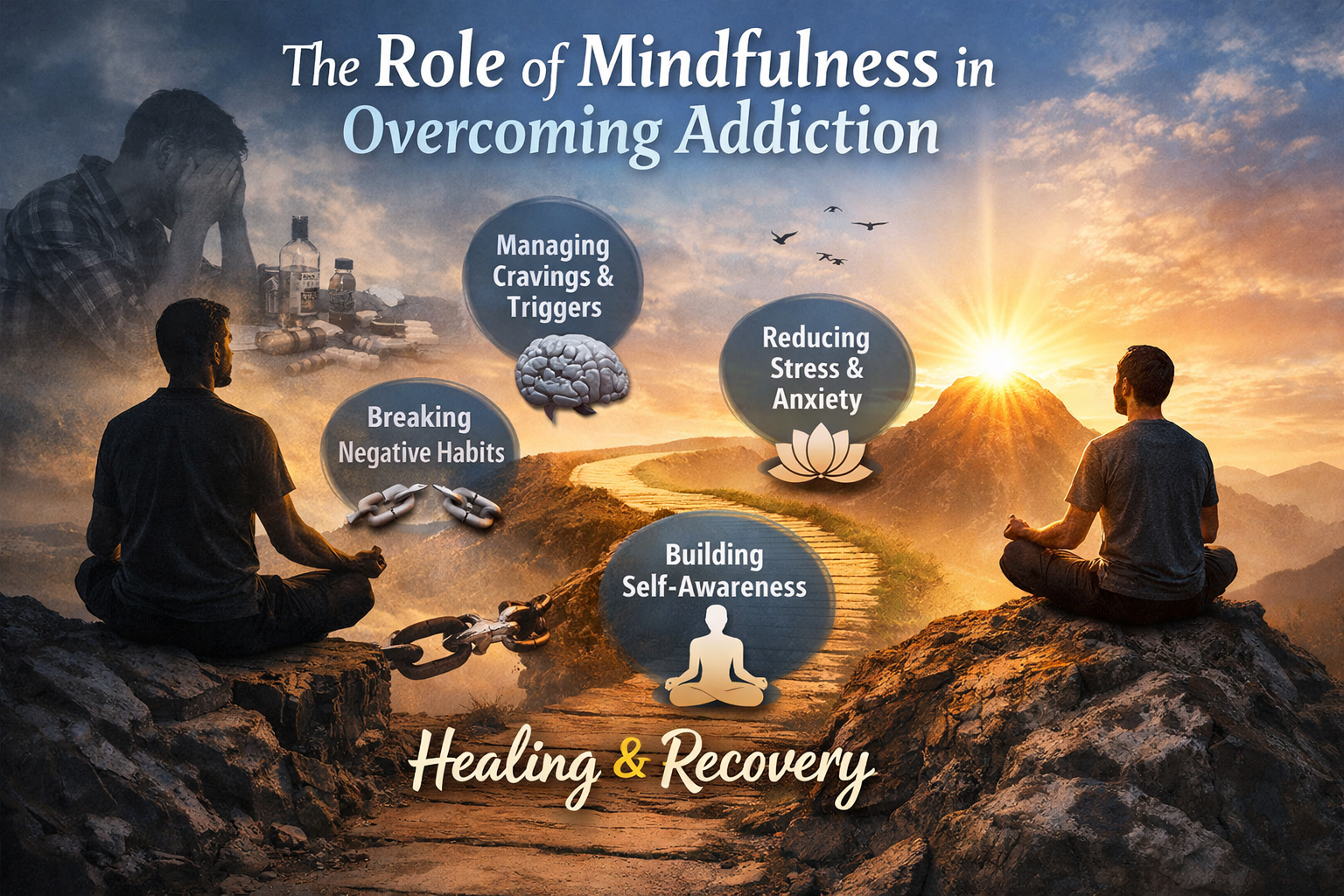
The role of mindfulness in addiction recovery is to help individuals become aware of cravings, emotions, and triggers without reacting impulsively. This awareness supports healthier decision-making and reduces relapse risk.
Addiction is a complex struggle that affects both the mind and body. While traditional treatments such as counselling, therapy, and medication are crucial, integrating mindfulness into addiction recovery has proven to be highly effective. Mindfulness equips individuals with the ability to live in the present moment, observe cravings without judgment, and regain control over their thoughts and behaviours.
Understanding Mindfulness in Addiction Recovery
Mindfulness is the practice of being fully present, aware of your thoughts, emotions, and sensations without judgment. At Aarogya Sewa Samithi, we use this approach in addiction recovery to help individuals break the cycle of compulsive behaviours, enabling them to respond to triggers rather than react impulsively..
Key benefits include:
Reducing stress and anxiety that often lead to relapse
The Role of Mindfulness in Addiction Recovery helps individuals manage stress and anxiety by encouraging calm awareness of thoughts and emotions. This reduces emotional overload, which is a major trigger for relapse.
Improving emotional regulation
Through The Role of Mindfulness in Addiction Recovery, individuals learn to observe emotions without reacting impulsively. This skill allows them to respond thoughtfully rather than turning to substances.
Enhancing self-awareness and self-compassion
The Role of Mindfulness In Addiction Recovery promotes deeper self-awareness and kindness toward oneself. By practising self-compassion, individuals reduce guilt and shame that can hinder recovery, reinforcing The Role of Mindfulness In Addiction Recovery as a supportive process.
Strengthening resilience against cravings
The Role of Mindfulness in Addiction Recovery strengthens resilience by teaching individuals to acknowledge cravings without acting on them. This mindful response builds control and supports long-term sobriety.
The Science Behind Mindfulness in Addiction Recovery
Research has shown that mindfulness can rewire the brain to reduce automatic, compulsive responses associated with addiction. Practices like meditation activate the prefrontal cortex—the area responsible for decision-making and impulse control—while reducing activity in the amygdala, which is associated with stress and emotional reactivity. This neurological shift helps individuals respond to cravings thoughtfully rather than reactively, decreasing the likelihood of relapse.
Studies also indicate that mindfulness reduces stress hormones like cortisol, which often trigger substance use or relapse. This highlights the role of mindfulness in addiction recovery, making mindfulness an effective complementary approach alongside therapy and medication.
How Mindfulness Supports Sobriety
Mindfulness is not just meditation—it’s a lifestyle that encourages conscious awareness of each moment. The Role of Mindfulness in Addiction Recovery is significant, as it helps individuals recognise triggers, cope with cravings, and maintain long-term sobriety. When applied to addiction recovery, mindfulness supports emotional regulation, self-awareness, and healthier coping strategies that strengthen the recovery process.
Mindfulness Practices for Sobriety
Some effective mindfulness practices include:
-
Mindfulness Meditation: Focused attention on breath, sensations, or thoughts to develop awareness and reduce impulsivity.
-
Body Scan Meditation: Observing sensations in each part of the body to release tension and enhance self-awareness.
-
Mindful Walking or Movement: Engaging fully with physical movements to calm the mind and reduce stress.
-
Journaling Mindful Thoughts: Recording thoughts and emotions to identify patterns and triggers.
Mindfulness Meditation for Addiction
Mindfulness meditation has been extensively studied and proven to help reduce relapse rates. In structured sessions at a Nasha Mukti Kendra, patients learn to:
-
Observe cravings without acting on them
-
Accept uncomfortable emotions without judgment
-
Build patience and self-control
-
Strengthen coping mechanisms for high-risk situations
Integrating Mindfulness into Daily Recovery
For lasting results, mindfulness should be practised consistently, not just during therapy sessions. Here’s how to integrate it into daily life:
Daily Mindfulness Tips:
-
Start the day with a 5-10 minute meditation
-
Practice mindful eating, savouring each bite
-
Take short, mindful breaks during stressful moments
-
Reflect on your thoughts and emotions without judgment
-
Use guided mindfulness apps or recordings for support
Mindful Living After Addiction
Recovery doesn’t end at sobriety; it’s about creating a sustainable, mindful lifestyle. Mindful living after addiction focuses on:
-
Prioritising mental health through meditation and self-reflection
-
Establishing daily routines that support sobriety
-
Building supportive relationships with like-minded individuals
-
Practising gratitude and positive reinforcement
A Nasha Mukti Kendra integrates mindfulness into structured rehabilitation programs. Benefits include:
Personalise group mindfulness workshops
-
Stress management training
-
Cognitive-behavioural strategies combined with mindfulness
These approaches help patients rebuild their lives while reducing the risk of relapse.

Conclusion
Mindfulness serves as a powerful tool in addiction recovery by fostering self-awareness, reducing stress, and helping individuals manage cravings and triggers. By encouraging present-moment focus and non-judgmental acceptance, mindfulness empowers individuals to break negative patterns, build emotional resilience, and maintain long-term sobriety. Integrating mindfulness practices into recovery at Aarogya Sewa Samithi, one of the leading nasha mukti kendra in Dehradun, Uttarakhand, not only supports healing but also promotes a balanced and fulfilling life beyond addiction.
FAQ Section
Q1: How does mindfulness help with addiction?
A: Mindfulness helps individuals recognise cravings without acting on them, reduces stress, and improves emotional regulation, supporting long-term sobriety.
Q2: Can mindfulness replace traditional addiction treatments?
A: No. Mindfulness complements traditional therapies like counselling, medications, and rehab programs for holistic recovery.
Q3: How long does it take to see results with mindfulness practices?
A: Consistent practice for a few weeks can improve awareness and emotional control, but lasting benefits increase over months.
Q4: What mindfulness practices are best for addiction recovery?
A: Meditation, body scans, mindful walking, and journaling are highly effective practices to support recovery.
Q5: Is mindfulness suitable for all types of addiction?
A: Yes. Mindfulness techniques can be adapted for substance abuse, alcohol addiction, and behavioural addictions.