Psychology of Addiction: A Powerful Insight Into How the Mind Gets Trapped and Recovers
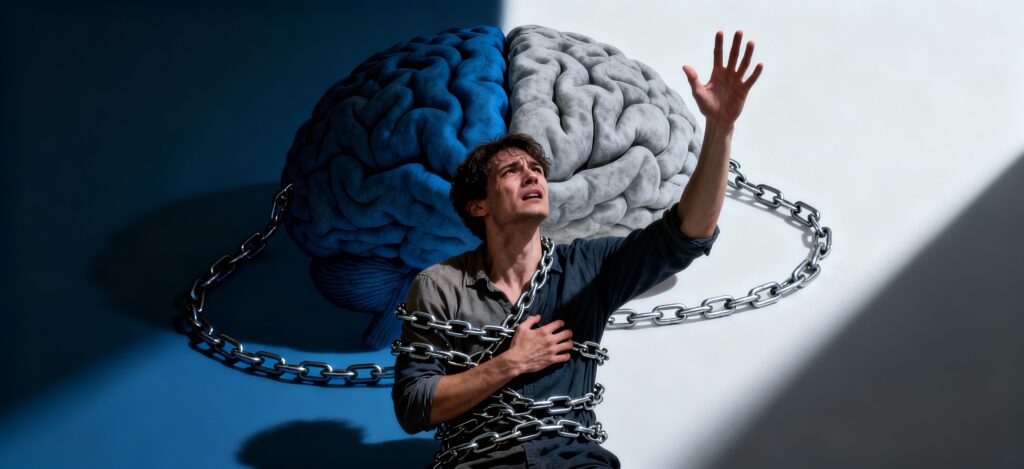
The psychology of addiction explores the mental and emotional factors that drive addictive behaviours, focusing on how brain function, emotions, and environment influence substance dependence. Understanding these processes helps in developing effective treatments and recovery strategies.
The Psychology of Addiction
Addiction is often misunderstood as a problem of willpower, but the Psychology of Addiction shows that it is far more complex, deeply rooted in the brain, emotions, environment, and behaviour. It is a progressive condition in which the mind becomes dependent on a substance or behaviour to regulate internal distress, pleasure, or functioning.
In India, organisations working in community mental health, such as Arogya Sewa Samiti, have highlighted how addiction is not just a personal issue but a social health concern. By understanding the Psychology of Addiction, individuals and families can approach this challenge with greater compassion, awareness, and clarity.
What the Psychology of Addiction Reveals About the Human Brain
The Psychology of Addiction begins with understanding how substances or compulsive behaviours alter brain chemistry. According to neuroscience research, addictive substances activate the brain’s reward system so intensely that the mind begins to prioritise the addiction over basic needs, relationships, and responsibilities.
Dopamine and the Cycle of Craving
Addictive substances overstimulate dopamine— the neurotransmitter responsible for pleasure, reward, and motivation. Over time, the brain becomes desensitised, requiring more of the substance to achieve the same effect. The Psychology of Addiction explains how this increases the intensity of cravings and reduces self-control.
Habit Formation and Neural Pathways
The brain forms strong neural pathways linking substance use with emotional relief. This is why addiction becomes automatic—almost like a reflex. Research on the Psychology of Addiction shows that repeated behaviour strengthens these pathways, making recovery challenging but still possible with structured intervention.
Emotional and Cognitive Components in the Psychology of Addiction
Addiction is rarely about the substance alone. The Psychology of Addiction reveals that emotional pain, trauma, stress, and negative thinking patterns often serve as triggers.
Addiction as an Emotional Escape
For many individuals, substances provide temporary relief from anxiety, grief, loneliness, or unresolved trauma. The Psychology of Addiction highlights this emotional dependency as a key driver of relapse.
Cognitive Distortions and Denial
Common thought patterns in addiction include:
- “I can quit whenever I want.”
- “One more time won’t hurt.”
- “I need this to deal with stress.”
Understanding these distortions is crucial in the Psychology of Addiction, as many individuals remain trapped due to denial and minimising behaviour.
Behavioural Psychology of Addiction: Why People Continue Despite Harm
Behavioural science explains how addiction becomes a learned pattern reinforced by immediate reward.
In the Psychology of Addiction, this phenomenon is called reward reinforcement.
Triggers and Automatic Responses
Specific people, places, emotional states, or even certain smells can trigger cravings. Learning to identify and manage these triggers is essential in overcoming dependency.
The Role of Conditioning
If a person repeatedly uses a substance to cope with stress, the brain starts associating stress with cravings. The Psychology of Addiction shows that breaking this conditioning requires new habits, therapy, and long-term support.
Social and Environmental Factors in the Psychology of Addiction
Addiction is shaped not only by the mind but also by the environment.
Family Dynamics
Overly strict, neglectful, or highly conflict-prone households significantly increase vulnerability. The Psychology of Addiction indicates that dysfunctional relationships often lead to escapism or emotional emptiness.
Peer Pressure and Social Influence
Young people who lack strong boundaries or emotional support are more susceptible to substance use. The Psychology of Addiction emphasises that social acceptance plays a powerful role in early experimentation.
Cultural Beliefs
Certain cultural practices or beliefs normalise harmful substances. This can mask early signs of dependency.
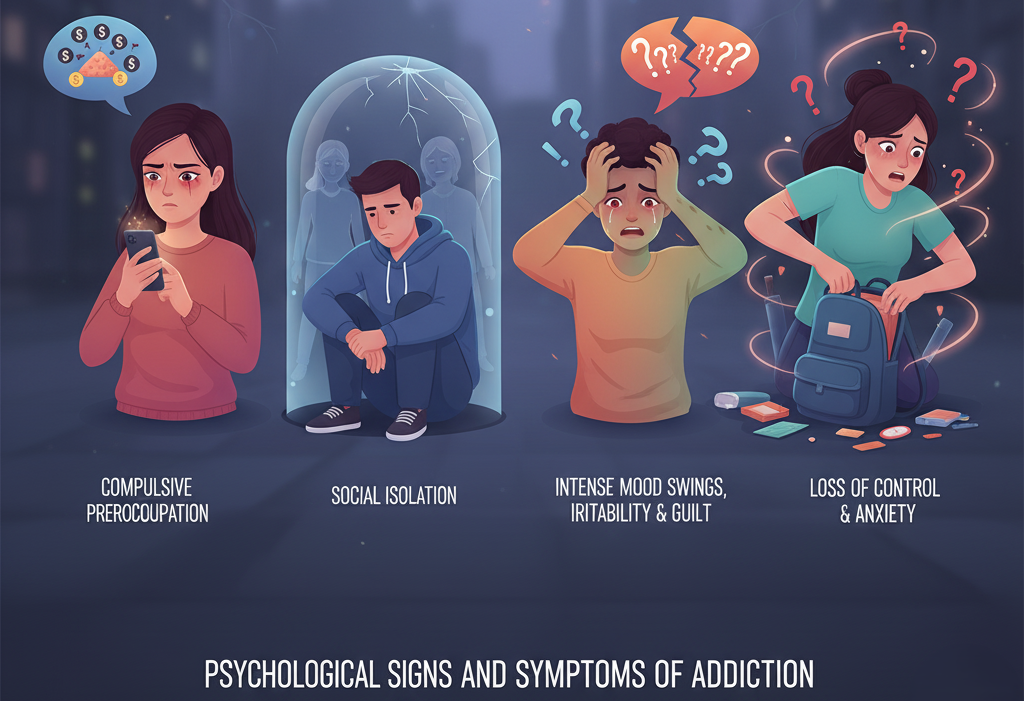
Psychological Signs and Symptoms of Addiction
Recognising early signs helps prevent severe mental and physical decline.
According to the Psychology of Addiction, symptoms can be categorised into emotional, cognitive, and behavioural patterns.
Emotional Symptoms
- Irritability
- Mood swings
- Anxiety and restlessness
- Emotional numbness
- Increased sensitivity to stress
Cognitive Symptoms
- Obsessive thinking
- Impaired judgment
- Difficulty focusing
- Denial
- Justifying harmful behaviours
Behavioral Symptoms
- Social withdrawal
- Lying or hiding usage
- Risk-taking behavior
- Neglecting responsibilities
- Spending excessive time obtaining or using substances
These patterns illustrate how deeply intertwined mental health is with the Psychology of Addiction.
Models Used in the Psychology of Addiction
The Disease Model
States that addiction is a chronic illness caused by brain changes—not a moral failure.
The Biopsychosocial Model
A comprehensive model is used widely in clinical settings. It explains addiction through:
- Biological factors
- Psychological factors
- Social factors
This model aligns closely with the Psychology of Addiction, integrating all dimensions of human behaviour.
The Cognitive-Behavioural Model
Focuses on modifying thoughts and behaviours that sustain addiction. CBT is often the most effective approach in rehabilitation.
The Path to Recovery Through Psychological Interventions
Recovery is not only about detoxing. It requires rebuilding emotional stability, reevaluating thought patterns, reestablishing coping mechanisms, and strengthening social support structures.
Psychotherapy
Includes:
- Cognitive Behavioural Therapy (CBT)
- Motivational Interviewing (MI)
- REBT
- Trauma-informed therapy
These therapies help individuals understand the roots of their addiction and reshape their coping skills.
- Behavioral Interventions
- These focus on habit change, trigger management, and relapse prevention.
- Group Therapy and Support Systems
- Hearing others’ experiences reduces shame, fear, and loneliness.
- Family Therapy
- Healing the home environment is vital because addiction affects the entire family system.
Relapse: A Crucial Insight in the Psychology of Addiction
Relapse is not failure—it’s a part of the learning curve. Psychology describes relapse as a moment when triggers overwhelm coping skills.
Causes of Relapse:
- Stress
- Trauma reminders
- Social pressure
- Poor emotional regulation
- Lack of support
Understanding relapse patterns helps individuals strengthen their recovery plan and build resilience.
Long-Term Recovery and Rebuilding Identity
After detox and therapy, individuals face the deeper challenge of rebuilding their lives—emotionally, mentally, socially, and spiritually. Detox removes the substance from the body, but healing the mind is a slow and transformative journey. This is where the Psychology of Addiction becomes essential, highlighting how recovery is not only about avoiding substances but about rediscovering who you are beyond addiction.
Addiction often strips away a person’s identity, self-esteem, and sense of direction. Long-term recovery requires restoring these lost parts of the self. The Psychology of Addiction teaches that individuals must re-awaken their personal identity, re-establish their purpose, and rebuild confidence that may have been broken during years of dependence.
This stage is about developing a new lifestyle—one that supports mental clarity, emotional balance, healthy decision-making, and long-term resilience. It is where individuals begin to shift from surviving to truly living.
Building New Habits
Healthy routines are the backbone of sustained recovery. During addiction, the brain becomes wired to seek pleasure, escape, or relief through harmful substances. In recovery, these neural pathways must be slowly replaced by healthier behaviours.
- Consistent sleep patterns help repair brain functioning.
- Physical exercise boosts dopamine naturally, supporting mood stability.
- Nutritious eating habits restore energy and improve cognitive functioning.
- Mindfulness practices, like meditation and deep breathing, help calm the mind.
- Productive daily structures, such as work or skill-building, create discipline and purpose.
Over time, these routines reshape neural pathways and reduce cravings. The Psychology of Addiction emphasises that new habits must be practised consistently to replace old patterns of dependency.
Developing Emotional Intelligence
Emotions play a powerful role in addiction and recovery. Many individuals fall into addiction because they lack healthy coping mechanisms for stress, trauma, anger, loneliness, or guilt. Recovery demands learning how to understand, regulate, and express emotions constructively.
Through therapy and daily self-reflection, individuals learn to:
- Recognise emotional triggers
- Express feelings without suppression or aggression
- Build empathy and insight
- Communicate needs more clearly
- Respond to stress with healthier strategies
As emotional intelligence develops, the brain no longer seeks substances to cope with intense feelings. This aligns strongly with the Psychology of Addiction, which shows that emotional growth reduces relapse risks and encourages long-term psychological stability.
Finding Meaning
Addiction often creates a void—an emptiness inside that substances temporarily fill. Recovery is about filling that space with meaning, purpose, and connection. Without purpose, the mind naturally seeks escape; with it, stability becomes easier to sustain.
Meaning can be found through:
- Work or career growth, which builds confidence and identity
- Healthy relationships provide emotional safety and support
- Spirituality or mindfulness, which helps individuals feel grounded
- Creative outlets, such as music, writing, art, or dance
- Fitness and sports, which promote discipline and release natural endorphins
- Hobbies and passions remind individuals of joy beyond substances
When a person feels connected to something bigger—whether it’s a goal, community, value system, or loved ones—they become mentally stronger. The Psychology of Addiction supports that meaning-making is a key factor in preventing relapse and ensuring long-term recovery.
Conclusion: A Compassionate Understanding of the Psychology of Addiction
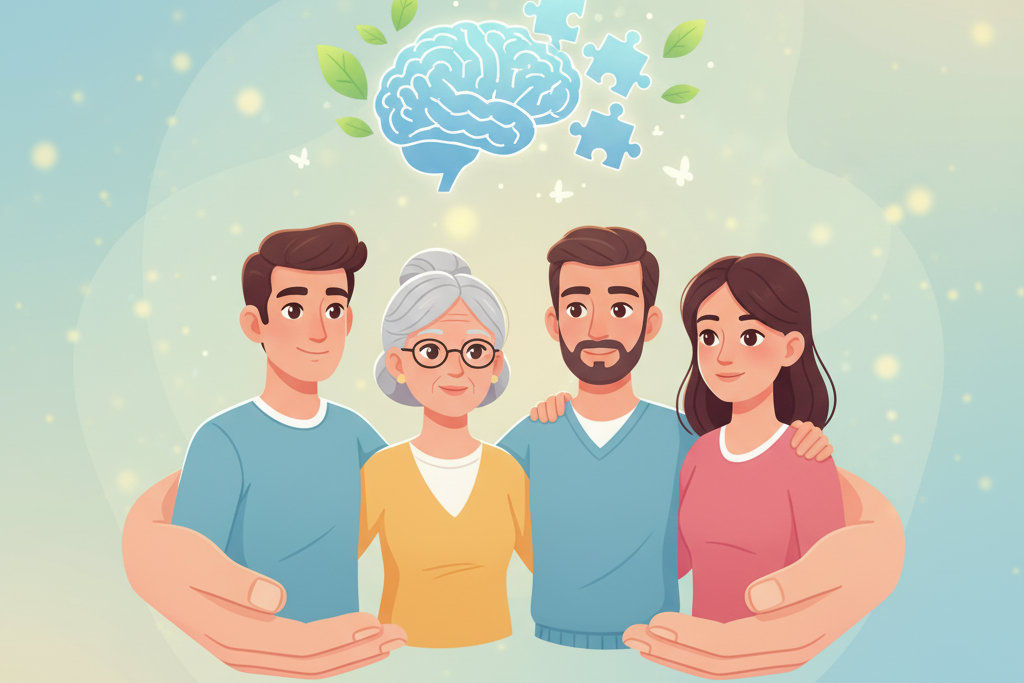
The Psychology of Addiction reminds us that dependency is not a personal weakness but a complex mental, emotional, and social struggle. By understanding how the brain, thoughts, emotions, and environment contribute to addiction, individuals and families can approach recovery with greater empathy and stronger strategies.
Suppose you or someone you care about is seeking structured care and psychological support. In that case, Arogya Sewa Samiti, the best deaddiction centre in Dehradun, can offer a safe and supervised environment for long-term recovery grounded in science and compassion.