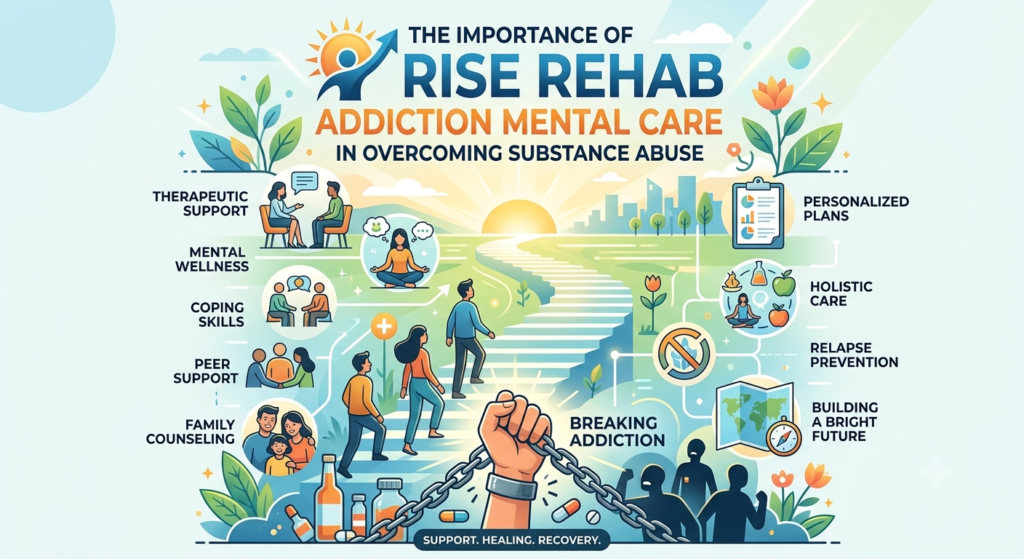
Substance abuse is one of the biggest health challenges affecting individuals and families today. Whether the addiction involves alcohol, drugs, or prescription medicines, it can damage physical health, mental well-being, relationships, and careers. The good news is that recovery is possible with professional support. Rise Rehab Addiction Mental Care focuses on treating both addiction and mental health together, helping people regain control of their lives. At Aarogya Sewa Samiti, the goal is to provide compassionate care that addresses every stage of recovery.
Understanding Substance Abuse
Substance abuse occurs when a person repeatedly uses alcohol or drugs despite experiencing harmful consequences. Over time, these substances change how the brain functions, making it difficult to stop without professional help. Addiction is not a sign of weakness. It is a medical condition that requires proper treatment, emotional support, and long-term care.
Many people continue using substances because they struggle with stress, trauma, anxiety, or depression. This is why Rise Rehab Addiction Mental Care emphasizes treating both addiction and underlying mental health conditions together for lasting recovery.
Why Mental Health Matters During Recovery
Mental health plays a major role in addiction recovery. People experiencing emotional pain often turn to substances as a temporary escape. Unfortunately, this creates a cycle where addiction worsens mental health, and poor mental health increases substance use.
Professional rehabilitation focuses on breaking this cycle through evidence-based therapies and personalized treatment plans. At Aarogya Rehab, experienced professionals understand that healing the mind is just as important as healing the body.
Common Causes of Substance Abuse
Although every individual’s journey is unique, several common factors increase the risk of addiction.
- Emotional stress and anxiety
- Depression or unresolved trauma
- Peer pressure
- Family history of addiction
- Chronic pain requiring medication
- Lack of healthy coping skills
- Social isolation
- Academic or workplace pressure
Recognizing these causes early allows individuals and families to seek professional help before addiction becomes severe.
Warning Signs That Should Never Be Ignored
Substance abuse often develops gradually. Identifying the warning signs early can make treatment more successful.
Some common signs include:
- Sudden mood swings
- Loss of interest in hobbies
- Poor work or academic performance
- Secretive behavior
- Financial difficulties
- Sleep disturbances
- Weight changes
- Increased tolerance to drugs or alcohol
- Withdrawal symptoms when not using substances
Seeking help immediately after noticing these signs can prevent long-term health complications.
How Rise Rehab Addiction Mental Care Supports Recovery
Recovery involves much more than stopping substance use. A successful rehabilitation program helps individuals understand the reasons behind their addiction while teaching healthier ways to manage life’s challenges.
At Aarogya Sewa Samiti, treatment focuses on physical healing, emotional recovery, and personal growth. Every person receives care designed to meet their specific needs rather than following a one-size-fits-all approach.
The rehabilitation journey usually includes medical care, counseling, behavioral therapy, family support, relapse prevention, and ongoing aftercare. Together, these services help individuals build confidence and develop healthier lifestyles.
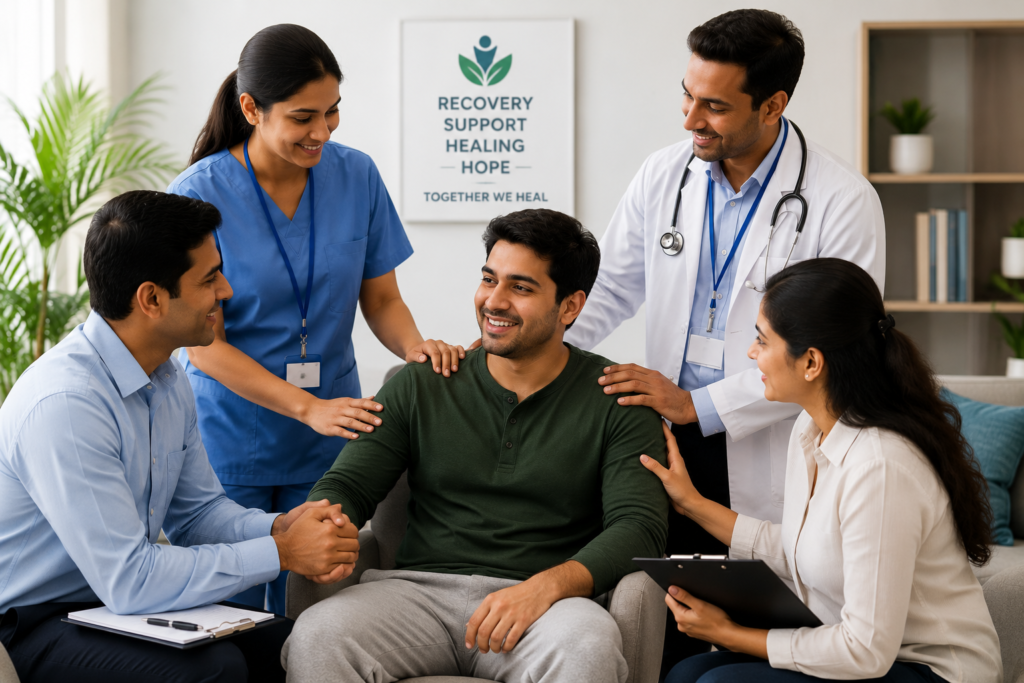
“A dedicated rehabilitation team provides continuous support throughout the recovery journey”
Benefits of Professional Rehabilitation
Professional rehabilitation provides a structured environment where individuals can recover safely under expert supervision. Instead of facing addiction alone, patients receive guidance from experienced healthcare professionals who understand every stage of recovery.
Some important benefits include:
- Safe medical supervision during detoxification
- Personalized treatment plans
- Individual and group counseling
- Mental health assessment
- Family therapy sessions
- Relapse prevention strategies
- Life skills development
- Continuous emotional support
These services work together to improve both physical and emotional well-being while preparing individuals for independent living after treatment.
The Role of Counseling in Lasting Recovery
Counseling is one of the most valuable parts of Rise Rehab Addiction Mental Care. Therapy helps individuals identify emotional triggers, negative thought patterns, and unhealthy behaviors that contribute to addiction.
Professional counselors encourage patients to develop practical coping strategies, improve communication skills, and rebuild self-confidence. Over time, individuals learn healthier ways to deal with stress without depending on alcohol or drugs.
Counseling also helps patients repair damaged relationships and regain trust within their families, making long-term recovery more achievable.
Family Support Makes Recovery Stronger
Addiction affects not only the individual but also parents, spouses, children, and close friends. Family members often experience emotional stress, confusion, and helplessness while watching a loved one struggle. Including the family in the recovery process creates a stronger support system and improves long-term outcomes.
Family counseling helps everyone understand addiction as a medical condition rather than a personal failure. It also encourages healthy communication, rebuilds trust, and teaches practical ways to support recovery without enabling harmful behaviors. At Aarogya Rehab, families are encouraged to become active partners in the healing journey.

“Family counseling strengthens communication, rebuilds trust, and creates a supportive foundation for lasting recovery from addiction”
Preventing Relapse Through Continuous Care
Recovery does not end after completing a rehabilitation program. Returning to everyday life can present challenges such as stress, peer pressure, and emotional triggers. Learning how to manage these situations is an important part of Rise Rehab Addiction Mental Care.
Effective relapse prevention includes:
- Identifying personal triggers.
- Developing healthy coping strategies.
- Attending regular counseling sessions.
- Participating in support groups.
- Following a structured daily routine.
- Maintaining physical fitness and balanced nutrition.
- Seeking professional help whenever needed.
These practices help individuals remain focused on their recovery goals and reduce the risk of returning to substance use.

“Mental wellness is an essential part of recovery, helping individuals find balance, clarity, and inner strength”
Building a Healthy Lifestyle After Rehabilitation
A successful recovery involves creating positive habits that support both physical and mental well-being. Healthy routines improve confidence and make it easier to handle everyday challenges without relying on addictive substances.
Some healthy habits include regular exercise, nutritious meals, adequate sleep, mindfulness practices, hobbies, and spending time with supportive family members and friends. Setting realistic personal and professional goals also gives individuals a renewed sense of purpose and motivation.
With consistent effort and guidance, recovery becomes a lifelong journey of growth rather than simply avoiding addiction.
Why Choose Aarogya Sewa Samiti?
Choosing the right rehabilitation centre is one of the most important decisions in the recovery process. Aarogya Sewa Samiti is committed to providing compassionate, professional, and comprehensive care for individuals struggling with substance abuse and mental health challenges.
The team at Aarogya Rehab focuses on treating the whole person instead of only addressing addiction symptoms. Through individualized treatment plans, professional counseling, therapeutic activities, and ongoing support, the centre aims to help every patient build a healthier and more independent future.
The supportive environment encourages dignity, respect, and hope, allowing individuals to recover at their own pace while receiving expert guidance throughout the process.
Frequently Asked Questions
Can addiction be completely treated?
Yes. With professional rehabilitation, counseling, lifestyle changes, and continued support, many individuals achieve long-term recovery and lead fulfilling lives.
Why is mental health treatment important during addiction recovery?
Mental health conditions such as anxiety, depression, and trauma often contribute to substance abuse. Treating both together improves recovery outcomes and reduces relapse risk.
How long does rehabilitation usually take?
The duration varies depending on each person’s condition, treatment goals, and progress. Professionals recommend personalized treatment plans rather than fixed timelines.
Is family involvement necessary?
Family participation often strengthens recovery by improving communication, emotional support, and understanding throughout the rehabilitation journey.
Conclusion
Overcoming substance abuse requires determination, professional care, and ongoing emotional support. Rise Rehab Addiction Mental Care highlights the importance of addressing both addiction and mental health together, giving individuals the best opportunity to achieve lasting recovery. With expert guidance, compassionate counseling, structured rehabilitation, and family involvement, healing becomes possible.
At Aarogya Sewa Samiti, every individual is treated with dignity, respect, and personalized attention. Aarogya Rehab believes that recovery is not just about quitting substances—it is about rebuilding confidence, restoring relationships, improving mental wellness, and creating a healthier future. Taking the first step toward professional rehabilitation today can open the door to a life filled with hope, purpose, and lasting well-being.