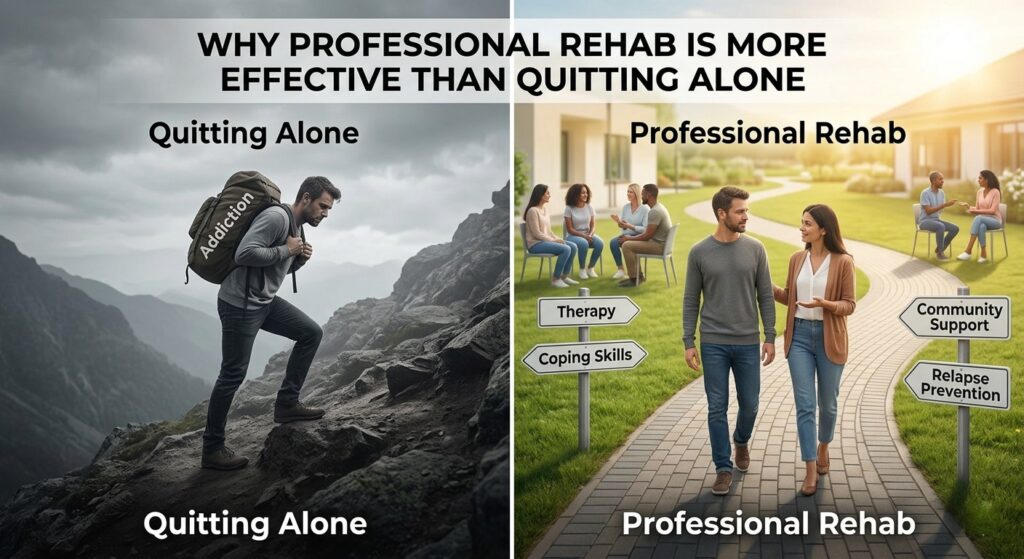
Addiction is a complex condition that affects not only the body but also the mind, emotions, relationships, and overall quality of life. Whether someone is struggling with alcohol addiction, drug dependency, or substance abuse, deciding to quit is a positive first step. However, many people believe they can overcome addiction on their own without professional help.
While self-motivation is important, addiction recovery often requires much more than willpower. This is why professional rehab programs have proven to be significantly more effective than trying to quit alone. Rehabilitation centers provide medical support, counseling, therapy, structured treatment plans, and long-term recovery guidance that increase the chances of lasting sobriety.
At Aarogya Rehab, operated under Aarogya Sewa Samiti and supported by Aarogya Sewa Samiti Dehradun, individuals receive comprehensive care designed to address every aspect of addiction recovery.
Understanding Why Quitting Alone Is Difficult
Many people attempt to stop drinking alcohol or using drugs without professional support. While some may stay sober temporarily, maintaining long-term recovery can be extremely challenging.
Addiction changes the brain’s reward system. Over time, substances become deeply connected to emotions, habits, and daily routines. Even when someone wants to stop, cravings and withdrawal symptoms can make recovery difficult.
Common challenges people face when quitting alone include:
• Strong cravings for alcohol or drugs
• Physical withdrawal symptoms
• Anxiety and depression
• Lack of emotional support
• Stress-related relapse
• Difficulty managing triggers
• Isolation and loneliness
Without professional guidance, these challenges often lead individuals back to substance use.
Professional Rehab Provides Medical Supervision
One of the biggest advantages of professional rehab is access to medical care.
For people with severe addiction, withdrawal symptoms can become uncomfortable and sometimes dangerous. Attempting detoxification without medical supervision may create serious health risks.
Common withdrawal symptoms include:
- Nausea and vomiting
- Tremors and sweating
- Insomnia
- Mood swings
- Anxiety and panic attacks
- Elevated heart rate
- Severe cravings
At Aarogya Rehab, medical professionals monitor patients throughout the detox process, ensuring safety and comfort during recovery.

Medical detoxification “Support in Rehabilitation Center”
Structured Treatment Creates Better Results
One major reason people relapse when quitting alone is the absence of structure.
A professional rehabilitation center provides a carefully designed treatment schedule that helps patients stay focused on recovery.
A structured rehab program often includes:
• Medical assessment
• Detoxification services
• Individual counseling
• Group therapy
• Family counseling
• Wellness activities
• Relapse prevention training
• Aftercare planning
This organized approach eliminates many distractions and creates an environment that supports healing.
Counseling Addresses the Root Cause of Addiction
Many people assume addiction is simply a lack of self-control. In reality, addiction often develops due to deeper emotional or psychological issues.
Some common underlying causes include:
- Stress
- Trauma
- Anxiety disorders
- Depression
- Family conflicts
- Low self-esteem
- Social pressure
Professional counseling helps identify and address these root causes.
At Aarogya Rehab, trained counselors work closely with patients to understand their challenges and develop healthier coping strategies.
Therapy Helps Change Negative Thinking Patterns
Addiction is closely linked to behavior and thought patterns. Simply removing alcohol or drugs does not automatically change those patterns.
Professional rehab uses evidence-based therapies that help individuals build healthier habits.
Common therapies include:
• Cognitive Behavioral Therapy (CBT)
• Motivational Enhancement Therapy
• Behavioral Counseling
• Mindfulness-Based Therapy
• Relapse Prevention Therapy
These therapies teach patients how to recognize triggers, manage stress, and make healthier decisions.
Professional Support Reduces Relapse Risk
Relapse is one of the biggest challenges in addiction recovery.
When individuals quit alone, they often lack the skills needed to manage cravings and stressful situations. As a result, many return to substance use when faced with emotional difficulties.
Professional rehabilitation programs focus heavily on relapse prevention.
Patients learn how to:
- Identify personal triggers
- Avoid high-risk situations
- Manage stress effectively
- Build healthy routines
- Develop coping mechanisms
- Seek support when needed
These skills greatly improve long-term recovery outcomes.
The Importance of Peer Support
Addiction can be an isolating experience. Many individuals feel misunderstood or judged by others.
Professional rehab programs create opportunities for patients to connect with people facing similar challenges.
Benefits of peer support include:
• Reduced feelings of isolation
• Increased motivation
• Shared experiences
• Greater accountability
• Emotional encouragement
Group therapy sessions provide a safe environment where individuals can discuss struggles, successes, and recovery goals.
Knowing that others understand their journey often strengthens commitment to sobriety.
Family Involvement Improves Recovery
Addiction affects entire families, not just the individual.
Broken trust, communication issues, emotional stress, and financial difficulties are common consequences of substance abuse.
Professional rehab programs recognize the importance of family healing.
Family counseling helps:
- Rebuild relationships
- Improve communication
- Educate loved ones about addiction
- Establish healthy boundaries
- Create a supportive recovery environment
At Aarogya Rehab, family participation is encouraged because strong support systems improve recovery success.

“Family counseling session during addiction treatment”
Professional Rehab Focuses on Mental Health
Many people struggling with addiction also experience mental health conditions.
Common co-occurring disorders include:
• Anxiety
• Depression
• PTSD
• Bipolar disorder
• Stress-related disorders
When individuals attempt to quit alone, these mental health issues often remain untreated.
Professional rehabilitation centers provide integrated care that addresses both addiction and mental health concerns simultaneously.
Treating both conditions together significantly increases the likelihood of long-term recovery.
Healthy Lifestyle Development Supports Recovery
Recovery involves more than simply avoiding substances.
Long-term sobriety requires building a healthy and balanced lifestyle.
Professional rehab programs encourage positive habits such as:
- Regular exercise
- Balanced nutrition
- Yoga and meditation
- Stress management
- Healthy sleep patterns
- Productive hobbies
- Social engagement
These habits help strengthen physical and emotional well-being while reducing relapse risk.

“Healthy choices today build a healthier future tomorrow”
Why Environment Matters During Recovery
The environment plays a critical role in addiction recovery.
When someone attempts to quit alone, they often remain surrounded by the same people, places, and situations associated with substance use.
This increases temptation and relapse risk.
Professional rehabilitation centers provide:
• Safe surroundings
• Substance-free environments
• Professional supervision
• Positive influences
• Recovery-focused communities
This supportive setting allows patients to concentrate fully on healing and personal growth.