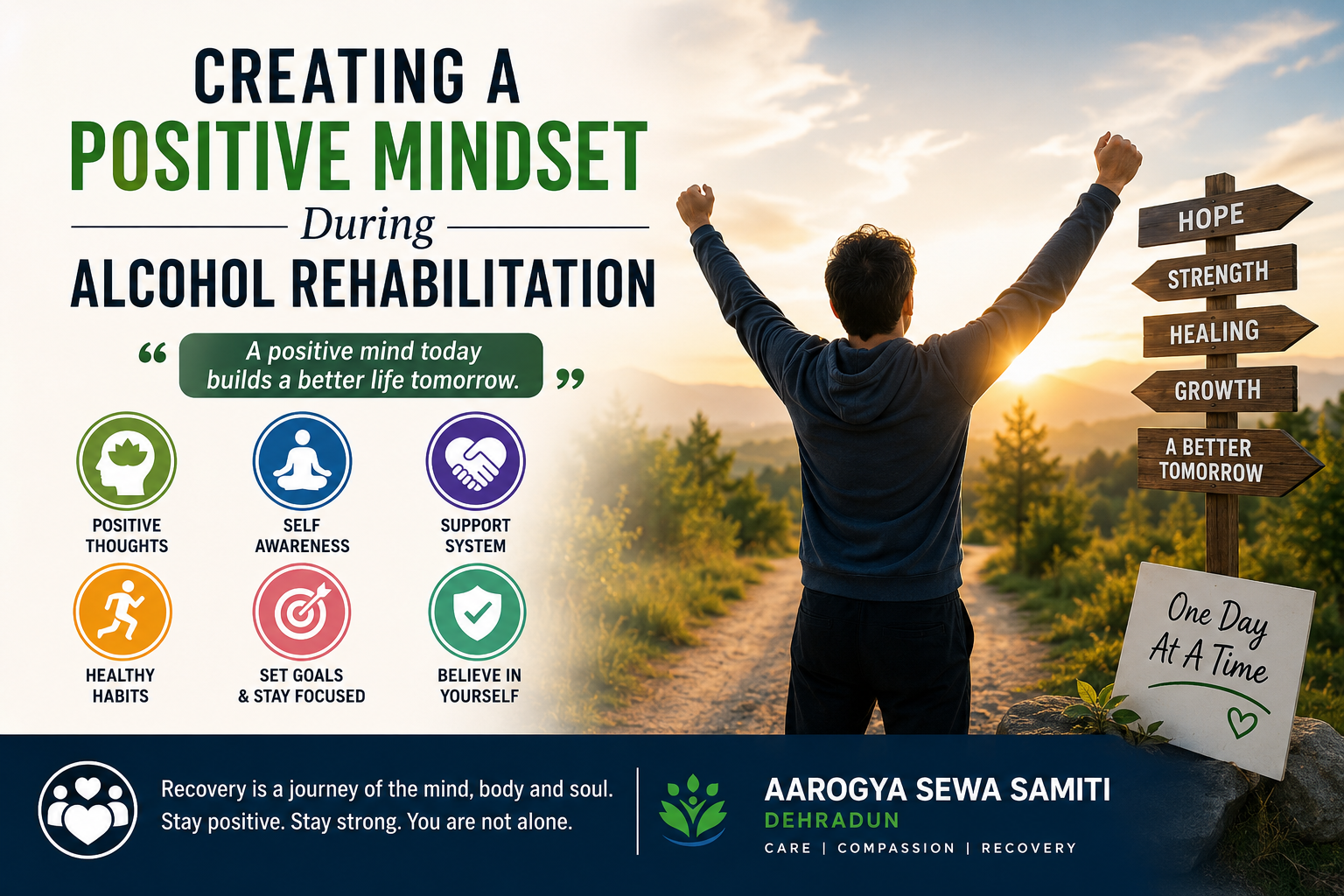
Recovering from alcohol addiction is more than simply quitting alcohol. It is a journey of rebuilding confidence, improving mental health, and developing healthier habits. A positive mindset plays a significant role in making Alcohol Rehabilitation, successful. When people believe that recovery is possible, they become more motivated to stay committed to treatment and embrace a healthier lifestyle.
At Aarogya Sewa Samiti, Dehradun, we understand that every recovery journey is unique. Our experienced team provides personalized treatment, emotional support, and professional counselling to help individuals develop a positive outlook during Alcohol Rehabilitation.
Whether you have recently started treatment or are supporting someone through recovery, maintaining hope and positivity can make a lasting difference.
Why Is a Positive Mindset Important During Alcohol Rehabilitation?
A positive mindset helps individuals remain focused on recovery even during difficult times. Alcohol Rehabilitation, involves physical healing, emotional recovery, and behavioural change. Every stage presents new challenges, but optimism encourages people to continue moving forward.
People with a positive attitude are more likely to:
- Stay committed to treatment plans.
- Build healthy daily routines.
- Participate actively in counselling sessions.
- Develop stronger coping skills.
- Reduce the chances of relapse.
- Improve emotional well-being.
- Strengthen relationships with family and friends.
Recovery is not about perfection. It is about making consistent progress every day.
Understanding the Emotional Challenges of Alcohol Rehabilitation
Many individuals experience emotional ups and downs during Alcohol Rehabilitation. Anxiety, stress, guilt, frustration, and fear are common feelings during the recovery process.
These emotions should not discourage anyone. Instead, they should be viewed as natural parts of healing. Professional counselling helps individuals understand their emotions and replace negative thoughts with healthier thinking patterns.
At Aarogya Sewa Samiti, our counsellors guide patients through these emotional challenges with compassion and understanding.
How Alcohol Rehabilitation Helps Build Confidence
Confidence often decreases during addiction. Many people begin to doubt themselves after repeated struggles with alcohol.
A structured Alcohol Rehabilitation, programme helps individuals regain confidence by:
- Achieving small recovery goals.
- Learning new coping techniques.
- Celebrating progress.
- Building healthy habits.
- Improving physical health.
- Restoring emotional balance.
Every milestone reminds patients that positive change is possible.
Positive Thinking Strategies During Alcohol Rehabilitation
Developing a healthy mindset takes practice. During Alcohol Rehabilitation, patients can strengthen positive thinking through simple daily habits.
Practice Gratitude
Writing down a few positive experiences each day shifts attention from problems to progress.
Set Small Goals
Recovery becomes more manageable when broken into achievable daily and weekly goals.
Replace Negative Thoughts
Instead of thinking, “I can’t recover,” try saying, “Recovery takes time, and I am improving every day.”
Celebrate Small Successes
Each sober day is an achievement worth recognizing during Alcohol Rehabilitation.
Stay Patient
Healing does not happen overnight. Progress is more important than perfection.
The Role of Counselling in Alcohol Rehabilitation
Professional counselling is an essential part of Alcohol Rehabilitation. Counselling helps individuals identify the causes of addiction, understand emotional triggers, and develop healthier coping mechanisms.
Therapists also teach stress management, communication skills, and relapse prevention techniques.
Counselling benefits include:
- Better emotional control
- Reduced anxiety
- Improved decision-making
- Greater self-awareness
- Increased motivation
- Stronger confidence
Family Support During Alcohol Rehabilitation
Family encouragement has a powerful impact on recovery. Positive family involvement motivates individuals to remain committed to Alcohol Rehabilitation.
Families can help by:
- Listening without judgment.
- Encouraging healthy routines.
- Celebrating progress.
- Attending family counselling sessions.
- Learning about addiction recovery.
Supportive relationships create a stronger foundation for long-term sobriety.
Healthy Lifestyle Habits During Alcohol Rehabilitation
A healthy body supports a healthy mind. Lifestyle improvements significantly enhance the success of Alcohol Rehabilitation.
Balanced Nutrition
Healthy meals improve energy levels and help repair the body after alcohol dependence.
Regular Exercise
Walking, yoga, and light exercise reduce stress while boosting mood naturally.
Proper Sleep
Good sleep improves emotional stability and mental focus.
Meditation and Mindfulness
Mindfulness helps patients stay calm and manage cravings more effectively.
Hobbies and Interests
Reading, gardening, music, painting, or volunteering create purpose and reduce boredom.
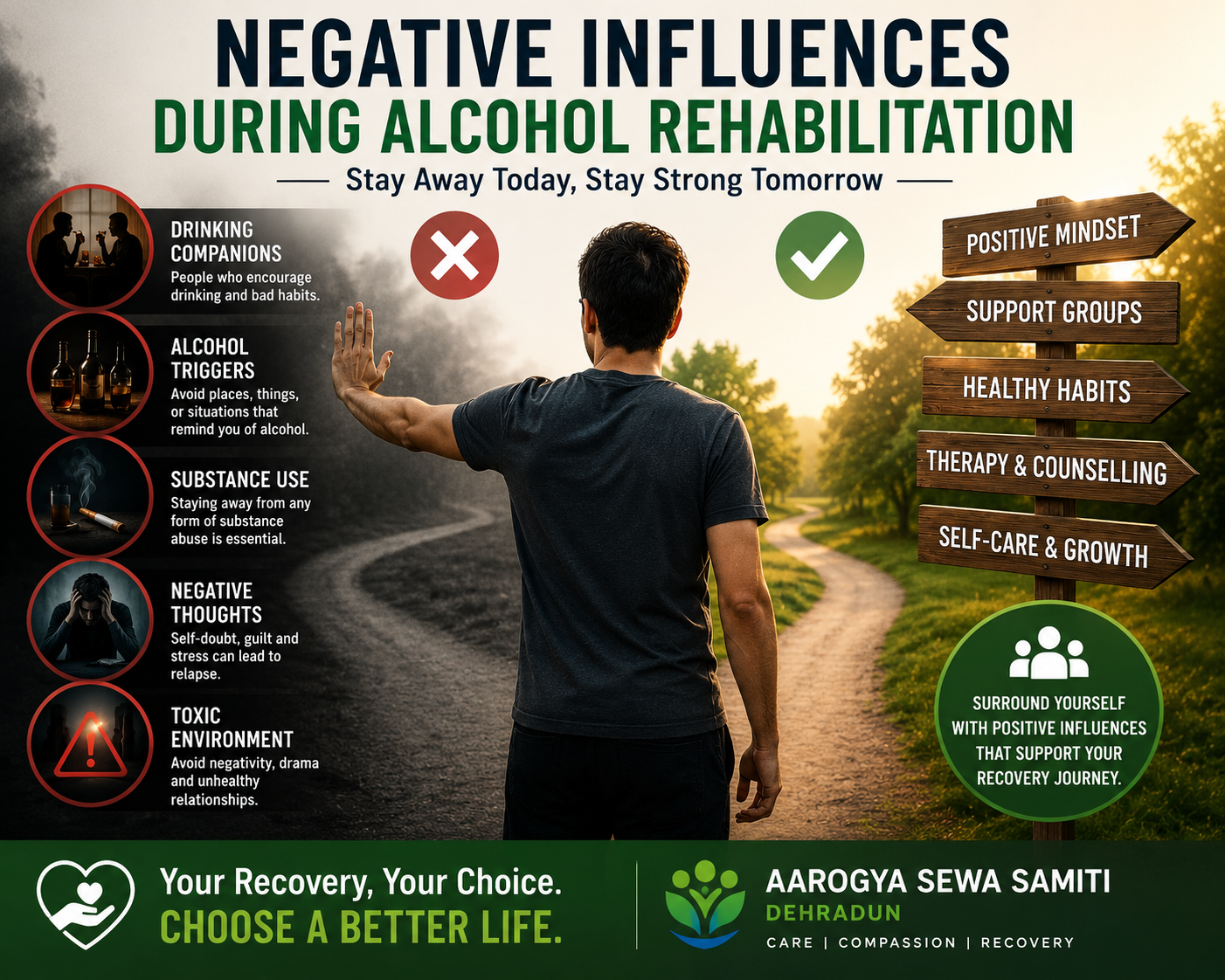
Avoiding Negative Influences During Alcohol Rehabilitation
Recovery becomes easier when individuals avoid environments that encourage drinking.
Helpful strategies include:
- Staying away from drinking companions.
- Avoiding places associated with alcohol.
- Building friendships with supportive people.
- Participating in recovery support groups.
- Following daily treatment routines.
Healthy surroundings reinforce positive behaviour.
Building Long-Term Recovery After Alcohol Rehabilitation
Completing Alcohol Rehabilitation is only the beginning of lifelong recovery.
Long-term success depends on:
- Continuing counselling.
- Following relapse prevention plans.
- Practising stress management.
- Maintaining healthy relationships.
- Attending follow-up sessions.
- Living a balanced lifestyle.
Consistency helps protect long-term sobriety.
Why Choose Aarogya Sewa Samiti for Alcohol Rehabilitation?
Aarogya Sewa Samiti in Dehradun provides compassionate and evidence-based care for individuals recovering from alcohol addiction.
Our services include:
- Alcohol Rehabilitation
- Medical detoxification
- Individual counselling
- Group therapy
- Family counselling
- Mental health support
- Relapse prevention programmes
- Aftercare planning
Our experienced professionals focus on treating both the addiction and the emotional challenges that accompany recovery.
Internal Links
Include these internal links naturally throughout the article:
- Contact Us
- About Us
- Our Services
- Alcohol Rehabilitation
- Drug Detoxification
- Family Counselling
- Admission Process
- Rehabilitation Programmes
Recommended Outbound Links
For credibility, include links to:
- World Health Organization (WHO)
- National Institute of Mental Health and Neurosciences (NIMHANS)
- Ministry of Social Justice & Empowerment
- National Health Portal (India)
A Message for Alcohol Rehabilitation
Recovery begins with a single decision to seek help. Every challenge you overcome makes you stronger than yesterday. During Alcohol Rehabilitation, there may be difficult moments, but every step forward is meaningful. Believe in yourself, trust the recovery process, and remember that lasting change is possible with determination, professional guidance, and family support. Aarogya Sewa Samiti is committed to walking beside you on your journey toward a healthier, happier, and alcohol-free life.
Conclusion
Creating a positive mindset during Alcohol Rehabilitation, is one of the most valuable tools for lasting recovery. A hopeful attitude encourages individuals to remain committed, overcome setbacks, and build a healthier future. With professional treatment, family support, counselling, and healthy daily habits, recovery becomes achievable.
At Aarogya Sewa Samiti in Dehradun, we believe that every individual deserves a second chance. Our dedicated team provides compassionate care and comprehensive rehabilitation services to help patients rebuild their lives with confidence, dignity, and hope. If you or your loved one is struggling with alcohol addiction, contact Aarogya Sewa Samiti today and begin the journey toward lasting recovery.
| Anchor Text | Outbound Link |
|---|---|
| World Health Organization (WHO) – Alcohol Facts | https://www.who.int/health-topics/alcohol |
| National Institute on Alcohol Abuse and Alcoholism (NIAAA) | https://www.niaaa.nih.gov |
| National Institute on Drug Abuse (NIDA) | https://nida.nih.gov |
| Substance Abuse and Mental Health Services Administration (SAMHSA) | https://www.samhsa.gov |
| National Institute of Mental Health and Neurosciences (NIMHANS) | https://nimhans.ac.in |
| Ministry of Social Justice & Empowerment (Government of India) | https://socialjustice.gov.in |
| National Health Portal (Government of India) | https://www.nhp.gov.in |
Frequently Asked Questions (FAQs)
1. What is Alcohol Rehabilitation?
Alcohol Rehabilitation is a structured treatment programme that helps individuals overcome alcohol addiction through medical care, counselling, therapy, and long-term recovery planning.
2. Why is a positive mindset important during Alcohol Rehabilitation?
A positive mindset increases motivation, improves emotional resilience, and helps individuals stay committed to recovery goals.
3. How long does Alcohol Rehabilitation take?
The duration varies depending on individual needs, addiction severity, and treatment progress. Recovery is an ongoing process.
4. Does counselling help during Alcohol Rehabilitation?
Yes. Counselling helps patients understand addiction, manage emotions, prevent relapse, and build healthier coping skills.
5. Can family members participate in treatment?
Yes. Family counselling is often recommended because family support greatly improves recovery outcomes.
6. What lifestyle changes support Alcohol Rehabilitation?
Healthy eating, exercise, proper sleep, meditation, stress management, and avoiding alcohol-related environments all contribute to successful recovery.
7. Can relapse happen after Alcohol Rehabilitation?
Relapse can occur, but ongoing counselling, follow-up care, and healthy habits significantly reduce the risk.