College life is an exciting phase filled with new opportunities, friendships, and responsibilities. It is a time when students learn new skills, prepare for their careers, and become more independent. However, college life can also expose young adults to challenges such as academic pressure, peer influence, stress, and substance abuse.
Understanding college students and drug abuse is important because early awareness can prevent addiction before it starts. Prevention is always better than treatment, and making informed choices helps students protect their health, education, and future. At Aarogya Rehab, operated by Aarogya Sewa Samiti, awareness, counselling, and professional rehabilitation services help individuals overcome addiction and build healthier lives.
Why Are College Students More Vulnerable to Drug Abuse?
Many college students experience major life changes after leaving home.
They may face:
- Academic pressure
- Social expectations
- Homesickness
- Financial stress
- Curiosity about new experiences
- Easy access to alcohol or drugs
Some students experiment with substances believing they will reduce stress or improve social acceptance. Unfortunately, even occasional use can gradually lead to dependence and addiction.
Recognizing these risks helps students make healthier decisions.
Common Causes of Drug Abuse Among College Students
There is rarely a single reason why students begin using drugs.
Several factors may contribute, including:
Peer Pressure
Many students feel pressured to fit into social groups.
They may fear rejection if they refuse alcohol or drugs during parties or gatherings.
Academic Stress
Heavy coursework, exams, and competition can create significant pressure.
Some students misuse drugs believing they improve concentration or reduce anxiety.
Curiosity
Experimentation is common during young adulthood.
Unfortunately, trying drugs “just once” can sometimes lead to repeated use.
Emotional Challenges
Depression, loneliness, anxiety, or relationship problems may increase the risk of substance abuse.
Learning healthy coping strategies is much safer than relying on drugs.
Early Warning Signs of Drug Abuse
Recognizing the early signs allows parents, teachers, and friends to provide support before addiction becomes severe.
Common warning signs include:
Behavioral Changes
- Missing classes
- Poor attendance
- Secretive behavior
- New friend groups
- Loss of motivation
- Risk-taking behavior
Emotional Changes
- Mood swings
- Irritability
- Anxiety
- Depression
- Lack of interest in hobbies
- Difficulty concentrating
Physical Changes
- Red eyes
- Weight changes
- Poor hygiene
- Frequent illness
- Fatigue
- Changes in sleep patterns
The earlier these signs are identified, the easier it becomes to seek professional help.

“Early recognition of behavioral changes can prevent serious addiction”
The Impact of Drug Abuse on College Life
Substance abuse affects nearly every aspect of a student’s life.
Academic Performance
Drug use reduces concentration, memory, and decision-making abilities.
Students may experience:
- Falling grades
- Missed assignments
- Poor attendance
- Difficulty studying
- Exam failure
Physical Health
Long-term substance abuse can weaken the immune system and damage important organs.
Students may experience:
- Poor nutrition
- Fatigue
- Sleep disorders
- Frequent illness
- Reduced physical fitness
Mental Health
Drug abuse often increases:
- Anxiety
- Depression
- Panic attacks
- Emotional instability
- Low self-esteem
Without treatment, these problems may become more severe over time.
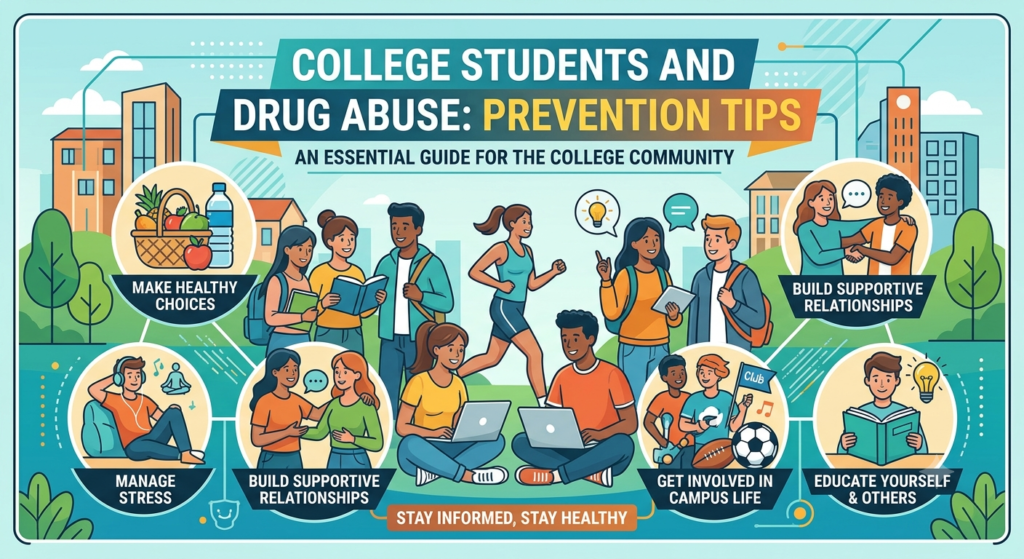
Prevention Tips for College Students
Preventing addiction begins with making healthy daily choices.
Here are some practical prevention tips.
Choose Positive Friendships
Spend time with friends who encourage healthy habits and respect your decisions.
Supportive friendships reduce the pressure to experiment with drugs.
Learn to Say No
It is perfectly acceptable to refuse alcohol or drugs.
Simple responses like “No thanks” or “I’m not interested” can help students avoid uncomfortable situations.
Manage Stress in Healthy Ways
Healthy stress management techniques include:
- Exercise
- Meditation
- Yoga
- Reading
- Music
- Talking to trusted friends
- Time management
These activities improve mental health without the risks associated with substance use.

“Healthy stress management reduces the risk of substance abuse”
Stay Focused on Personal Goals
Having clear academic and career goals motivates students to make healthier decisions.
Students should:
- Attend classes regularly.
- Follow a study schedule.
- Participate in sports.
- Join campus clubs.
- Volunteer in community activities.
- Develop new hobbies.
A meaningful routine leaves less time for risky behaviors and encourages personal growth.
How Parents and Teachers Can Help
Parents and educators play an important role in preventing college students and drug abuse.
They should:
- Encourage open communication.
- Recognize early warning signs.
- Avoid judgment.
- Offer emotional support.
- Promote healthy lifestyles.
- Seek professional help when necessary.
Positive guidance can make a significant difference in a young person’s life.
How Aarogya Rehab Supports Young Adults
When prevention is no longer enough, professional treatment becomes essential.
Aarogya Rehab, managed by Aarogya Sewa Samiti, provides compassionate addiction treatment designed to meet the physical, emotional, and psychological needs of young adults.
Treatment programs include:
- Medical detoxification
- Individual counselling
- Group therapy
- Family counselling
- Yoga and meditation
- Mental wellness activities
- Relapse prevention
- Aftercare support
These personalized services help students recover, rebuild confidence, and successfully return to education and everyday life.
When Should a Student Seek Professional Help?
Many students believe they can stop using drugs whenever they choose. However, if substance use begins affecting daily life, it is important to seek professional support as early as possible.
A student should consider addiction treatment if they:
- Cannot stop using drugs despite trying.
- Experience withdrawal symptoms.
- Miss classes regularly.
- Lose interest in studies or hobbies.
- Have frequent conflicts with family or friends.
- Feel anxious, depressed, or emotionally unstable.
- Continue using drugs despite negative consequences.
Early treatment improves recovery outcomes and prevents addiction from becoming more severe.

“Early counselling helps students overcome challenges before addiction becomes more serious”
Healthy Alternatives to Drug Use
One of the best ways to prevent college students and drug abuse is by encouraging healthy and rewarding activities. Positive habits improve emotional well-being, reduce stress, and build self-confidence.
Students can choose activities such as:
- Regular exercise
- Playing sports
- Yoga and meditation
- Reading books
- Learning new skills
- Creative hobbies like painting or music
- Joining student clubs
- Volunteering for social causes
These activities provide healthy ways to manage stress while creating meaningful experiences and friendships.
The Importance of Mental Health Support
Mental health and substance abuse are closely connected. Students facing anxiety, depression, loneliness, or academic pressure may become more vulnerable to drug use if they do not receive timely support.
Colleges and families should encourage students to:
- Speak openly about emotional struggles.
- Seek counselling without hesitation.
- Practice stress management techniques.
- Maintain healthy sleep habits.
- Stay connected with supportive friends and family.
Looking after mental health is one of the strongest defenses against addiction.
How Aarogya Rehab Helps Students Recover
For students who have already developed substance dependence, professional treatment provides hope for recovery.
Aarogya Rehab, operated by Aarogya Sewa Samiti, offers evidence-based treatment programs that address both physical addiction and emotional well-being.
The rehabilitation process focuses on helping young adults:
- Safely complete medical detox.
- Understand the causes of addiction.
- Build healthy coping skills.
- Restore confidence and self-esteem.
- Improve communication with family.
- Continue education after recovery.
- Prevent future relapse.
Every treatment plan is personalized to help individuals achieve long-term recovery and successfully return to a productive life.
Tips for Parents to Prevent Drug Abuse
Parents remain one of the strongest influences in a student’s life, even after they begin college.
Helpful parenting strategies include:
- Maintain regular communication.
- Encourage honest conversations.
- Listen without judging.
- Learn about substance abuse risks.
- Watch for behavioral changes.
- Support healthy routines.
- Encourage professional help when needed.
A caring and supportive family environment can reduce the likelihood of drug abuse.

“Open communication between parents and students strengthens prevention efforts”
Why Awareness Programs Matter
Drug awareness programs educate students before risky behaviors begin. Colleges that regularly organize seminars, workshops, and counselling sessions help students make informed decisions about substance use.
Awareness initiatives also reduce stigma around addiction, making it easier for students to seek help without fear of judgment.
Educational programs encourage:
- Better decision-making
- Early identification of addiction
- Healthy coping strategies
- Increased mental health awareness
- Greater confidence in seeking professional support
Prevention through education remains one of the most effective ways to reduce drug abuse among young adults.
Conclusion
Understanding college students and drug abuse is essential for protecting the health, education, and future of young adults. While academic pressure, peer influence, curiosity, and emotional challenges can increase the risk of substance abuse, informed decisions and healthy habits can greatly reduce that risk.
Parents, teachers, colleges, and students all play an important role in prevention. Recognizing early warning signs, encouraging open communication, promoting mental wellness, and seeking timely professional support can prevent addiction from becoming a lifelong struggle.
When addiction develops, recovery is possible with the right care. Aarogya Rehab, managed by Aarogya Sewa Samiti, provides comprehensive addiction treatment, including medical detoxification, counselling, therapy, wellness programs, family support, and relapse prevention. With compassionate guidance and personalized treatment, students can regain control of their lives and confidently pursue their academic and personal goals.
Frequently Asked Questions (FAQs)
1. Why are college students at greater risk of drug abuse?
College students often face academic pressure, peer influence, stress, curiosity, and greater independence, which may increase the risk of experimenting with drugs.
2. What are the early warning signs of drug abuse among students?
Common signs include declining grades, missing classes, mood swings, isolation, poor concentration, changes in sleep patterns, and secretive behavior.
3. How can students avoid drug abuse?
Students can reduce their risk by choosing supportive friends, managing stress in healthy ways, participating in sports or hobbies, and seeking counselling when needed.
4. When should a student seek professional addiction treatment?
Professional help should be sought when drug use begins affecting physical health, mental well-being, relationships, academic performance, or daily responsibilities.
5. How does Aarogya Rehab help young adults recover?
Aarogya Rehab, operated by Aarogya Sewa Samiti, provides medical detoxification, counselling, group therapy, family counselling, yoga, wellness programs, relapse prevention, and personalized rehabilitation plans for long-term recovery.