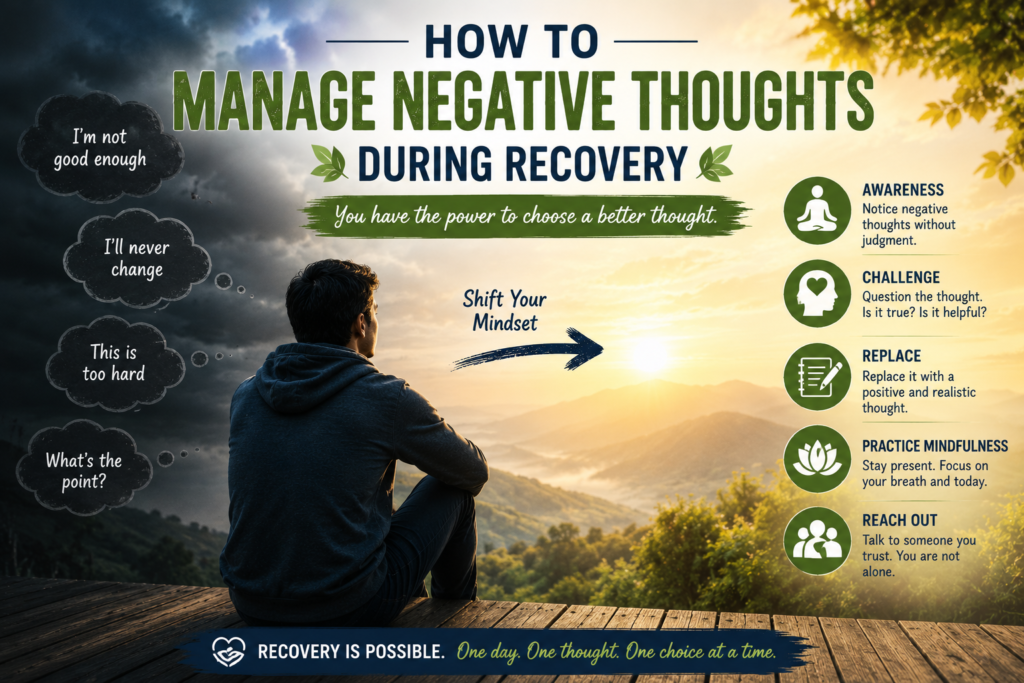
Recovery from addiction is a journey that involves the mind, body, and emotions. While treatment can help individuals move away from addictive behaviours, they may still experience difficult thoughts and emotions during recovery. Negative thinking can sometimes affect confidence, motivation, relationships, and daily life.
Thoughts such as “I cannot change,” “I have already made too many mistakes,” or “I will never recover” may appear during difficult moments. These thoughts can feel very real, but they do not always reflect reality. Learning to recognise and manage them can support a healthier recovery journey.
Managing negative thoughts during recovery does not mean forcing yourself to think positively all the time. It means learning to notice unhelpful thinking patterns, understand where they come from, and respond to them in healthier ways. With patience and appropriate support, individuals can develop greater emotional strength.
What Are Negative Thoughts?
Negative thoughts are thoughts that focus mainly on fear, failure, guilt, hopelessness, or self-criticism. Everyone experiences difficult thoughts occasionally, but they can become a concern when they occur frequently or begin affecting everyday life.
During addiction recovery, negative thinking may be connected to past experiences, relationship problems, stress, guilt, or fear about the future. A person may also worry about making mistakes or facing situations that were previously difficult to manage.
Common negative thoughts may include:
- “I am not good enough.”
- “I have ruined everything.”
- “Nobody will trust me again.”
- “I will never change.”
- “There is no point in trying.”
- “One mistake means I have failed.”
Recognising these thoughts is an important first step. A thought is not always a fact. Learning to question negative thinking can help individuals develop a more balanced view of themselves and their recovery.
Why Negative Thoughts Can Appear During Recovery
Addiction can affect emotional health and relationships. During recovery, individuals may become more aware of feelings that were previously ignored or avoided.
Guilt about past actions, worries about relationships, financial concerns, or uncertainty about the future can contribute to negative thinking. Changes in daily routines can also feel uncomfortable, especially during the early stages of recovery.
Some individuals may also experience stress or anxiety while adjusting to life without addictive behaviours. This is one reason why recovery should address emotional and psychological well-being alongside other aspects of treatment.
At Aarogya Rehab, the recovery approach described by the organisation includes medical care, counselling, psychological support, yoga, detoxification, residential treatment, relapse prevention, and aftercare. Aarogya Sewa Samiti focuses on providing structured and supportive care to help individuals work toward recovery.
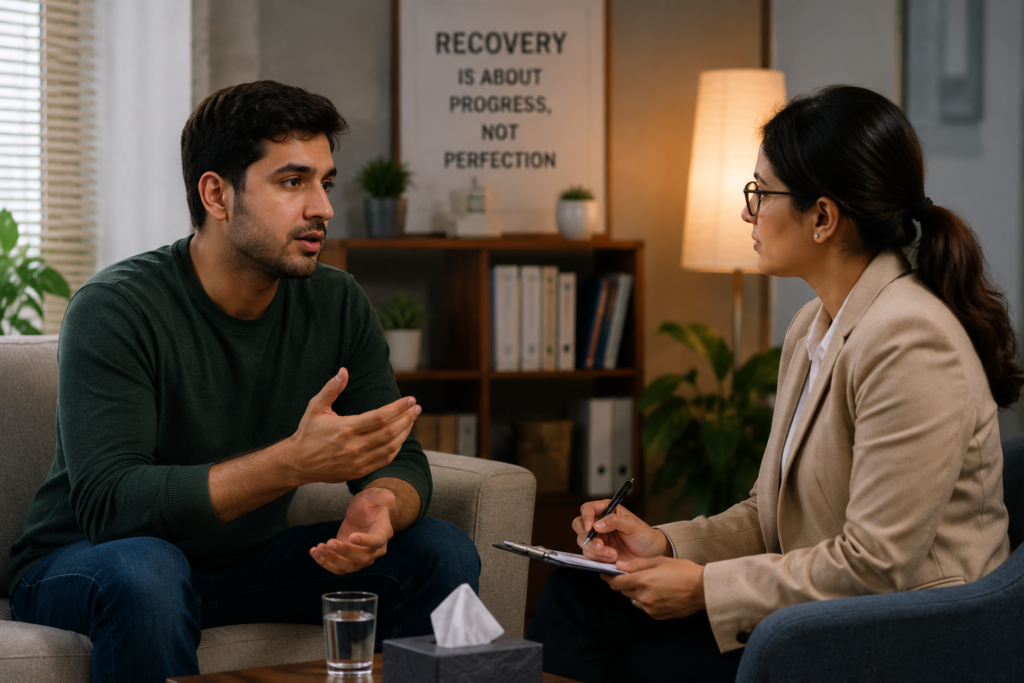
“A realistic image of an adult speaking with a professional counsellor about difficult thoughts and emotions during recovery”
Step 1: Notice Your Thoughts
The first step in managing negative thoughts during recovery is learning to notice them. Many negative thoughts happen automatically, so people may accept them without questioning whether they are accurate.
Try to pause when a negative thought appears. Ask yourself what you are thinking and how that thought is affecting your emotions and behaviour.
For example, instead of simply thinking, “I cannot handle this,” try asking:
- What situation caused this thought?
- Is this thought based on facts?
- Am I assuming the worst?
- Would I speak this way to someone I care about?
- Is there another way to look at the situation?
This simple pause can create space between a difficult thought and your response.
Step 2: Challenge Unhelpful Thinking
Negative thoughts can sometimes become extreme. A person may focus on one mistake and believe that everything is going wrong.
This type of thinking can be challenged by looking for a more balanced perspective. The goal is not to pretend that problems do not exist but to avoid making them seem bigger or more permanent than they really are.
For example, instead of thinking, “I failed, so I can never recover,” a person might say, “I faced a difficult moment, but I can learn from it and continue seeking support.”
Balanced thinking can help individuals recognise difficulties without losing sight of their ability to make progress.
Step 3: Practise Self-Compassion
Many people in recovery are harder on themselves than they would be on others. They may carry guilt or shame about things that happened during addiction.
Taking responsibility for past actions is important, but constant self-criticism may make emotional recovery more difficult. Self-compassion means recognising that you are a person who can make mistakes, learn, and grow.
Self-compassion does not mean ignoring responsibility. Instead, it means accepting the past while focusing on what can be done differently today.
Try reminding yourself:
- Recovery takes time.
- I can learn from my past.
- I do not have to be perfect.
- Asking for help is okay.
- One difficult day does not define my entire journey.
Step 4: Talk About Difficult Thoughts
Keeping negative thoughts hidden can sometimes make them feel more powerful. Talking to someone trustworthy can provide a different perspective.
A person may choose to speak with a counsellor, psychologist, doctor, family member, or another trusted support person. Professional guidance can be particularly useful when negative thoughts are persistent or interfere with daily life.
At Aarogya Sewa Samiti, counselling and psychological support are included in the organisation’s described approach to addiction recovery. The website also highlights the involvement of professionals such as psychiatrists, psychologists, counsellors, medical staff, and other support professionals.
Open conversations can help individuals identify emotional triggers and develop healthier ways of responding to difficult situations.
Step 5: Create a Healthy Daily Routine
A structured routine can provide stability during recovery. When a person has too much unplanned time, negative thinking may sometimes become more noticeable.
A healthy routine can include:
- Regular sleep and wake-up times
- Nutritious meals
- Physical activity
- Counselling or therapy appointments
- Time with supportive people
- Relaxing hobbies
- Meaningful daily activities
The purpose of a routine is not to keep every minute busy. It is to create balance and structure that supports emotional well-being.
Even small activities, such as taking a walk, reading, gardening, or learning something new, can help create a sense of purpose.
Step 6: Use Mindfulness and Relaxation Techniques
Mindfulness involves paying attention to the present moment rather than becoming completely absorbed in thoughts about the past or future.
Simple practices such as mindful breathing, meditation, and yoga may help some people become more aware of their thoughts without immediately reacting to them.
At Aarogya Rehab, yoga and wellness practices are described as part of the broader recovery approach. These practices can complement professional treatment and help individuals develop healthier routines.
Mindfulness does not make every negative thought disappear. Instead, it may help a person observe thoughts with greater awareness and choose how to respond.

“A realistic image of an adult participating in a guided yoga or mindfulness session in a calm wellness environment”
Step 7: Focus on Small, Achievable Goals
Negative thinking can make the future seem overwhelming. When this happens, focusing on one small goal at a time may be helpful.
Instead of thinking about changing your entire life immediately, consider what you can do today. A small step could be attending a counselling session, completing a daily task, contacting a supportive person, or following your recovery plan.
Small achievements can gradually build confidence. Over time, these actions can create evidence that positive change is possible.
The recovery journey does not need to be perfect. Progress can happen through consistent, manageable steps.
Step 8: Build a Supportive Environment
The people and environments around us can influence our thoughts and emotions. During recovery, it may be helpful to spend more time with people who encourage healthy choices.
Support may come from:
- Family members
- Trusted friends
- Counsellors
- Mental health professionals
- Recovery support groups
- Healthcare professionals
At the same time, individuals may need to establish boundaries with people or situations that create unnecessary stress or encourage unhealthy behaviour.
A supportive environment can make it easier to discuss difficult emotions and remain connected to recovery goals.
When Negative Thoughts Become Overwhelming
Sometimes negative thoughts can become persistent and seriously affect a person’s daily life. An individual may lose interest in activities, struggle with sleep, withdraw from others, or find it increasingly difficult to manage responsibilities.
In such situations, professional support is important. A qualified mental health or healthcare professional can assess the person’s needs and recommend appropriate care.
If a person feels unable to cope or is experiencing a mental health crisis, they should seek immediate help from a trusted adult, healthcare professional, or local emergency service.
Seeking support early can help prevent difficulties from becoming more serious.
The Role of Family in Emotional Recovery
Family members can support individuals by listening without unnecessary judgement and encouraging healthy communication. They can also help create an environment where the person feels comfortable asking for assistance.
However, family members should remember that they cannot manage recovery on behalf of another person. Professional treatment and appropriate boundaries remain important.
Family counselling may also help improve communication and rebuild trust. With time, patience, and understanding, families can become an important source of encouragement during recovery.

“A realistic, hopeful image of an adult walking outdoors with a family member in a peaceful natural environment, symbolising renewed trust and a fresh beginning”
Recovery Is About Progress, Not Perfection
One of the most important lessons in managing negative thoughts during recovery is understanding that progress does not require perfection.
There may be days when motivation feels low or difficult emotions return. These moments do not erase the progress that has already been made.
Instead of asking, “Why am I still struggling?” try asking, “What support do I need today?”
This change in perspective can encourage patience and help individuals focus on practical solutions rather than self-criticism.
At Aarogya Rehab and Aarogya Sewa Samiti, the recovery approach includes support aimed at helping individuals address addiction while developing healthier routines and emotional well-being. With appropriate treatment, counselling, and continued support, individuals can continue working toward a more stable and fulfilling life.
Final Thoughts
Negative thoughts can be a difficult part of addiction recovery, but they do not have to control the recovery journey. Learning to recognise unhelpful thoughts, challenge them, practise self-compassion, and seek support can help individuals develop greater emotional resilience.
Managing negative thoughts during recovery is a gradual process. Healthy routines, mindfulness, counselling, family support, and realistic goals can all contribute to emotional well-being.
Recovery is not about forgetting the past or pretending that difficulties do not exist. It is about learning from experiences and developing healthier ways to face the future.
With patience and the right support, individuals can learn to respond to negative thoughts with greater awareness and confidence. Every positive step, no matter how small, can contribute to a healthier recovery journey.