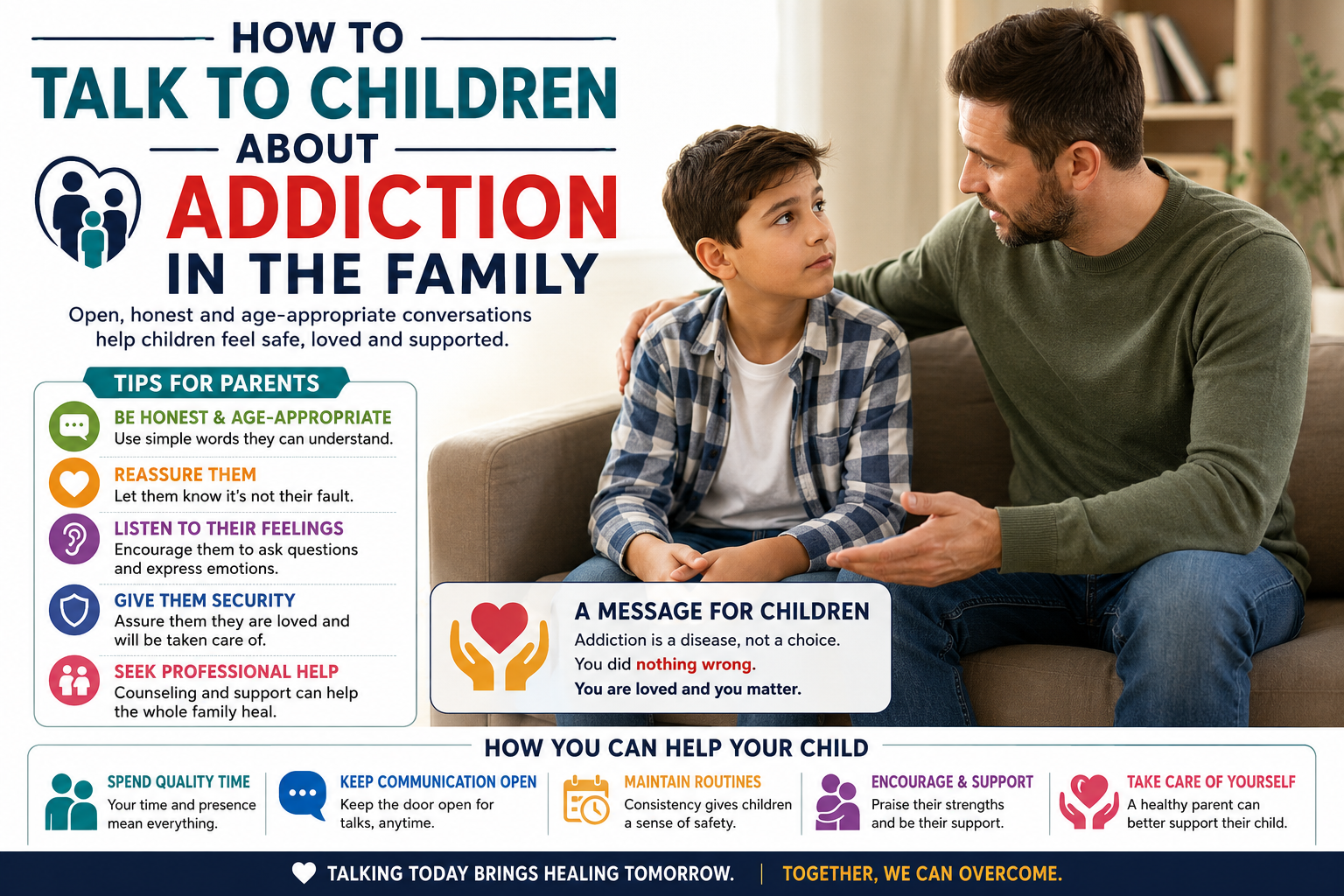
Addiction does not only affect one person. It affects the entire family emotionally, mentally, socially, and financially. Children are often the silent sufferers when addiction enters a household. They may not fully understand what is happening, but they can sense stress, fear, arguments, emotional distance, and sudden changes in behaviour.
This is why learning How to Talk to Children About Addiction in the Family, is extremely important. Honest and age-appropriate communication can help children feel safer, emotionally supported, and less confused during difficult situations.
At Aarogya Sewa Samiti Dehradun, we understand how deeply addiction affects families. Our counselling and rehabilitation programs focus not only on recovery for the individual but also emotional healing for family members, especially children.
Many parents and guardians struggle with explaining addiction to children because they fear causing emotional pain or confusion. However, avoiding the conversation can often increase fear and misunderstanding. Children may blame themselves, feel isolated, or imagine situations worse than reality.
Talking openly, calmly, and honestly can protect a child’s emotional health and help build trust within the family.
Why Children Need Honest Conversations About Addiction
Children notice more than adults often realise. Even very young children can sense emotional tension inside the home.
When addiction affects a family member, children may experience:
- Fear and insecurity
- Anxiety and confusion
- Sadness and loneliness
- Anger or frustration
- Shame or embarrassment
- Difficulty trusting adults
Without proper communication, children may create their own explanations for what is happening. Some may believe they caused the problem. Others may think addiction means the family no longer loves them.
This is why How to Talk to Children About Addiction in the Family, should focus on honesty, emotional safety, and reassurance.
Understanding Addiction Before Explaining Addiction to Children
Before parents begin explaining addiction to children, it is important to understand addiction clearly themselves.
Addiction is not simply bad behaviour or lack of discipline. It is a health condition that changes how the brain works. Alcohol or drug dependency affects emotions, judgement, behaviour, and relationships.
According to World Health Organisation, addiction and substance use disorders can impact mental and physical health significantly and require professional support and treatment.
Children should understand that:
- Addiction is an illness
- The person struggling still deserves care and support
- The child is not responsible for the addiction
- Recovery is possible with treatment and support
These messages help reduce fear and guilt.
How to Talk to Children About Addiction in the Family Honestly
Choose the Right Time and Environment
One of the most important steps in How to Talk to Children About Addiction in the Family, is choosing a calm and safe moment.
Avoid discussing addiction:
- During arguments
- When the addicted person is intoxicated
- In stressful or chaotic situations
Choose a quiet and comfortable environment where the child feels emotionally secure.
Children need time to process information and ask questions freely.
Use Simple and Age-Appropriate Language
When explaining addiction to children, avoid complicated medical terms or frightening details.
For Younger Children
You might say:
“Sometimes people become sick in a way that changes how they act or make decisions. They need help from doctors and counsellors.”
For Teenagers
Teenagers can understand more detailed explanations about:
- Substance abuse
- Emotional struggles
- Mental health challenges
- Treatment and recovery programs
Honest communication builds trust and emotional connection.
Reassure Children That It Is Not Their Fault
Many children secretly believe they caused the addiction or family problems.
This emotional burden can create long-term anxiety and low self-esteem.
While discussing How to Talk to Children About Addiction in the Family, it is extremely important to say clearly:
- “You did not cause this.”
- “You cannot control another person’s addiction.”
- “You are loved and supported.”
These simple reassurances can provide enormous emotional relief.
Encourage Questions About Addiction
Children may feel nervous asking questions. Some may fear upsetting adults.
Encourage open communication by saying:
- “You can ask me anything.”
- “It is okay to feel confused.”
- “Your feelings matter.”
When explaining addiction to children, answering questions honestly helps reduce fear and misunderstanding.
If you do not know how to answer a question, it is okay to say:
“I don’t know everything right now, but we can learn together.”
Emotional Effects of Addiction on Children
Addiction in families often affects children emotionally in ways adults may not immediately notice.
Common Emotional Reactions Include:
- Anxiety
- Fear of abandonment
- Sadness
- Anger
- Shame
- Difficulty concentrating in school
- Withdrawal from friends
At Aarogya Sewa Samiti Dehradun, family counselling programs help children express emotions safely and receive emotional support during recovery.

Importance of Family Counselling in Addiction Recovery
Professional counselling can help families communicate more effectively and heal emotionally.
Family therapy provides:
- Safe emotional discussions
- Improved communication
- Emotional coping strategies
- Relationship rebuilding
- Support for children
You can learn more about family addiction recovery support through Substance Abuse and Mental Health Services Administration.
Family involvement often improves long-term recovery outcomes significantly.
How Addiction Changes Family Dynamics
One major challenge in How to Talk to Children About Addiction in the Family, is helping them understand sudden changes in behaviour.
Children may notice:
- Mood swings
- Financial problems
- Missed family events
- Emotional distance
- Increased arguments
These experiences can make children feel emotionally unsafe.
Explaining that addiction changes behaviour — but recovery is possible — helps children understand the situation more clearly.
Avoid Blaming or Shaming Language
When explaining addiction to children, avoid statements like:
- “They are a bad person.”
- “They ruined the family.”
- “They don’t care about us.”
Blame and shame can confuse children emotionally and increase fear.
Instead, focus on:
- The importance of treatment
- Emotional healing
- Positive support systems
- Healthy boundaries
Children learn emotional behaviour from adults around them.

Creating Emotional Safety for Children
Children need stability and emotional reassurance during stressful family situations.
Ways to Create Emotional Safety
- Maintain daily routines
- Spend quality time together
- Encourage emotional expression
- Listen without judgement
- Provide reassurance consistently
Small daily actions can help children feel more secure emotionally.
How Schools and Teachers Can Help
Teachers often notice emotional changes in children before families do.
Children affected by addiction may show:
- Poor concentration
- Behavioural changes
- Frequent absences
- Emotional withdrawal
Parents can work with trusted teachers or school counsellors to ensure additional emotional support.
The Importance of Routine for Children
Routine provides emotional stability during uncertain times.
Children feel safer when they know:
- When meals happen
- School schedules remain normal
- Bedtime routines continue
- Daily activities stay consistent
Structure reduces anxiety and emotional stress significantly.
Talking to Teenagers About Addiction
Teenagers often understand more about addiction but may struggle emotionally in different ways.
Some teenagers may:
- Become angry
- Isolate themselves
- Experiment with substances
- Feel embarrassed socially
When discussing How to Talk to Children About Addiction in the Family, teenagers need:
- Respectful communication
- Honest information
- Emotional validation
- Healthy coping guidance
Avoid lecturing or forcing conversations. Listening calmly is often more effective.
Healthy Ways Children Can Cope Emotionally
Teaching healthy coping methods is an important part of explaining addiction to children.
Encourage activities like:
- Drawing or art
- Sports and exercise
- Journaling
- Talking to trusted adults
- Meditation or breathing exercises
- Spending time with supportive friends
Healthy emotional outlets reduce stress and emotional isolation.
Professional Rehabilitation and Family Healing
Addiction recovery is not only about stopping substance use. It is also about rebuilding relationships and emotional trust.
At Aarogya Sewa Samiti, rehabilitation programs include:
- Detoxification support
- Individual counselling
- Family therapy
- Emotional wellness programs
- Relapse prevention planning
Families heal together when communication and emotional support improve.
Internal Support Resources for Families
Families looking for help can explore:
Professional guidance helps families manage emotional challenges more effectively.
Signs a Child May Need Professional Emotional Support
Sometimes children need extra emotional care from counsellors or therapists.
Warning Signs Include:
- Extreme anxiety
- Withdrawal from family
- Sleep problems
- Aggressive behaviour
- Depression symptoms
- School performance decline
Early emotional support can prevent long-term mental health struggles.
A Message for Explaining Addiction to Children
Talking to children about addiction may feel uncomfortable or emotional, but silence often creates more fear and confusion.
Children do not need perfect answers. They need honesty, reassurance, emotional safety, and love.
When families communicate openly and seek professional support, healing becomes possible for everyone involved.
Remember:
- Children deserve truthful guidance
- Addiction is treatable
- Recovery can rebuild families
- Emotional support matters deeply
No family has to face addiction alone.
How Aarogya Sewa Samiti Dehradun Supports Families
At Aarogya Sewa Samiti Dehradun, we understand the emotional pain addiction creates within families.
Our programs focus on:
- Addiction treatment
- Family counselling
- Emotional wellness
- Child-focused support strategies
- Long-term recovery planning
We believe recovery becomes stronger when families heal together with compassion and understanding.
Conclusion
Understanding How to Talk to Children About Addiction in the Family, is one of the most important steps families can take during recovery. Children need emotional honesty, reassurance, stability, and compassionate support when addiction affects their home environment.
By explaining addiction to children, calmly and truthfully, families can reduce fear, strengthen trust, and encourage emotional healing. Professional counselling and rehabilitation programs also provide valuable guidance during difficult times.
At Aarogya Sewa Samiti Dehradun, we believe that the Best Rehab Centre in Dehradun, recovery is not only about helping one person overcome addiction — it is about helping entire families heal emotionally and rebuild stronger relationships together.