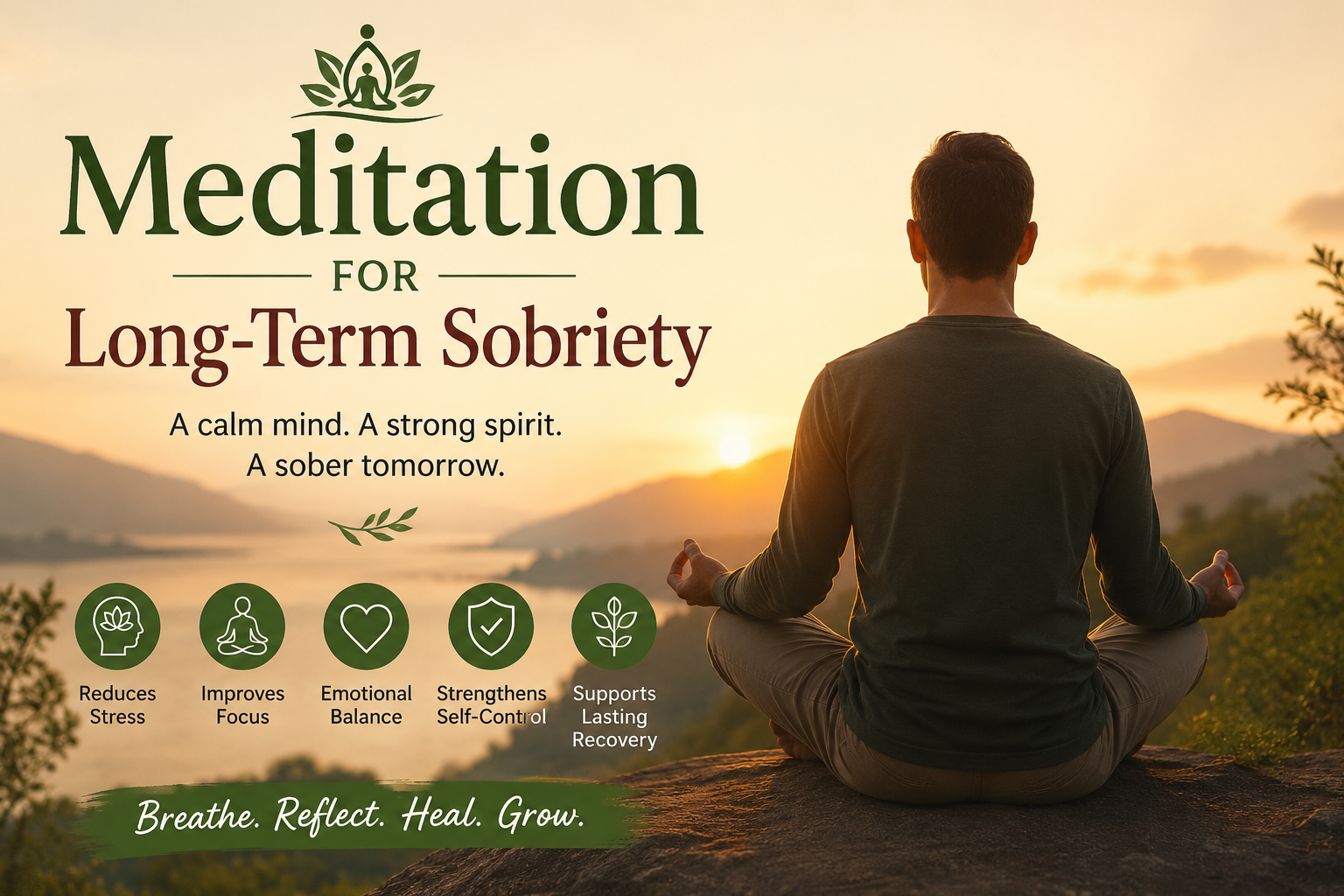
Recovering from addiction is a journey that continues long after treatment is completed. While medical care, counselling, and family support are essential, maintaining Long-Term Sobriety, requires healthy daily habits that strengthen both the mind and body. One of the most effective and natural ways to support lasting recovery is meditation.
Meditation helps calm the mind, reduce stress, improve emotional balance, and strengthen self-awareness. These benefits are especially valuable for people recovering from drug or alcohol addiction because stress, anxiety, and cravings are common challenges during the recovery process. By practising meditation regularly, individuals can learn to respond to difficult situations in a healthier way instead of turning to addictive substances.
At Aarogya Sewa Samiti, Dehradun, we encourage individuals to include meditation in their recovery routine. Meditation helps reduce stress, improve emotional balance, increase self-awareness, and lower the risk of relapse. Combined with professional treatment, meditation becomes a valuable tool for achieving Long-Term Sobriety, and living a healthier, addiction-free life.
What Is Long-Term Sobriety?
Long-Term Sobriety, means maintaining a substance-free lifestyle over an extended period while continuing to make healthy choices every day. It is not only about avoiding drugs or alcohol but also about building emotional strength, developing positive habits, and improving overall well-being.
People who achieve Long-Term Sobriety, often focus on physical health, emotional healing, supportive relationships, and personal growth.
Why Meditation Supports Long-Term Sobriety
Meditation is a simple practice that trains the mind to stay calm and focused. During addiction recovery, many individuals experience anxiety, stress, cravings, and emotional ups and downs. Meditation helps manage these challenges without relying on substances.
Benefits of meditation include:
- Reduces stress and anxiety
- Improves emotional control
- Increases self-awareness
- Helps manage cravings
- Improves concentration
- Promotes better sleep
- Encourages positive thinking
- Supports Long-Term Sobriety
Practising meditation for just a few minutes each day can make recovery more manageable.
How Meditation Changes the Brain for Long-Term Sobriety
Scientific studies suggest that regular meditation positively affects the brain. It can strengthen areas responsible for decision-making, emotional regulation, and self-control while reducing activity in regions associated with stress and impulsive behaviour.
These changes help individuals respond to challenges more calmly and make healthier decisions that support Long-Term Sobriety.
Types of Meditation That Promote Long-Term Sobriety
Mindfulness Meditation
Mindfulness teaches individuals to observe their thoughts and feelings without reacting immediately. This helps reduce impulsive behaviour and supports recovery.
Deep Breathing Meditation
Slow breathing relaxes the nervous system and reduces anxiety during stressful situations.
Guided Meditation
Listening to guided meditation recordings helps beginners develop focus and emotional balance.
Loving-Kindness Meditation
This practice encourages compassion toward oneself and others, reducing guilt and improving self-esteem.
Body Scan Meditation
Body scan meditation increases awareness of physical sensations and helps reduce stress-related tension.
Benefits of Meditation During Addiction Recovery
Meditation supports recovery in many ways.
Better Emotional Balance
People become more aware of their emotions and learn healthier ways to respond.
Reduced Cravings
Meditation helps individuals observe cravings without acting on them.
Improved Mental Health
Regular practice reduces symptoms of anxiety and depression.
Better Sleep
Many people in recovery struggle with sleep. Meditation encourages relaxation and improves sleep quality.
Stronger Focus
Improved concentration helps individuals stay committed to treatment goals and Long-Term Sobriety.
Combining Meditation With Professional Treatment
Meditation is most effective when combined with professional addiction treatment.
At Aarogya Sewa Samiti, recovery programmes may include:
- Drug Detoxification
- Alcohol Rehabilitation
- Individual Counselling
- Group Therapy
- Family Counselling
- Behavioural Therapy
- Relapse Prevention
- Aftercare Support
- Meditation and Wellness Activities
This comprehensive approach helps individuals build lasting recovery.
Healthy Habits That Strengthen Long-Term Sobriety
Meditation works best when combined with other healthy lifestyle choices.
Helpful habits include:
- Eating nutritious meals
- Exercising regularly
- Getting enough sleep
- Drinking plenty of water
- Practising yoga
- Spending time with supportive family members
- Avoiding triggers
- Following a structured daily routine
- Participating in counselling sessions
These habits improve physical and emotional well-being while supporting Long-Term Sobriety.
Common Challenges During Long-Term Sobriety
Recovery is not always easy. Individuals may experience:
- Stress
- Loneliness
- Emotional triggers
- Social pressure
- Cravings
- Fear of relapse
Meditation helps manage these challenges by encouraging calm thinking and emotional resilience.
Why Choose Aarogya Sewa Samiti in Dehradun?
Aarogya Sewa Samiti is dedicated to helping individuals achieve lasting recovery through compassionate and personalized care.
Our services include:
- Drug Detoxification
- Alcohol Rehabilitation
- Individual Counselling
- Group Therapy
- Family Counselling
- Mental Health Support
- Relapse Prevention
- Aftercare Programmes
- Wellness and Meditation Guidance
We believe every individual deserves the opportunity to achieve Long-Term Sobriety, and enjoy a healthier future.
Suggested Internal Links
Add these internal links naturally throughout the article:
- Home
- About Us
- Services
- Contact Us
- Drug Detoxification
- Alcohol Rehabilitation
- Family Counselling
- Admission Process
- Aftercare

A Message for Long-Term Sobriety
Recovery is built one day at a time. Every healthy decision you make strengthens your confidence and moves you closer to Long-Term Sobriety. Meditation reminds you to stay present, believe in your progress, and keep moving forward even during difficult moments. Healing takes patience, but every step is meaningful. At Aarogya Sewa Samiti, we are committed to supporting you with compassionate care, professional guidance, and hope throughout your recovery journey.
Conclusion
Meditation is a simple yet powerful practice that can make a significant difference during addiction recovery. By reducing stress, improving emotional balance, strengthening self-awareness, and supporting healthy decision-making, meditation helps individuals maintain Long-Term Sobriety.
When combined with professional treatment, counselling, Drug Detoxification, and family support, meditation becomes an important part of a sustainable recovery plan. If you or someone you care about is seeking help, Aarogya Sewa Samiti in Dehradun, that the Best Rehab Centre in Dehradun, provides comprehensive rehabilitation services designed to support lasting recovery and a brighter future.
Frequently Asked Questions (FAQs)
1. What is Long-Term Sobriety?
Long-Term Sobriety means maintaining a healthy, substance-free lifestyle while continuing to practise habits that support recovery.
2. How does meditation help during addiction recovery?
Meditation reduces stress, improves emotional control, manages cravings, and supports better decision-making.
3. Can meditation prevent relapse?
Meditation can reduce relapse risk by helping individuals manage triggers, cravings, and emotional stress more effectively.
4. How often should I meditate during recovery?
Even 10–20 minutes of daily meditation can provide meaningful benefits for recovery.
5. Is meditation a replacement for addiction treatment?
No. Meditation supports recovery but should be combined with professional treatment, counselling, and rehabilitation.
6. Can beginners practise meditation?
Yes. Simple breathing exercises and guided meditation are suitable for beginners.
7. What other healthy habits support Long-Term Sobriety?
Regular exercise, healthy eating, counselling, family support, quality sleep, and stress management all contribute to lasting recovery.
8. Does Aarogya Sewa Samiti include meditation in recovery programmes?
Aarogya Sewa Samiti encourages mindfulness, wellness practices, and healthy lifestyle habits alongside evidence-based addiction treatment.
9. How does meditation improve mental health?
Meditation helps reduce anxiety, depression, stress, and negative thinking while improving emotional resilience.
10. Why is Long-Term Sobriety important?
Long-Term Sobriety improves physical health, emotional well-being, relationships, confidence, and overall quality of life.