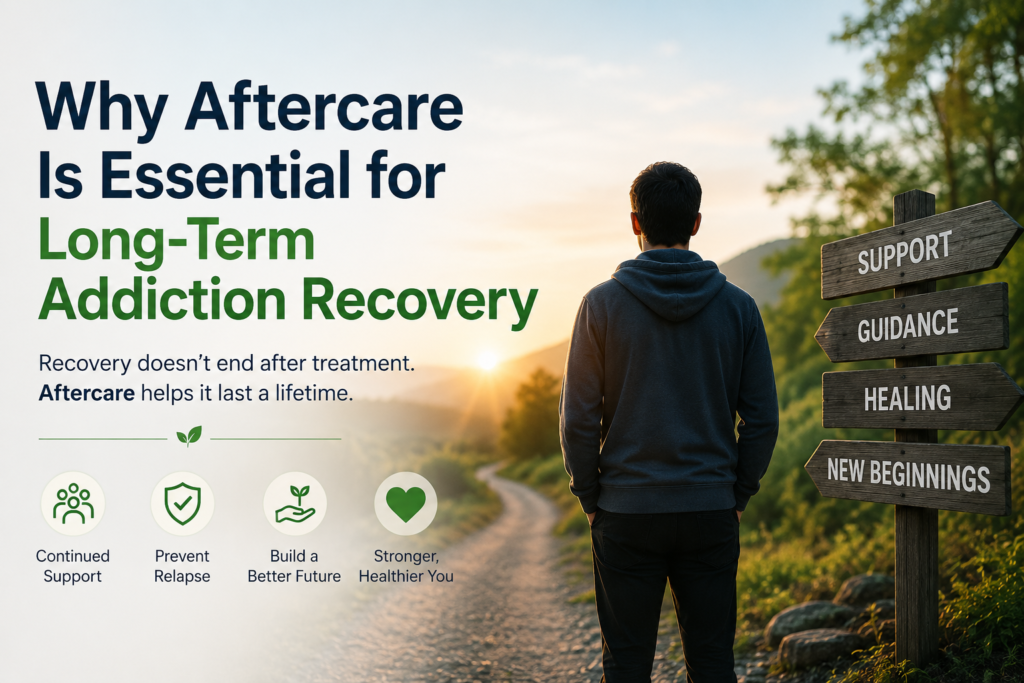
Completing an addiction treatment programme is a significant achievement, but recovery does not end when a person leaves a rehabilitation centre. Recovery is an ongoing process that requires continued effort, healthy habits, and professional support. This is where aftercare for long-term addiction recovery becomes important.
Aftercare refers to the ongoing support individuals receive after completing their primary addiction treatment. It helps people maintain the progress they have made, manage daily challenges, and continue building a healthier lifestyle. Without continued support, individuals may find it more difficult to cope with stress, emotional triggers, and life changes.
Long-term recovery is about creating a stable future rather than simply stopping addictive behaviour. With proper aftercare, individuals can strengthen their confidence, improve emotional well-being, rebuild relationships, and reduce the risk of relapse.
What Is Aftercare in Addiction Recovery?
Aftercare is the support provided after a person completes residential or structured addiction treatment. Recovery continues beyond rehabilitation, and aftercare helps individuals apply what they have learned in real-life situations.
Returning home often means facing responsibilities, work, family life, and social situations that may feel overwhelming. Without guidance, these changes can create stress and emotional pressure.
Aftercare programs are designed to provide continued encouragement and practical support during this transition. They remind individuals that recovery is a long-term commitment rather than a single event.
At Aarogya Rehab, aftercare is described as an important part of the overall recovery process. Aarogya Sewa Samiti also highlights relapse prevention, counselling, family support, and ongoing guidance as part of helping individuals maintain recovery.
Why Recovery Does Not End After Treatment
Many people believe that completing rehabilitation means the recovery journey is over. In reality, recovery continues every day through healthy decisions, emotional awareness, and ongoing support.
During treatment, individuals receive structured care and professional guidance. After leaving the rehabilitation centre, they return to environments where old habits, stress, or social influences may still exist.
Without continued support, these situations may become difficult to manage. Aftercare provides practical strategies and professional guidance that help individuals face everyday challenges with confidence.
Recovery is strongest when healthy habits continue long after formal treatment has ended.
The Main Goals of Aftercare
The purpose of aftercare for long-term addiction recovery is to help individuals remain focused on their recovery while adjusting to everyday life.
Important goals include:
- Maintaining long-term recovery
- Reducing the risk of relapse
- Building healthy daily routines
- Managing stress effectively
- Strengthening emotional well-being
- Improving family relationships
- Developing confidence and independence
- Continuing personal growth
Every individual’s recovery journey is unique. Aftercare plans should be based on personal needs and developed with professional guidance.
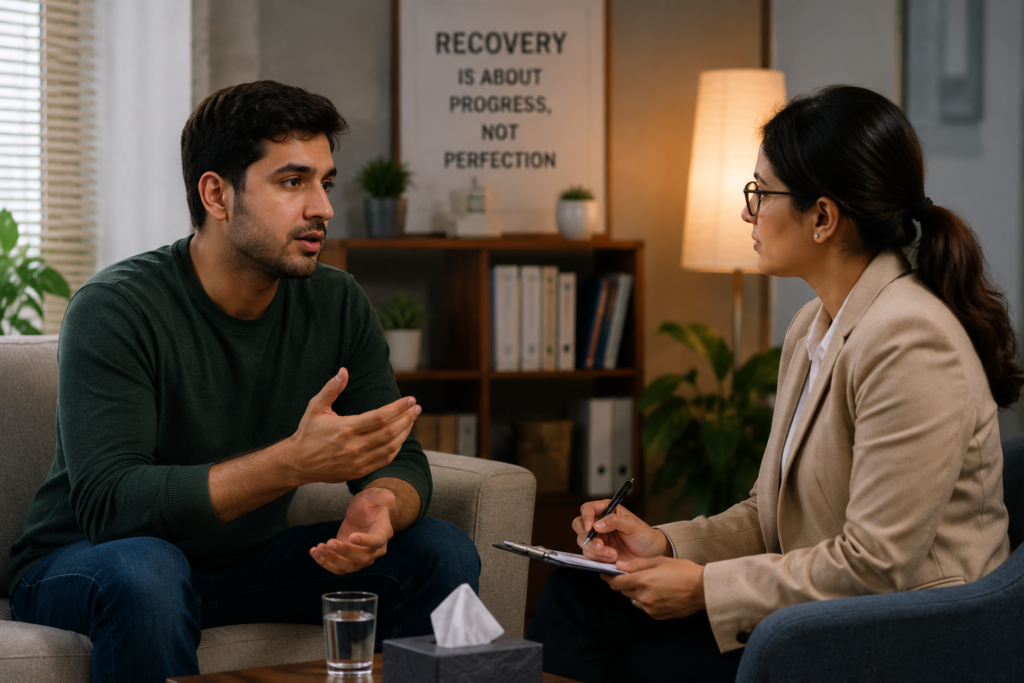
“A realistic image of a counsellor discussing an aftercare plan with an adult in recovery”
How Aftercare Helps Prevent Relapse
One of the biggest reasons aftercare is important is its role in relapse prevention. Returning to everyday life may expose individuals to familiar places, emotional triggers, or stressful situations.
Relapse does not happen suddenly in every case. It may begin with unmanaged stress, emotional difficulties, isolation, or ignoring healthy routines.
Aftercare helps individuals recognise early warning signs and respond before problems become more serious.
A relapse-prevention plan may include:
- Identifying personal triggers
- Attending regular counselling
- Staying connected with supportive people
- Following healthy routines
- Avoiding high-risk situations
- Seeking help early when difficulties arise
At Aarogya Rehab, relapse prevention and ongoing recovery support are included within the organisation’s broader approach to addiction recovery.
The Importance of Continued Counselling
Counselling remains valuable even after formal treatment ends. Life continues to present new situations, and individuals may need guidance while adjusting to these changes.
Counselling sessions provide an opportunity to discuss challenges openly and develop practical solutions before problems become overwhelming.
Professional counselling may help individuals:
- Manage stress and anxiety
- Improve communication skills
- Strengthen coping strategies
- Build confidence
- Address emotional concerns
- Stay motivated during recovery
At Aarogya Sewa Samiti, counselling and psychological support are described as essential components of addiction recovery. Ongoing counselling can help individuals remain focused on long-term recovery goals.

“A realistic image of an adult attending a follow-up counselling session after rehabilitation”
Building Healthy Daily Routines
A structured routine provides stability during recovery. Aftercare encourages individuals to continue healthy habits that support physical and emotional well-being.
A balanced routine may include:
- Waking up at consistent times
- Eating nutritious meals
- Exercising regularly
- Practising yoga or mindfulness
- Attending counselling appointments
- Spending time with supportive people
- Following a healthy sleep schedule
These daily habits may seem simple, but together they create a strong foundation for long-term recovery.
At Aarogya Rehab, yoga and wellness activities form part of the recovery approach described on the organisation’s website. These practices can complement professional treatment and support overall well-being.
Managing Stress After Rehabilitation
Stress is a normal part of life, but learning to manage it in healthy ways is essential during recovery.
Many people previously used addictive behaviours to cope with emotional pressure. After treatment, they need healthier alternatives.
Helpful stress-management strategies include:
- Deep breathing exercises
- Meditation
- Physical activity
- Journaling
- Spending time outdoors
- Talking to trusted people
- Seeking professional support
Aftercare encourages individuals to practise these skills regularly rather than waiting until stress becomes overwhelming.
Strengthening Family Relationships
Addiction often affects family relationships. Rebuilding trust and improving communication usually takes time.
Aftercare can help individuals continue working on healthy relationships after returning home.
Family members can support recovery by:
- Encouraging healthy routines
- Communicating respectfully
- Listening without unnecessary judgement
- Supporting counselling recommendations
- Maintaining healthy boundaries
- Recognising positive progress
According to Aarogya Sewa Samiti, family counselling and family involvement are important aspects of the recovery process. Families who understand addiction can often provide more effective emotional support while maintaining appropriate boundaries.
The Value of Support Networks
Recovery becomes easier when individuals remain connected to supportive people.
A strong support network may include:
- Family members
- Friends who encourage healthy choices
- Counsellors
- Doctors
- Mental health professionals
- Recovery support groups
Supportive relationships provide encouragement during difficult moments and remind individuals that they do not have to face recovery alone.
Building positive relationships may also reduce feelings of loneliness or isolation, which can sometimes become challenges during recovery.
Returning to Work, Education, or Daily Responsibilities
Many people return to work, education, or family responsibilities after rehabilitation. Although this is an exciting step, it may also create new pressures.
Aftercare helps individuals develop practical strategies for balancing responsibilities while protecting their recovery.
Some useful approaches include:
- Planning realistic daily schedules
- Taking regular breaks
- Managing stress before it builds
- Asking for help when needed
- Maintaining healthy boundaries
- Continuing professional support
The goal is to build a balanced lifestyle that supports both personal responsibilities and long-term recovery.
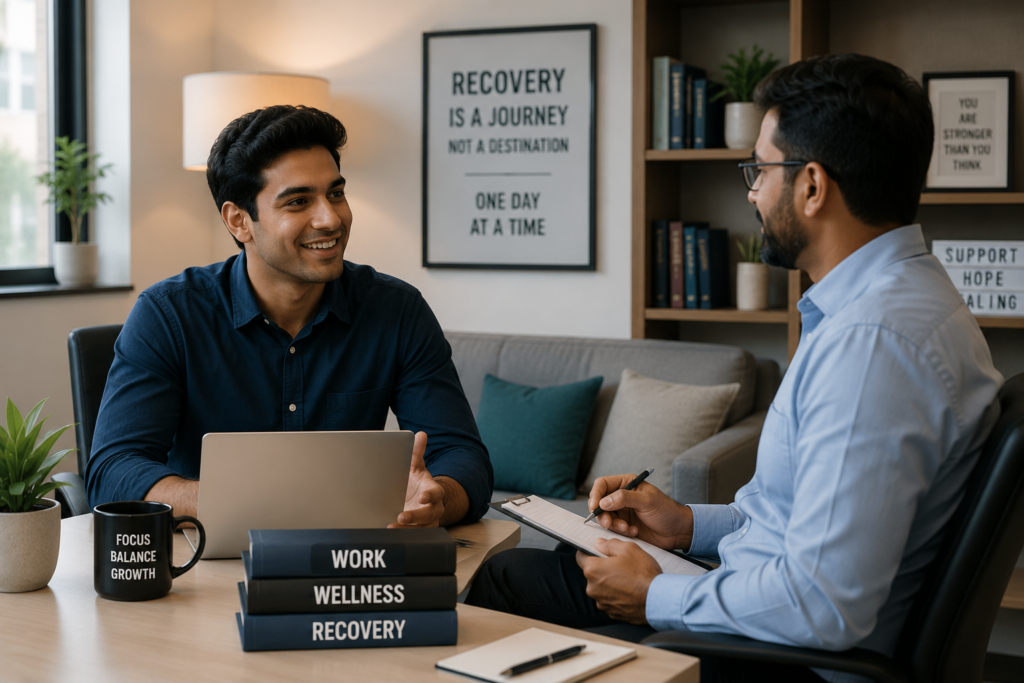
“A realistic image of an adult successfully balancing work and recovery with support from a counsellor”
Why Personal Growth Matters
Recovery is not only about avoiding addictive behaviour. It is also about creating a meaningful and satisfying life.
Aftercare encourages individuals to continue growing by learning new skills, developing hobbies, improving confidence, and setting realistic goals.
Personal growth may include:
- Learning new skills
- Returning to education
- Improving physical health
- Building healthier relationships
- Volunteering or helping others
- Developing new interests
These activities can create purpose and motivation while supporting emotional well-being.
How Aarogya Rehab Supports Long-Term Recovery
At Aarogya Rehab, recovery extends beyond the completion of treatment. The organisation’s website describes a comprehensive approach that includes medical care, detoxification, counselling, psychological support, yoga, residential treatment, relapse prevention, family involvement, and aftercare.
Aarogya Sewa Samiti believes recovery is an ongoing journey that requires continued encouragement and structured support. By combining professional guidance with healthy lifestyle practices, individuals can continue making positive progress long after leaving the rehabilitation centre.
Every recovery journey is different. Professional assessment helps ensure that aftercare plans are tailored to each person’s needs and circumstances.
Final Thoughts
Aftercare for long-term addiction recovery is one of the most important parts of maintaining lasting recovery. Completing rehabilitation is a major achievement, but continued support helps individuals apply what they have learned while managing everyday challenges.
Regular counselling, healthy routines, family involvement, stress management, relapse prevention, and ongoing professional guidance all contribute to a stronger recovery journey.
At Aarogya Rehab and Aarogya Sewa Samiti, aftercare is recognised as an essential part of helping individuals maintain progress, rebuild confidence, and develop healthier lifestyles. Recovery is not about reaching a finish line. It is about making positive choices every day and continuing to grow.
If you or someone you care about is recovering from addiction, seeking ongoing professional support can make a meaningful difference. With patience, commitment, and the right aftercare plan, long-term recovery is possible, and a healthier future can become a reality.