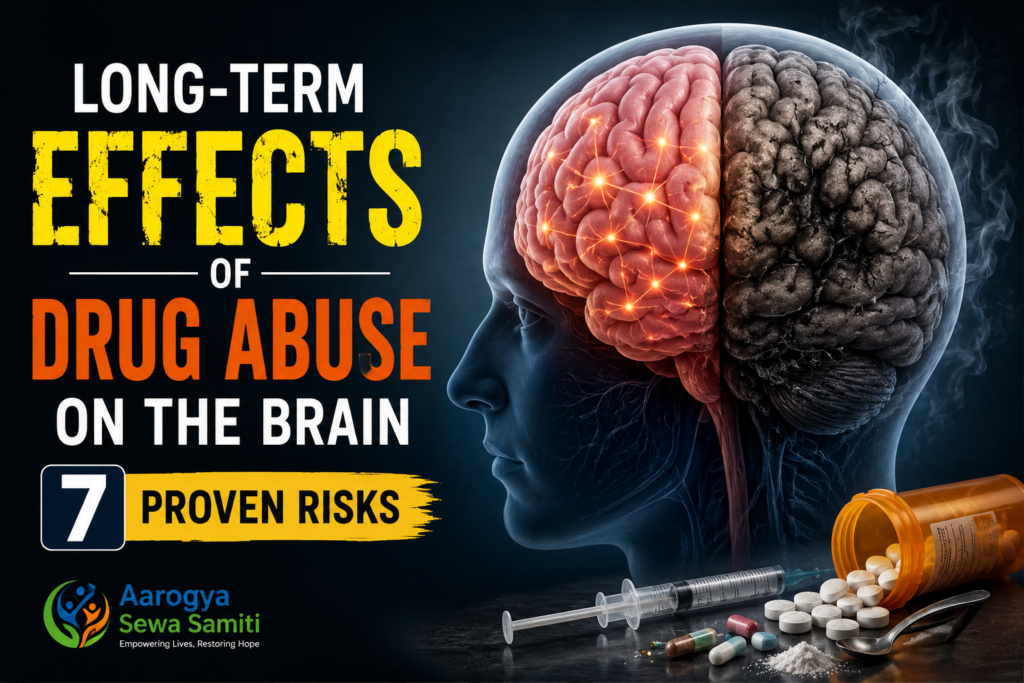
“Long-Term Effects of Drug Abuse on the Brain”
Drug addiction affects more than a person’s physical health. The Long-Term Effects of Drug Abuse on the Brain can alter thinking, emotions, behavior, and decision-making abilities for years. In many cases, these changes continue even after drug use has stopped.
At Aarogya Sewa Samiti, we believe that understanding the impact of addiction is the first step toward recovery. Therefore, this guide explains how substance abuse changes the brain, the risks involved, and the possibilities for healing.
Table of Contents
- Understanding How Drugs Affect the Brain
- Why the Brain Changes Over Time
- 7 Long-Term Effects of Drug Abuse on the Brain
- Mental Health Consequences
- Can the Brain Recover?
- Treatment and Rehabilitation
- Prevention and Family Support
- Conclusion
Understanding How Drugs Affect the Brain
The brain controls every thought, feeling, and action. Drugs interfere with the brain’s communication system. They affect neurotransmitters, which are chemical messengers responsible for sending signals between brain cells.
Initially, drug use may create feelings of pleasure. However, repeated use forces the brain to adapt. As a result, normal activities become less enjoyable, and the person increasingly depends on drugs to feel good.
Therefore, the Long-Term Effects of Drug Abuse on the Brain can be severe and life-changing.
Why the Brain Changes Over Time
When drugs repeatedly flood the brain with dopamine, the reward system becomes overstimulated. Consequently, the brain reduces its natural dopamine production.
Over time, individuals may struggle to experience happiness without substances. In addition, their ability to make rational decisions may decline.
These neurological changes often become more pronounced the longer drug use continues.
7 Proven Long-Term Effects of Drug Abuse on the Brain
1. Memory Loss and Cognitive Decline
One of the most common Long-Term Effects of Drug Abuse on the Brain is memory impairment.
People may experience:
- Difficulty remembering information
- Reduced concentration
- Poor learning ability
- Slower thinking processes
Furthermore, chronic substance abuse can affect areas responsible for storing and retrieving memories.
2. Impaired Decision-Making
Drug abuse damages the prefrontal cortex, which controls judgment and self-control.
As a result, individuals may:
- Take unnecessary risks
- Make poor financial decisions
- Struggle with responsibility
- Ignore long-term consequences
Therefore, addiction often leads to problems in relationships, education, and employment.
3. Emotional Instability
Many substances alter brain regions that regulate emotions.
Consequently, people may experience:
- Mood swings
- Irritability
- Aggressive behavior
- Emotional numbness
In addition, emotional instability can continue even during recovery.
4. Increased Risk of Depression
The Long-Term Effects of Drug Abuse on the Brain frequently include depression.
Because drugs disrupt natural chemical balance, individuals may struggle with:
- Persistent sadness
- Loss of motivation
- Fatigue
- Feelings of hopelessness
Therefore, professional treatment becomes essential.
5. Anxiety and Panic Disorders
Long-term substance abuse can significantly increase anxiety levels.
Common symptoms include:
- Constant worry
- Panic attacks
- Restlessness
- Sleep disturbances
Moreover, some individuals continue experiencing anxiety months after stopping drug use.
6. Reduced Impulse Control
Damage to brain circuits affects self-regulation.
As a result, individuals may:
- Act without thinking
- Engage in risky behaviors
- Experience stronger cravings
- Relapse more easily
Therefore, structured rehabilitation programs are often necessary.
7. Higher Risk of Neurological Disorders
Research suggests that chronic drug use may increase vulnerability to neurological complications.
These may include:
- Seizures
- Stroke
- Cognitive disorders
- Long-term brain damage
Consequently, early intervention can significantly improve outcomes.
Mental Health Consequences
The connection between addiction and mental health is strong.
The Long-Term Effects of Drug Abuse on the Brain often contribute to:
- Depression
- Anxiety disorders
- Paranoia
- Psychosis
- Personality changes
Furthermore, mental health conditions may worsen if substance abuse continues.
Because of this, effective treatment should address both addiction and mental health concerns simultaneously.
Can the Brain Recover?
The good news is that the brain has a remarkable ability known as neuroplasticity.
This means the brain can create new neural pathways over time.
However, recovery depends on several factors:
- Type of substance used
- Duration of addiction
- Overall physical health
- Age of the individual
- Quality of treatment received
Although some damage may be permanent, many people experience significant improvements through long-term recovery efforts.
Treatment and Rehabilitation
Recovery is possible with proper support.
At Aarogya Sewa Samiti, comprehensive rehabilitation programs focus on both physical and psychological healing.
Treatment may include:
Medical Detoxification
Detox helps remove harmful substances safely under medical supervision.
Individual Counseling
Therapy addresses emotional triggers and unhealthy behavioral patterns.
Group Therapy
Support groups encourage accountability and shared recovery experiences.
Family Counseling
Addiction affects families as well. Therefore, family involvement often improves recovery outcomes.
Relapse Prevention Programs
Individuals learn coping strategies to maintain long-term sobriety.
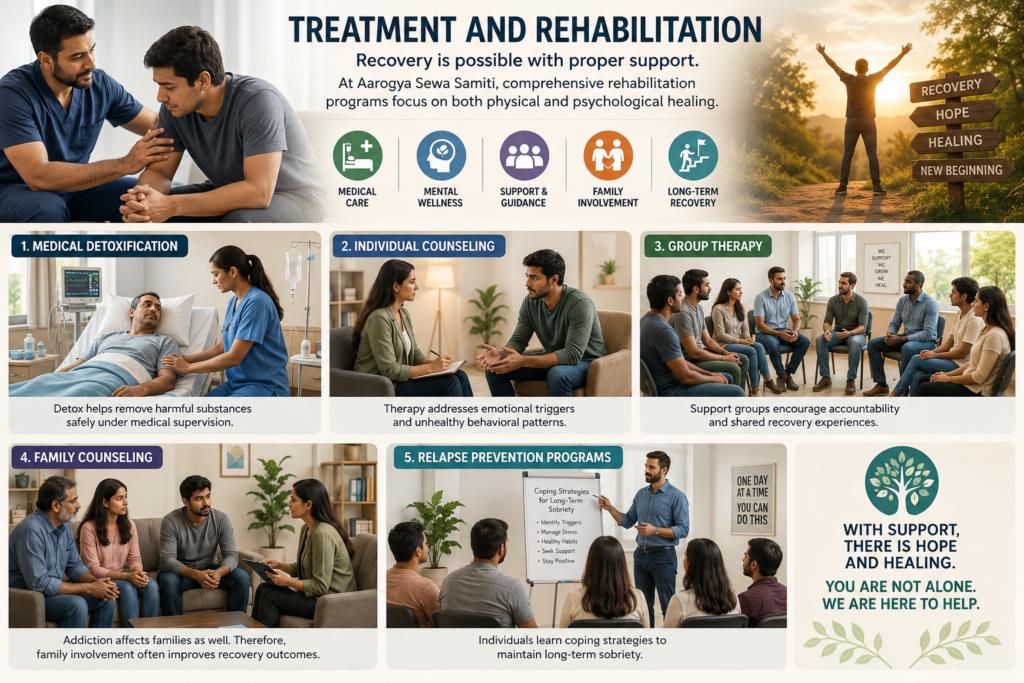
“Recovery Begins with the Right Support and Care”
Prevention and Family Support
Prevention is always better than treatment.
Families can help by:
- Encouraging open communication
- Recognizing early warning signs
- Promoting healthy coping mechanisms
- Seeking professional guidance when needed
In addition, educational programs can reduce the likelihood of substance abuse among young people.
Conclusion
The Long-Term Effects of Drug Abuse on the Brain can impact memory, emotions, decision-making, and mental health. However, recovery remains possible with timely intervention and professional care.
Understanding these risks is an important step toward prevention and healing. If you or a loved one is struggling with addiction, seeking support from experienced rehabilitation professionals can make a significant difference.
Aarogya Sewa Samiti is committed to helping individuals regain control of their lives through compassionate and evidence-based treatment programs.
Internal Link
Learn more about our addiction recovery programs: https://aarogyarehab.org/
External Dofollow Reference
World Health Organization (WHO): https://www.who.int/