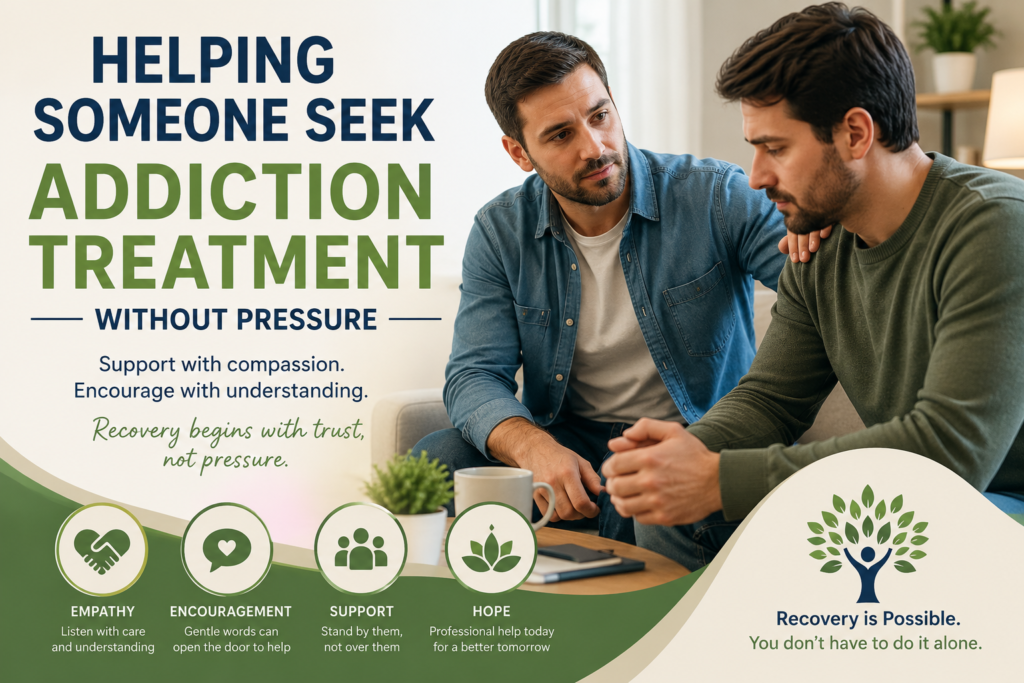
Watching someone you care about struggle with addiction can be heartbreaking. Whether it is a family member, friend, spouse, or colleague, you naturally want to help them recover. However, forcing, blaming, or threatening them to seek treatment often creates resistance instead of encouraging positive change. Helping Someone Seek Addiction Treatment Without Pressure requires patience, understanding, empathy, and the right approach.
Every person experiences addiction differently. Some may not realize they have a problem, while others may feel ashamed, afraid, or uncertain about asking for help. They may worry about being judged, losing relationships, or facing withdrawal symptoms. This is why supportive conversations are much more effective than arguments or criticism.
Aarogya Rehab, operated by Aarogya Sewa Samiti, believes that recovery begins with trust and compassionate guidance. Professional treatment combined with emotional support can help individuals take their first step toward a healthier and addiction-free life.
Understanding Why People Resist Treatment
Many people assume that someone with addiction simply refuses help. In reality, there are several emotional and psychological reasons why they hesitate to seek treatment.
Some common reasons include:
- Fear of withdrawal symptoms.
- Denial about the severity of addiction.
- Feelings of shame or guilt.
- Fear of being judged by others.
- Financial concerns.
- Anxiety about changing their lifestyle.
- Lack of confidence in recovery.
Understanding these concerns helps family members respond with compassion rather than frustration. Helping Someone Seek Addiction Treatment Without Pressure starts with recognizing their fears instead of criticizing their decisions.
Why Pressure Often Does Not Work
When people feel forced into treatment, they may become defensive or withdraw emotionally. Constant criticism, threats, or emotional manipulation can damage relationships and make recovery even more difficult.
Avoid statements like:
- “You are ruining everyone’s life.”
- “If you don’t stop today, we are done.”
- “You just don’t care about your family.”
- “You are too weak to quit.”
Instead, focus on expressing genuine concern and offering support. Calm communication encourages openness, while pressure often increases resistance.
Start with Empathy and Understanding
Empathy means trying to understand another person’s feelings without judging them. People struggling with addiction often carry emotional pain that others cannot see.
When beginning a conversation:
- Choose a quiet and private place.
- Speak calmly and respectfully.
- Listen more than you speak.
- Avoid interrupting.
- Acknowledge their emotions.
- Show concern instead of anger.
Simple statements such as “I care about you,” or “I want to understand what you’re going through,” can make a significant difference.
Choose the Right Time to Talk
Timing is extremely important when discussing addiction treatment. Conversations are more productive when the individual is calm, sober, and emotionally stable.
Avoid discussing treatment when the person is:
- Under the influence of alcohol or drugs.
- Extremely angry.
- Highly stressed.
- Surrounded by large groups of people.
- Feeling embarrassed or overwhelmed.
A respectful conversation at the right moment increases the chances of meaningful communication.

“Professional Therapist Conducting One-on-One Counseling”
Listen Without Judging
Many individuals with addiction expect criticism whenever the topic arises. Active listening helps break this expectation and builds trust.
Good listening involves:
- Maintaining eye contact.
- Allowing them to finish speaking.
- Avoiding immediate advice.
- Asking thoughtful questions.
- Showing patience.
- Respecting their perspective.
Sometimes people become more willing to seek treatment simply because someone truly listened to them.
Share Your Concerns Honestly
Instead of accusing the person, explain how their addiction affects you and why you are worried. Speak from your own experience rather than making assumptions about their intentions.
For example, you can say:
- “I’m worried because I’ve noticed you seem unhappy lately.”
- “I care about your health and want to support you.”
- “I’m concerned because your addiction is affecting your well-being.”
These statements encourage conversation rather than conflict.
Encourage Professional Help Gently
You do not have to convince someone to enter treatment immediately. Sometimes the first goal is simply encouraging them to learn about available options.
You can suggest:
- Speaking with a counselor.
- Visiting a rehabilitation center.
- Meeting a medical professional.
- Learning about addiction recovery.
- Talking to someone who has successfully recovered.
At Aarogya Rehab, experienced professionals provide confidential assessments and personalized treatment plans. Individuals receive compassionate guidance without judgment, helping them feel safe while exploring recovery options.
Respect Their Decisions While Remaining Supportive
Recovery is a personal journey, and lasting change usually happens when the individual makes the decision willingly. While you should never support harmful behavior, respecting their ability to choose can strengthen trust and keep communication open.
Helping Someone Seek Addiction Treatment Without Pressure means staying available, offering encouragement, and reminding them that professional help is always within reach. With consistent compassion, patience, and support from loved ones, many people become more willing to accept treatment when they feel ready.
Avoid Enabling Harmful Behavior
Supporting someone does not mean protecting them from the consequences of addiction. Sometimes, family members unknowingly make addiction worse by covering up problems or making excuses for the person’s behavior. This is known as enabling.
Examples of enabling include:
- Giving money that may be used for substances.
- Making excuses for missed work or responsibilities.
- Ignoring harmful behavior.
- Hiding the addiction from others.
- Solving every problem caused by substance use.
- Accepting repeated broken promises.
Instead, offer emotional support while encouraging healthy decisions. Setting clear and respectful boundaries helps protect both you and your loved one.

“Healthy boundaries support recovery while encouraging responsibility and positive change”
Learn About Addiction Before Offering Advice
Understanding addiction helps you respond with patience instead of frustration. Addiction is a medical condition that affects brain function, emotions, and behavior. It is not simply a lack of willpower.
Learning about addiction allows you to:
- Understand withdrawal symptoms.
- Recognize emotional triggers.
- Identify signs of relapse.
- Communicate more effectively.
- Provide meaningful encouragement.
- Support long-term recovery.
The more informed you are, the better prepared you will be to help someone make positive decisions.
Offer Practical Support
Many people want treatment but feel overwhelmed by the process. Offering practical assistance can make seeking help feel less stressful.
You can help by:
- Researching rehabilitation centers.
- Scheduling appointments.
- Providing transportation.
- Helping with paperwork.
- Offering childcare if needed.
- Accompanying them to the first consultation.
At Aarogya Rehab, individuals receive compassionate care from experienced professionals who guide them through every stage of treatment. Aarogya Sewa Samiti focuses on creating a welcoming environment where people feel respected, understood, and supported from the very beginning.
Be Patient Throughout the Process
Recovery is rarely a single decision made overnight. Some individuals may take weeks or even months before accepting professional treatment. They may struggle with fear, uncertainty, or denial before becoming ready for change.
Helping Someone Seek Addiction Treatment Without Pressure requires patience and consistency. Continue showing kindness, maintaining communication, and reminding them that support is available whenever they choose to seek help.
Avoid becoming discouraged if progress seems slow. Every positive conversation can plant the seed for future recovery.
Encourage Healthy Daily Habits
Even before treatment begins, healthy lifestyle changes can improve emotional well-being and build motivation for recovery.
Encourage habits such as:
- Eating balanced meals.
- Getting enough sleep.
- Walking or exercising regularly.
- Practicing mindfulness.
- Spending time with supportive family members.
- Reducing stress through hobbies.
- Limiting exposure to negative influences.
These small improvements often increase confidence and make professional treatment feel more achievable.
Know When Professional Intervention Is Necessary
Sometimes addiction becomes severe enough that immediate professional help is needed. Waiting too long can increase health risks and make recovery more difficult.
Warning signs include:
- Frequent overdose or medical emergencies.
- Violent or aggressive behavior.
- Serious withdrawal symptoms.
- Thoughts of self-harm or hopelessness.
- Complete inability to manage daily responsibilities.
- Dangerous substance use despite severe consequences.
In these situations, contacting medical professionals or a rehabilitation center as soon as possible is essential. Early intervention can protect both the individual and their loved ones.
Build Hope Instead of Fear
Fear-based messages rarely inspire lasting recovery. Hope, encouragement, and positive reinforcement are much more effective in motivating someone to seek help.
Celebrate small improvements, such as:
- Agreeing to discuss treatment.
- Meeting with a counselor.
- Attending an assessment.
- Completing the first day of treatment.
- Remaining sober for a short period.
Recognizing progress helps individuals believe that recovery is possible and worth pursuing.
Be a Source of Strength
People facing addiction often feel isolated and misunderstood. Simply knowing that someone believes in them can make a powerful difference.
Offer reassurance through your actions by:
- Staying calm during difficult conversations.
- Respecting their feelings.
- Encouraging positive choices.
- Remaining available without forcing decisions.
- Supporting treatment goals.
- Showing patience during setbacks.
Your steady support can become an important part of their recovery journey and help them take the first step toward lasting change.
The Importance of Family Support After Treatment
Support should not end when a loved one enters a rehabilitation program. Recovery is an ongoing journey that continues long after treatment is completed. Family encouragement plays a major role in helping individuals maintain sobriety and rebuild their lives.
Families can support recovery by:
- Encouraging regular counseling sessions.
- Celebrating recovery milestones.
- Maintaining healthy communication.
- Creating a substance-free home environment.
- Practicing patience during difficult moments.
- Supporting positive lifestyle changes.
When families stay involved in healthy ways, individuals often feel more confident and motivated to continue their recovery journey.

“A caring and supportive family environment helps individuals maintain long-term recovery after treatment”
Why Choosing the Right Rehabilitation Center Matters
Selecting a professional rehabilitation center is one of the most important decisions during the recovery process. A trusted facility provides medical care, counseling, emotional support, and personalized treatment plans that address the unique needs of every individual.
At Aarogya Rehab, operated by Aarogya Sewa Samiti, treatment focuses on healing the whole person rather than only treating addiction. Experienced doctors, counselors, psychologists, and support staff work together to help individuals recover physically, mentally, and emotionally.
The center offers compassionate care in a safe and respectful environment where every person is encouraged to move toward lasting recovery with dignity and confidence.
Common Mistakes to Avoid
While trying to help someone, it is easy to make mistakes that unintentionally push them further away. Being aware of these behaviors can improve communication and strengthen trust.
Avoid:
- Arguing when emotions are high.
- Shaming or blaming the individual.
- Comparing them with others.
- Making unrealistic demands.
- Ignoring your own emotional well-being.
- Expecting immediate results.
Instead, focus on building trust, offering consistent encouragement, and maintaining healthy boundaries throughout the recovery journey.
Taking Care of Yourself While Helping Others
Supporting someone with addiction can be emotionally exhausting. Family members and close friends often experience stress, anxiety, frustration, and emotional fatigue. Caring for yourself allows you to provide better support without becoming overwhelmed.
Consider these self-care practices:
- Talk to a trusted friend or counselor.
- Join a family support group.
- Maintain healthy sleep and eating habits.
- Continue your work and personal interests.
- Set realistic expectations.
- Ask for professional guidance when needed.
Looking after your own well-being is not selfish. It helps you remain strong and supportive throughout your loved one’s recovery process.
Recovery Is Possible with Compassion and Patience
Many people successfully overcome addiction and rebuild happy, meaningful lives. The journey may include setbacks, but every positive step deserves recognition. Encouragement, understanding, and professional treatment can inspire lasting change.
Helping Someone Seek Addiction Treatment Without Pressure means believing in their ability to recover while respecting their personal journey. Compassion creates hope, and hope often becomes the first step toward recovery.
Every conversation filled with kindness, every moment of patience, and every act of support can bring someone closer to accepting the help they need.
Conclusion
Watching someone struggle with addiction can be painful, but forcing treatment is rarely the answer. Lasting recovery usually begins when individuals feel understood, respected, and supported rather than judged or pressured. Helping Someone Seek Addiction Treatment Without Pressure is about creating an environment where trust, empathy, and honest communication encourage positive change.
Listening without criticism, offering practical assistance, setting healthy boundaries, and encouraging professional care are all powerful ways to help a loved one move toward recovery. Every person deserves the opportunity to heal with dignity and receive compassionate treatment that addresses both physical and emotional well-being.
Aarogya Rehab, under the guidance of Aarogya Sewa Samiti, is committed to helping individuals and families overcome addiction through personalized treatment, counseling, medical care, and long-term support. Their experienced team understands that recovery is a journey, and every step is taken with compassion, respect, and professional expertise.
If someone you care about is struggling with addiction, remember that your patience, encouragement, and understanding may become the reason they finally choose to seek help. Recovery is possible, and the right support can change a life forever.
Frequently Asked Questions (FAQs)
1. How can I encourage someone to seek addiction treatment without forcing them?
Speak with empathy, listen without judgment, express your concerns calmly, and encourage professional help while respecting their choices.
2. Why do people refuse addiction treatment?
Common reasons include fear of withdrawal, denial, shame, financial concerns, anxiety, and uncertainty about the recovery process.
3. Should I continue supporting someone who refuses treatment?
Yes, but support them in healthy ways. Set clear boundaries, avoid enabling harmful behavior, and continue encouraging professional treatment with patience.
4. How does Aarogya Rehab help individuals with addiction?
Aarogya Rehab, managed by Aarogya Sewa Samiti, provides medical detoxification, counseling, behavioral therapies, family support, relapse prevention, and personalized rehabilitation programs.
5. Can family involvement improve addiction recovery?
Absolutely. Positive family support, healthy communication, and ongoing encouragement significantly improve motivation, treatment participation, and long-term recovery outcomes.